
Blog

  • How to Resolve Conflict the Compassionate Way

    How to Resolve Conflict the Compassionate Way

    Hiya Gorgeous!

    🎶 Talk about it, talk about it, talk about it, talk about it. 🎶

    Gotta love those lyrics from the Lipps Inc. disco classic. Once you’re back from Funkytown, let’s talk about your communication skills, cookie! After all, sometimes you’ve just got to “talk about it.”

    As far as I’m concerned, open communication is one of the most important tools I have access to—it’s how I deepen my relationships AND patch them up when things get tough. It’s also essential for leading my team and navigating challenges in my business.

    That’s why I treat my communication skills like a precious plant. I have to tend to them on a daily basis so they can flourish in every corner of my life.

    Because, the truth is, effective communication isn’t always easy. That’s especially true when we need to resolve conflict. As this pandemic reshapes our world, I’m betting you may be facing a bit more of that lately. We’re all under a lot of pressure and stress, often in close quarters. Disagreements and misunderstandings are bound to bubble up. So there’s no better time than the present to level up our communication skills!

    Today I’m sharing 9 ways you can communicate better and resolve conflict with empathy, compassion and love. Whether you’re learning how to be an effective communicator or just want to dust off your skills, these tips are for you! They come from my personal toolkit and have helped me make my conversations smoother, no matter how difficult they are.

    Don’t feel any pressure to remember or apply them all now, though! Think of this as a menu of tasty communication-boosting tips. If you peruse the list and pick one to apply, I promise you’ll have a much easier time navigating your next tough talk!

    9 Compassionate Ways to Resolve Conflict

    1. Think before you speak.

    Whenever possible, take some time to think about what you want to say before you start a tough conversation. (Sometimes conflict comes out of nowhere and I’ve got more tips below to help you respond well in those cases.) But when it’s possible, a little forethought will empower you to speak with compassion and clarity.

    For example, I know that I communicate my best when I do it with intention. Usually that means organizing my thoughts and goals for a conversation beforehand—whether it’s for a team meeting, dinner with my folks or a more serious sit-down with a pal. It’s ok if your process looks a little different—just focus on setting yourself up to feel safe and confident in the upcoming convo!

    2. Pick the right time & place.

    Good timing can make the difference between a peaceful resolution and a fiery blowout. Consider factors like both of your stress and energy levels. Bombarding someone the moment they get home from a tough day at work won’t get you anywhere! When in doubt, ask if it’s a good time to talk—getting buy-in shows the other person that you’re not there to attack them.

    The way you communicate is also important. For example, texting can be a great tool for quick check-ins, but it’s not the best way to resolve conflict because there’s no tone of voice or body language to contextualize what you’re saying. Difficult convos are usually best had face-to-face (or on FaceTime or Zoom while we’re social distancing!).

    3. Say what you mean, but don’t be an honesty bulldozer.

    Hiding or sugarcoating your needs just builds resentment. So speak your truth, toots! Keep it clear and simple.

    But one caution: being honest doesn’t mean saying whatever you want, however you want, whenever you want! I’m a say-it-like-I-feel-it type gal and that bluntness has gotten me in some hot water over the years. I’ve learned that while I don’t need to censor what’s in my heart, I do need to be mindful of how I share it. And if I’m debating whether or not to speak up at all, I ask myself: Will the truth help this relationship in some way or does it just cause more hurt?

    4. Put yourself in their shoes.

    Let empathy be your guide when it comes to resolving conflict. The more we strive to understand and appreciate each other, the kinder and more successful our conversations will be. As you prepare for your conversation, take some time to look at things from their point of view. It will help you be more balanced and empathetic in the way you speak.

    Continue that practice as the conversation actually unfolds, too. When we’re having a tough convo and someone does or says something that we perceive as an attack, our instinct is often to go on the defensive. Pausing to hear, understand and embrace their point of view will help you respond intentionally instead of reacting defensively.

    5. Speak for yourself.

    No one likes being told how they feel. That’s why it’s so helpful to use observational statements in challenging convos. So instead of, “You’ve been so moody and distant, what is going on with you?” try, “I’ve been feeling a disconnect between us, have you noticed that too?”

    See how differently that lands? Not only are you removing your own assumptions—you’re also giving the other person room to share their perspective before establishing anything as fact.
    Don’t get me wrong, it can be really tempting to blurt out your inner talk track in the heat of the moment, but you’ll have better outcomes if you slow down and let the other person speak for themselves. Which brings us to…

    6. Listen.

    Communication isn’t all about talking, especially when you’re trying to resolve conflict. My therapist always says that people just want to be understood and that it’s one of the greatest gifts we can give. Interrupting, ignoring or discounting the other person’s side of the story is a surefire way to make them check out of the conversation.

    That’s why a big part of learning how to be an effective communicator is practicing mindful listening. Make it a point to show your loved one that you’re fully present (AKA not just thinking about what you’re going to say next). I’ve found it helpful to repeat back what I think the other person means (and to ask them to do the same) to clear up any misunderstandings before the conversation is over. You might be surprised what you hear when you really, truly listen.

    7. Tackle one thing at a time.

    I’m sure you’ve been in a tough conversation that snowballed—one minute you’re asking your partner for more help around the house and the next thing you know you’re rehashing the details of an argument you had months ago… Been there!

    It’s totally normal for other thoughts to surface while you’re talking things out. But it’s difficult enough to resolve conflict without multiplying it, so try to stay on topic.

    I find this is easier when I’m practicing forgiveness instead of harboring frustration. In that sense, I can start to resolve conflict before it begins by doing my own emotional work—pausing regularly to drop the baggage from past hurts. That way, when there is a conflict, we can spend less time rehashing the past and more time finding a resolution!

    Could you use some support with that? If so, try my free Forgiveness Visualization meditation. It’ll help you shed the weight of any resentment, so you can approach your next discussion with open hands and an open heart.

    8. End on a positive note.

    Ya know what they say about not going to bed mad? I know how hard it can be when things get heated, but wrapping up your convo in a positive way is so important. It’ll give you both a sense of comfort and usually prevents persistent negative feelings or stewing.

    I’m not saying that you need to tie up every conversation with a neat little bow. Instead, it’s about letting the other person know that you love and appreciate them, even if the convo was contentious or you still have a lot to discuss. The more you focus on people’s good qualities, the more they show them to you—I’m speaking from experience!

    9. Follow up.

    Communication is a process. Sometimes conversations will end before you reach a resolution, so it’s a good idea to plan your next steps. I’ve found it helpful to decide when we’ll revisit the topic later before hitting pause. Otherwise, it’s easy to avoid when the dust settles and everything feels less urgent.

    Also, remember that hindsight is 20/20. With a little time and space for reflection, you might realize something you missed or wish you’d said differently. Plus, it shows good will to check in and make sure the other person is ok after a tough convo.

    Cultivating Safe Communication

    Before you go, I want to share one last piece of advice on communication. I received this big medicine at a workshop with Harville Hendrix a few years back. He talked about the importance of creating safety in our conversations through empathy, ownership and love. The more we prioritize making the other person feel safe, the more honest and impactful our communication can be—that’s what it really comes down to. How beautiful is that?

    I hope these tips help, sweet friend. You don’t have to try them all at once. Just pick one and commit to apply it in your next tough talk. And don’t worry if learning how to be an effective communicator takes some practice—that’s totally normal. It’s worthwhile, though.

    Giving yourself permission to speak the truth without shame is SO freeing. And you’ll feel a lot less self-doubt with the right communication skills in your toolkit. Mwah!

    Your turn: Which one of these tips will you try in your next tough conversation?

    Peace & talking it out,
  • Is Fresh Produce Safe During the Coronavirus?

    Is Fresh Produce Safe During the Coronavirus?

    Hiya Gorgeous!

    In this season of uncertainty, one of the most important things we can do is hear and respond to the needs of those we love.

    As I’ve read your comments and emails in recent weeks, one thing caught my attention (besides how much I love this kind community!). It’s a question that keeps popping up:

    What does healthy nourishment look like in a season of quarantine cooking?

    If limited grocery trips or ingredient scarcity has thrown off your cooking mojo, you’re not alone, toots. We’re all struggling to redefine healthy habits during this strange new normal.

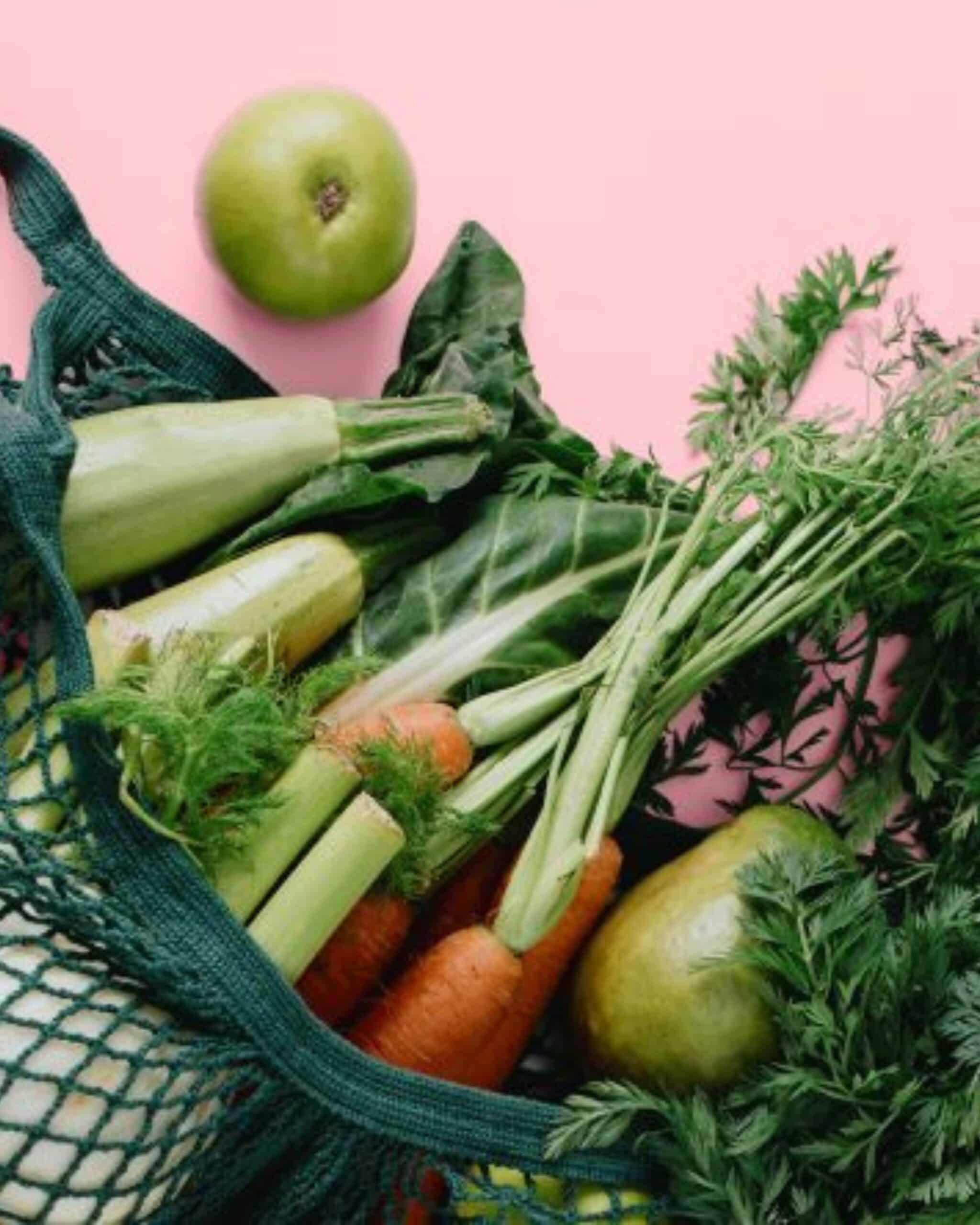
    One area that seems to be particularly challenging is fresh produce. Sure, you can sanitize the heck out of your boxes and cartons. But what about those leafy greens and lovely fruits? Are they even safe to eat?

    That question is especially important to the patients in our community—those facing cancer and other immune-compromising conditions. So I decided to call in some backup from a friend whose nutrition brilliance was a lifeline to me when I needed it most.

    Allow me to introduce you to Lizabeth Gold of the Block Center for Integrative Cancer Treatment (a magical, healing haven you’d have to see to believe). Liz is a Registered Dietitian and my go-to for reliable, medically-sound nutrition advice.

    I’ve asked her to set our minds at ease about what smart shopping looks like during the coronavirus—especially when it comes to fresh produce.

    Without further ado, I’ll let Liz guide us through.

    Do we need to change the way we handle fresh produce during the coronavirus?

    A question I’ve heard frequently since the onset of the coronavirus is this:

    Do we need to change the way we handle fresh produce during the COVID-19 outbreak?

    At a time like this, it’s normal to be worried about food safety or to wonder if utilizing more rigorous means of washing produce such as using detergents, soaps or other chemicals is necessary.

    The simple answer is: No.

    Experts agree that we do not need to make any drastic changes in the way we handle or prepare our fruits and veggies. Dr. Jennifer McEntire, VP of Food Safety for the United Fresh Produce Association, released this statement:

    There is no evidence that consuming fresh produce (or any other food) can transmit the coronavirus/COVID-19. As consumers select their produce, adhering to food safety guidance is critical. We encourage consumers to wash their hands and wash their produce before consumption by following FDA recommendations.

    While you don’t need to handle fresh produce differently right now, the normal food safety guidelines created by the USDA and FDA should always be followed when selecting, preparing or consuming food.

    Below are the guidelines to follow when selecting and preparing fresh produce.

    Guidelines for Smart Shopping

    • Shop at grocery stores that have COVID-19 precautions in place. Some things to look for: Are they limiting the amount of shoppers in the store at one time? Are they putting social distancing measures in place (for their customers and to protect their employees)? Are they sanitizing shopping carts? Are employees wearing masks and gloves?
    • Shop at small, local stores. This one is a win-win. Locally-owned stores tend to have less customer traffic and often source supplies locally. That means fewer people come in contact with your groceries, which lowers your risk of exposure. By shopping local, you also get to support a small business (and the local farms they buy from) to ensure they stay strong, serving your community long after the pandemic subsides.
    • Shop during the “off” times. Whether you go really early or really late, you can minimize exposure by avoiding peak shopping times. Be aware that many stores are reserving early morning hours for elderly shoppers. If you find it difficult to predict the best times because everyone’s staying home, you can also just call the store and ask.
    • Limit trips to the store. This protects both you AND our essential workers. Plan ahead so you can shop just once a week. And before you run back out for a forgotten item, remember you can likely substitute it for something you have on hand. When in doubt, just Google it!
    • Wash hands before going out and carry hand sanitizer to use periodically as you shop.
    • Wear a cloth mask. But don’t let that mask give you a false sense of confidence. You still need to practice social distancing and refrain from touching your face.
    • Don’t manipulate or handle produce multiple times when selecting it at the store in order to avoid depositing or transferring a pathogen.
    • Or you can skip all those previous tips and just shop online! Grocery delivery services like Instacart, AmazonFresh, Peapod, FreshDirect and Boxed make grocery shopping easy and convenient. Most orders can be processed and delivered to your doorstep within two hours—no contact required.

    Tips to Prepare and Store Fresh Produce

    • Wipe down produce packaging. When you first arrive home from the store, quickly wipe down the outside of any plastic produce containers to sanitize them. (Bonus Tip: This would apply outside of produce, too. You can quickly wipe down the outside of all cans and cartons or simply throw away the boxes that hold self-contained items like oatmeal packets or cups of applesauce.)
    • Wash your hands before and after handling any produce.
    • Wash all surfaces and utensils such as cutting boards, countertops, knives, etc. before and after cutting or preparing produce.
    • Always remove the outermost leaves of the heads of cabbage and lettuce.
    • Always keep a separate cutting board that is only used for fruits and veggies and is never used for animal products.
    • Wash or scrub all fresh produce under running water BEFORE CUTTING. (Even if you’re not consuming the skins, they can harbor germs.) While water is running, rub the produce gently (for fruits or veggies that are easily bruised) or scrub using a clean vegetable brush (for root veggies, melons or celery).
    • Avoid using dish towels or cloths to dry the produce. Instead, allow it to air dry or use a clean paper towel. To avoid excessive bruising, a salad spinner can be used to thoroughly dry the leaves of softer lettuces.
    • Always keep fruits and veggies completely separate from any animal products including fish, seafood, meat or poultry when preparing or storing.
    • Always prepare or store your fresh produce within 2 hours of cutting it and make sure to clean and sanitize all storage bins and containers on a regular basis. Also make sure the storage temperature is below 40 degrees.

    Should You Use a Fresh Produce Wash?

    Although experts say it is not necessary, if you would like to utilize a wash or spray, here are a few safe and natural washes that can be used to get those fruits and veggies squeaky clean:

    • Veggie Wash
    • Fit Organic
    • Or make your own! Mix 1 cup of vinegar to 3 cups of water in a spray bottle. Spray fresh produce, let it sit for 5 minutes, and then rinse well under running water or scrub using a sanitized veggie brush.

    The bottom line is that it is more important than ever to eat a clean, whole food diet in order to boost immunity and overall health! So don’t be afraid of those fruits and veggies!

    Fresh produce is still safe—and immune boosting.

    Isn’t Liz a gem? I love learning from her and I love her passion for helping patients through whatever challenges they’re facing—even these coronavirus times.

    If you’d like to continue learning from Liz, you can start with this lovely interview, What to Eat (and Avoid) if You Have Cancer. You can also visit her at the Block Center website.

    I hope that Liz has set your mind at ease about produce. But if you’re feeling anxious about anything else, check out my free Instant Stress Reduction meditation below. Meditation is one of the best ways I know to manage worry and this is an easy starter track, even if you’ve never meditated before.

    The major takeaway that I hope you’ve absorbed today is that it’s still safe to eat green (and red and orange and purple, too). So don’t avoid those produce aisles during your next grocery run. In fact, head straight for them.

    Now more than ever, your body needs all of the immune-boosting, inflammation-reducing benefits that fresh produce can give. So load up on those scrumptious plants—just make sure to wash them well.

    Your turn: What’s one healthy ingredient you’ll add to your cart this week?

    Kindness & kale,

  • How to Make Easy, Healthy Snacks When You Can’t Get to the Store

    How to Make Easy, Healthy Snacks When You Can’t Get to the Store

    Hiya Gorgeous!

    Today I’m sharing some recipes for easy, healthy snacks that I think you’re gonna love.

    I chose them because, in times like these, we need simple foods that aren’t just tasty, but also full of fabulous nutrients. And I’m focusing on snacks because I’ve noticed that when it comes to recipe sharing, they often get left behind! Since you’re probably getting lots of healthy breakfast, lunch and dinner ideas from your favorite bloggers right now, I’m hoping I can help fill that hole.

    Now, to be clear, I’m not suggesting that you overhaul or get strict about your diet right now (unless you REALLY want to—I’m not here to tell you what to do!). There’s a lot of stressful stuff happening in our world, so I encourage you to make caring for yourself and others the number one focus for the time being. If you find yourself reaching for your favorite comfort foods, it’s ok. You’re doing the best you can under the circumstances, and beating yourself up definitely isn’t gonna help!

    But I do know that many of you are looking for healthy recipes that you can make with limited ingredients. Maybe your kids are home, so it’s harder to find time for your normal grocery store run (not to mention that snacks may be disappearing from your home at a much quicker rate!).

    And while social distancing doesn’t restrict us from going out for essentials, you might prefer to play it safe (especially if you’re over 60 or have a chronic health challenge). Plus, even if you can get to the store, you might find that the shelves are bare and you’re not able to get your go-to ingredients.

    The best part about these recipes is that they’re all really flexible. You can easily make adjustments based on your preferences and the ingredients you do/don’t have right now. I’ve included substitution ideas throughout the article, but I don’t know exactly what you have access to, so let your pantry, fridge and freezer be your guide! A general rule of thumb for substitutions is to use ingredients that are similar in flavor and texture to whatever you’re subbing out.

    Ok, toots, whaddya say we go raid your pantry together?!


    Easy, Healthy Snacks to Make When You Can’t Get to the Store

    Satisfying Smoothies

    Would any list of mine be complete without a shout out to green drinks? I think not! Smoothies are one of my favorite easy, healthy snacks because I can blend in advance and store them in airtight mason jars (they usually last up to 12 hours in the fridge and a month in the freezer!). Plus, unlike many recipes, the ingredients are usually flexible. If you don’t have a certain ingredient on hand, just sub in something similar or leave it out—voila, your very own creation! For more green smoothie tips, check out this post and this post from my blog archives.

    My Body Builder smoothie is great for those times you’re feeling especially peckish because it includes protein-packed peanut butter (or any nut/seed butter you like). And the Raspberry Revitalizer smoothie is a perfect afternoon pick-me-up. You can use any frozen berries in place of the raspberries, and the coconut butter/oil is optional. (Psst… all of these recipes are from Crazy Sexy Juice!)

    Delightful Dips and Dippers

    Veggies and hummus or apples with almond butter are my go-to plant-based snacks when I’m short on groceries. No recipe needed! When I don’t have fresh produce available, I opt for pantry staples like whole grain crackers or dried fruit with no added sugar.

    If you want to make your own dip, this Smoky Southwestern Hummus from my Test Kitchen Tuesday series is a total crowd pleaser (though you might not want to share!). No worries if you don’t have the spices it calls for—feel free to experiment and try different spice combos, or keep it simple with a little salt, pepper and garlic. If you don’t have chickpeas on hand, check out this yummy recipe for Sweet Potato Hummus.

    Have a hankering for fries that aren’t deep fried? You only need four ingredients to make these delightfully crispy Oil-Free Rosemary French Fries. Dip them in ketchup for a classic snack, or get a little wild and pair them with your homemade hummus!

    Need more snack ideas? Grab this free downloadable cheat sheet to learn about my top 10 recipe-boosting ingredients and how to use them (includes 3 more recipes for you to try!).

    Energy Balls, Bars and Bites

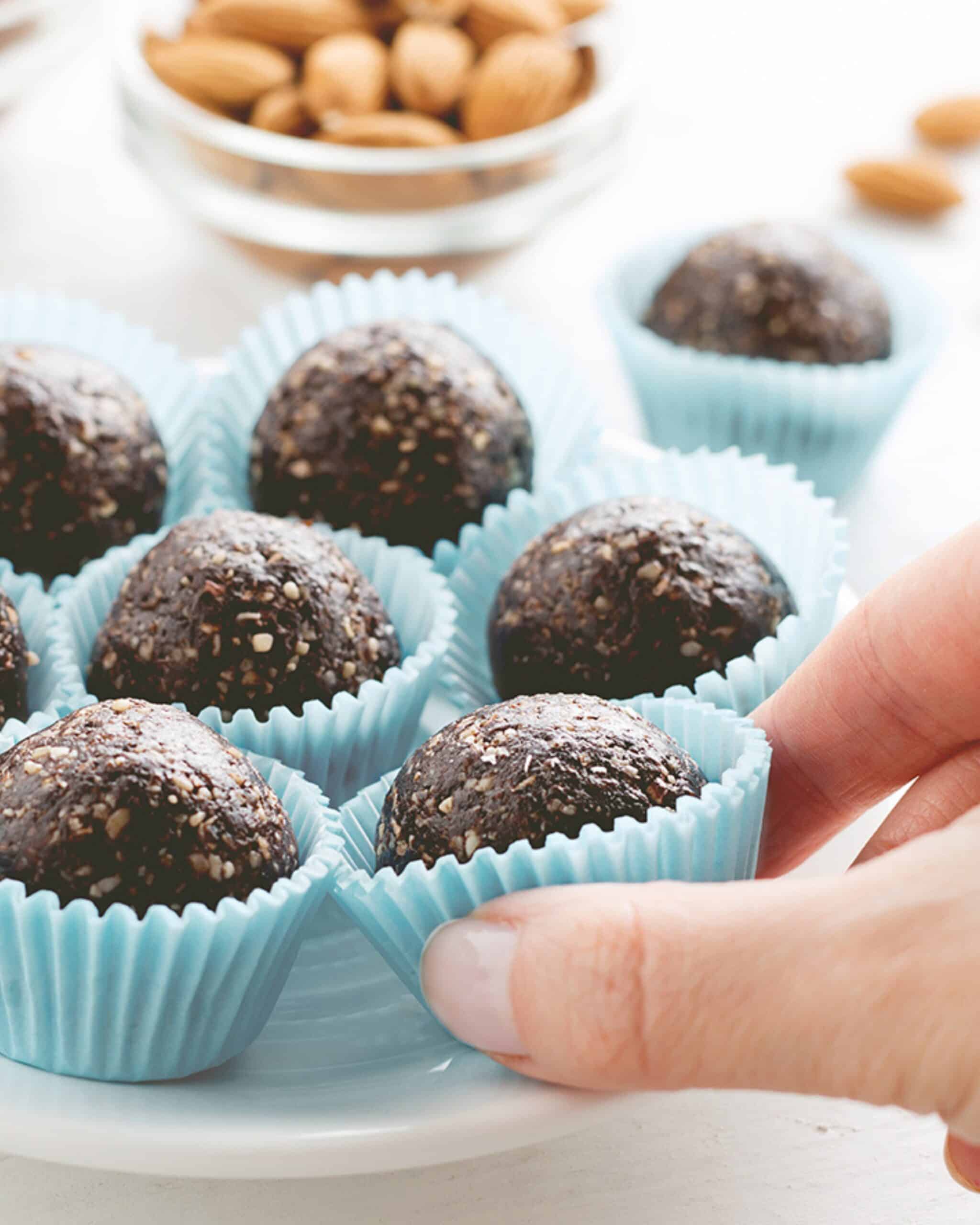
    What’s better than a bite-sized treat that packs a serious nutritional punch? Nada! I fill my bites with lots of plant-based protein and complex carbs so they fill me up and give me sustainable energy ‘til my next meal. I suggest whipping up a big batch of these easy vegan snacks ahead of time so you have plenty on hand for your busier days.

    I love these No-Bake Cherry Vanilla Protein Bars because they’re quick to make and more affordable (and eco-friendly!) than buying individually wrapped bars at the store. Most of the ingredients are easy to swap out for whatever you have in your pantry, so have fun with it!
    For example, any dried berries could sub in for the cherries—cranberries would be especially good because they’re tart, too!

    Have some matcha hanging around in your cabinet? These Matcha Pistachio Bliss Balls are also on regular rotation in my kitchen. They’re perfectly sweet and have a cookie dough-like consistency, YUM! Or if you’re in the mood for chocolate, try these Raw Brownie Bites. And no worries if you don’t have dates on hand—try this recipe for Raw Protein Energy Balls!

    Crazy Sexy Trail Mix

    One snack you’ll always find in my pantry is the trail mix from Crazy Sexy You, my 21-day total wellness program—and today I’m sharing the recipe publicly for the very first time! It’s chock-full of nutritious goodies, like selenium from the Brazil nuts and vitamin A from the goji berries.

    But the best thing about this recipe is that there’s no one right way to make it. If you don’t have some of the ingredients, just sub in whatever nuts, seeds and dried fruit you can find in your kitchen. I can’t wait to hear what combos you come up with!

    Crazy Sexy Trail Mix

    Serves 6 (about 1/3 cup or 80 ml per serving) | Prep time: 5 min

    • 1/2 cup (67 g) Brazil nuts
    • 1/2 cup (62 g) raw walnuts
    • 1/3 cup (40 g) raw cashews
    • 1/3 cup (48 g) raisins
    • 1/3 cup (25 g) dried goji berries
    • 2 Tbsp flaked or shredded unsweetened coconut (optional)
    • 1 tsp ground cinnamon (optional)
    1. In a large bowl, mix all ingredients together.
    2. Transfer to wide-mouth mason jars or to a large glass storage container.

    Storage tip: Store in a cool, dark place for up to 1 month.

    Make it nut-free: Replace Brazil nuts, walnuts and cashews with 2/3 cup (80 g) raw, shelled pumpkin seeds and 2/3 cup (46 g) raw, shelled sunflower seeds.

    Happy snacking, sweet friend!

    I hope that these recipes bring you some comfort (and of course, nourishment!) during these challenging times. Preparing food for yourself, no matter how basic it is, is a healing act of self-care that goes a long way. And remember: Above all else, keep it simple. Fruits and veggies baby, that’s where it’s at!

    And speaking of fruits and veggies, here are some tips to keep you safe the next time you do decide to brave the market:

    • It’s important to limit your trips to the store.
    • Wash your hands before and after you go (and don’t touch your face!).
    • Try to limit what you touch when you’re there (no fondling produce, etc.).
    • Remember to practice social distancing (six feet!) from staff and other patrons.
    • It’s also super important to respect the folks working at the grocery store. They’re also on the front lines and they’re scared. Let’s keep each other as safe as possible!

    One more thing before you go. I love sharing tips and recipes with you because it’s my mission to help you take care of yourself—body, mind and soul. But it’s especially important to me now because, as we navigate the coronavirus crisis, I recognize that it’s more important than ever for us to share and connect with each other. Just know that I’m so, so grateful for you.

    Your turn: What are your favorite easy, healthy snacks? Can’t wait to hear about your plant-based picks!

    Peace & scrumptious snacks,


  • How to Adapt to Working from Home

    How to Adapt to Working from Home

    Hiya Gorgeous!

    People often assume I’m an extrovert. I can’t blame them, given my penchant for speaking in front of thousands of people and connecting online every day. But the truth is, I love being alone. Solitude is my happy place, and working from home has always come naturally to me.

    That doesn’t mean it’s for everyone. Many find it easier to focus at an office. But as we practice social distancing to flatten the coronavirus curve, many of you have suddenly found yourselves with remote jobs… whether you like it or not.

    If you’re feeling the whiplash, you’re not alone.

    Folks all over the world are dealing with sudden, unexpected life changes, myself included! But since I have been doing the work-from-home thing successfully for a long time, I’m hoping I can help make this transition a little easier. So today I’m sharing what I’ve learned about what it takes to stay happy and productive while working remotely.

    We’ll also talk about ways to create and maintain BOUNDARIES. Full disclosure: This is the area I struggle with most. I love what I do—it’s my life’s work! And if I’m not careful, that line between work and life gets pretty darn blurry.

    When our world is turned upside down, it’s easy to bury ourselves in work or lose sight of what’s best for us. But I know that I’m happiest, healthiest and best-equipped to lead when I prioritize self-care and keep my boundaries strong. I think you’ll find that to be true for you, too!

    Pulling back the curtain on common work-from-home pitfalls.

    So, practically overnight you may have gone from commuting to the office to commuting to the… kitchen table (or home office if you’re lucky enough to have one!). That’s big, and on the surface it might sound like a dream come true. No more sitting in traffic or putting on real pants, right?

    But with the need for social distancing accelerating at lighting speed, you probably didn’t have much time to prepare. That means you may be missing out on some of the best practices that can make working from home a win.

    Whether you’re brand new or a seasoned pro at working from home, these symptoms indicate that remote work isn’t working for you. (No worries, though. Tips on how to make it work coming soon!)

    Look out for these common pitfalls:

    • Breaking frequently because you’re distracted by household chores like laundry.
    • Not taking ANY breaks and sitting at your computer for hours at time.
    • Eating meals at your desk.
    • Rolling out of bed with only a few minutes to spare before work.
    • Working into the evenings instead of shutting down at day’s end.
    • Being constantly distracted by the people and pets you live with.
    • Difficulty balancing work with caring for your kids.
    • Having more anxious thoughts or dreams about work than usual.
    • Feeling isolated and disconnected from your coworkers.
    • Feeling like you can’t disconnect and transition into “home mode” at the end of the day.

    I didn’t write this list just to stress you out. But if any of those sound familiar, there are some proven practices you can engage to protect your productivity (and your mental health!) while working from home. Now, ready to talk solutions?

    How to Quickly Adapt to Working from Home

    These practices have been essential for cultivating my balanced work-from-home life. I hope they help you stay happy and productive, whether you’re working from home or just staying home more than usual. And it doesn’t end when you go back to the office—you can keep using these ideas to improve your work/life balance, no matter where you are!

    1. Create a consistent schedule with start-up and wind-down times.

    Establishing start and stop times for your work day helps you maintain boundaries. I encourage you to try this out, even if you normally keep a flexible schedule! Your day is no longer bookended by getting to and leaving the office, so this gives you back that definition. Plus, establishing routines can provide a sense of normalcy in uncertain times.

    Take it a step further by creating start-up and wind-down rituals. That means that the first hour of your day is dedicated to getting grounded and set up for success with the work ahead—and the last hour is dedicated to wrapping up that work so that you can “clock out” on time. My team and I started doing this recently and it has been a game changer!

    2. Set clear objectives for each day.

    This might be something you do during your start-up ritual! Pick two or three top priorities and keep them visible all day long. (I write mine in my Results Journal, but do whatever works for you!) Whenever possible, batch activities like meetings, inbox time, etc. together on your calendar. That way, you’ll have long periods of dedicated focus to work toward your top objectives.

    3. When it comes to hygiene, act like you’re going to leave the house.

    Take a shower, put on clothes… you know the drill! I’m not saying you have to do full hair and makeup—if yoga pants are your jam, go for it. But good hygiene is part of taking care of yourself and maintaining your routine. Plus, it can make you feel more centered and motivated.

    4. Establish a dedicated workspace.

    All of a sudden, work is home and home is work. Whaaat? When the two share a space, it can be pretty hard to maintain boundaries. Don’t worry if you don’t have an office, just be intentional about creating separate spaces for work and the rest of your life (aka don’t work in your bed!). Also, tidy up your space. Chaos in your workspace creates chaos in your mind.

    5. Take real breaks.

    When you go to the office, you automatically get a little fresh air and movement, even if it’s just walking from your front door to the car. You’re also more likely to walk to meetings and water cooler chats throughout the day. Fear not if you feel a bit stagnant or sluggish when you first start working from home—it’s totally fixable.

    The key is to take real, mindful breaks. Take a few minutes for deep breathing in the morning or for stretching in the afternoon. Avoid the eat-at-your-desk trap and give yourself recess! Eat lunch outside if you can or do a quick yoga session in your living room. Just make simple self-care breaks a part of your day.

    6. Connect virtually.

    If you’re new to working from home, you might feel disconnected at first. Luckily, there are a lot of ways to connect virtually. Have video meetings whenever you can using a tool like Zoom. Use Slack to check-in with your coworkers about work-related topics as well as fun stuff like photos of your at-home workspace and wins for the day. Just don’t keep chat notifications on all day. I’ve been there and it’s a recipe for getting nothing done! 😉

    7. Have kids? Read this.

    I know that many of you aren’t just dealing with a surprise work-from-home scenario. You’re dealing with a whole new paradigm of parenting during the day, too. (You deserve a medal for this, by the way!) Trying to work while your kids are home can be really tough—and that’s especially true if you’re suddenly having to homeschool them. One of my amazing colleagues, Suzie Barbour, is a pro in this department. She’s a busy COO and also the founder of Homeschool Vibes, who homeschools while working from home on the reg! Here are a few tips she shared to help you succeed…

    • Keep a routine, but it doesn’t have to be rigid. Set clear boundaries between school and play time, and make sure everyone knows what to expect.
    • Plan for together AND alone time each day so you can all stay connected while still having your space.
    • Make a list of activities to choose from and get your kids’ input. If they’re bored during free time, they’ll have a resource to go to.
    • Be gentle with yourself and seek support. If your partner is home, work out a schedule to trade shifts with the kids. Lean on your loved ones and fellow parents, too. Even if they can’t be with you in person right now, they can still be there for you from afar. (There may even be a loving aunt or grandparent who’d love to read your child a story on Facetime if you need a quick break.)

    These are just a few of the ideas Suzie shared to help those working from home with kids. Follow her on Instagram or Facebook for more guidance. (And let me know in the comments if you’d be interested in a blog post on this topic.)

    And here’s my final tip…

    Remember, you are a whole person who is likely going through a lot of stress right now. Please be kind to yourself. There aren’t hard and fast dividing lines between the many roles in your life. You’re a friend, parent, employee, boss, lover, artist, patient, thriver… all of these beautiful parts of you are intertwined. Try seeing this as an opportunity to explore those connections and to plug into the activities that give you energy and comfort. With a few simple boundaries, working from home can be a powerful way to bring all the parts of yourself together.

    And as you adapt to this new reality, spread kindness around to those who can’t work from home. From medical and emergency workers, to the hospitality industry, to those who are keeping our supply chains running (farmers, factory workers, truck drivers, etc.)—many are braving traditional work climates because remote work isn’t an option. Recognize those who may be losing income or risking their safety to help others—and look for ways to help them in return. They’re looking out for us, so let’s make sure we have their backs, too!

    Your turn: Are you working from home right now? If so, how’s it going? And if you have tips to share, please do!

    Peace & boundaries,

  • Your Wellness Guide for Navigating Coronavirus

    Your Wellness Guide for Navigating Coronavirus

    To My Cherished Community,

    I hope this finds you safe and well. I’ve been thinking about how I can support you and your loved ones during these difficult times. Truth is, I don’t have all the answers. But what I do have is an endless amount of love for you, so I’m going to do everything in my power to get you the resources you need to navigate coronavirus and COVID-19.

    We’re in this together.

    I’m writing to you from my temporary home in Florida, where Brian, Lola, Tara and I recently moved to be closer to my parents. Little did I know that just weeks after road tripping down the eastern seaboard, we’d be facing an unprecedented global health crisis.

    As many of you know, my amazing Dad was diagnosed with pancreatic cancer in 2016. Thirteen years after my own cancer diagnosis, our roles reversed overnight. My dad, who was my rock back then and still is today, became the patient. And for the first time in my own health journey, I became a caregiver.

    I’m sharing this because many folks in this community are dealing with chronic health challenges that make them even more vulnerable right now.

    If you’re one of those people, please know that my family and I stand in solidarity with you. We’re taking extra precautions right now and encourage you to do the same.

    The other reason I’m sharing my family’s story is because over the coming days and weeks, many of us will find ourselves in similarly unexpected situations. But if I’ve learned anything from my own experiences, it’s that we need each other. In times like these, we must shed our default roles and let compassion and humility lead the way.

    That means listening to the experts.

    And when you listen, you’ll hear what is perhaps their most critical message: To minimize the damage from this outbreak, we must flatten the curve.

    If you’re wondering what that means, check out this helpful article. But here’s the short version: We can limit the speed of coronavirus transmission by practicing social distancing and other protective methods. If we don’t heed this advice, there may be a huge spike (the opposite of a flattened curve) in the number of folks who get infected at once, which could in turn overwhelm our healthcare system. (You can read about the healthcare crisis in Italy for a sense of what that could mean.)

    But what does that look like, practically speaking? I know that you must have a lot of questions about how to keep yourself and your loved ones well. So I went searching for the best, most reliable advice I could find, and put together the following list of tips and resources for you. By no means is this a comprehensive list, but I hope it provides you with some comfort and clarity during this challenging time.

    Your Wellness Guide: 8 Ways to Support Yourself and Others During Coronavirus and COVID-19

    1. Take social distancing very seriously while also staying connected.

    This is perhaps the biggest, most challenging change we’re facing for the coming weeks. But social distancing only works if we all participate. This is about protecting others as much as protecting ourselves. For every known case there are likely five to 10 undetected cases, and these asymptomatic carriers may be responsible for nearly 80% of all new cases.

    For a straightforward overview of social distancing practices, check out this helpful article from Johns Hopkins. The Centers for Disease Control and Prevention (CDC) and the World Health Organization (WHO) are also reliable resources for better understanding how you can help flatten the curve.

    Please keep this in mind while you’re hunkered down at home: Loneliness isn’t good for us either, so don’t cut yourself off from the world! Let’s take advantage of all the amazing technology we have access to (video chat like FaceTime and Zoom, text, emails and yes, good old fashioned phone calls!). I’ll be going live on instagram to support our community, so if you need some love please come and find me (I’m @crazysexykris).

    It’s also important to acknowledge that not everyone has the ability to protect themselves equally. And not everyone can weather this storm financially, either. Many folks were already hurting before the pandemic. So now is the time to up our game as a global family. The more we follow the guidelines, the more we protect the person stocking the shelves, delivering the packages, the caregivers, medical professionals and so on. For ways to contribute, see tip #8.

    2. Practice extra good hygiene.

    Coronavirus has spread so far and so fast because it’s primarily transmitted through respiratory droplets (which are produced by talking, coughing, etc.). And since those lil’ droplets can land pretty much anywhere, we need to take extra precautions when it comes to cleaning and hygiene.

    First and foremost, wash your hands well and often! Check out this guide from the WHO to make sure you’re covering all your bases. I also shared my own tutorial video on Instagram, which you can see here.

    Ramping up our hygiene efforts doesn’t stop with handwashing, though—you can also help protect yourself and others by changing your clothes when you get home, taking your shoes off at the door, disinfecting your phone and other commonly used items/surfaces. The CDC has lots of info to help you do that, including this helpful guide for protecting your home. And here’s a great video that will also show you how to protect yourself, your home and your office space.

    3. Reduce stress and stay in tune with your mental health.

    The uncertainty and volatility we’re experiencing right now can be extremely stressful. You may feel overwhelmed or helpless or unsettled by the many changes in your routine. But here’s the thing—stress messes with our immunity, so reducing it is of the utmost importance.

    Stay informed, but limit your exposure to news (only so much is helpful). Do stuff you love—draw, sing, dance, read! Choose activities that crowd out stress with joy and calm. Here’s a great resource from the CDC on managing anxiety during this time.

    One of my go-to stress reduction techniques is meditation and you can bet I’ll be doing a LOT of that over the coming weeks. It’s how I find a sense of safety within myself, even in the most unsettling circumstances. If this resonates with you, I hope you’ll try my free Instant Stress Reduction meditation below.

    4. Get plenty of rest and sleep.

    Sounds obvious, but the importance of sleep is often overlooked, especially when we’re stressed or dedicating time to caring for others. Getting sufficient, high-quality sleep is absolutely critical for a healthy immune system (more on how your body builds immunity while you’re asleep here). In fact, folks who get their nightly Zzzs are better at fending off viruses. So consider this your friendly reminder to get 7.5–8 hours of rest whenever possible and take naps when you need them.

    I’ve written a lot about sleep here on kriscarr.com, but my two favorite articles are The Ultimate Guide to Better Sleep and How to Sleep Better and Get the Rest You Need to Thrive. I hope you find them helpful.

    5. Eat and drink for your health.

    Eating a whole foods, plant-based diet is one of the best ways to promote long term health and strengthen your immune system. This is not an overnight solution, so please be wary of quick fix solutions (like products that claim to give you a quick immune boost). Instead, stick with your healthy habits and/or work in a few extra nutritious plant-based meals. Check out the recipes section of my website for hundreds of delicious ideas!

    And speaking of fuel, let this also be a reminder to stay hydrated. I know that coronavirus stress might make you want to take comfort in your favorite cocktail—I get it! But please keep in mind that alcohol can dehydrate you (and heavier consumption may even weaken your immune system). Whenever possible, reach for a big, hydrating glass of water (or green juice!) instead.

    At a time when we need to drastically limit our trips out of the house, it’s important to carefully plan our grocery errands. Buy smart but don’t hoard. Consider shopping at odd hours to avoid busy times of day. If you can’t get everything you normally purchase, stay calm. You may have to improvise right now, and that’s ok. Please just do your best and don’t stress yourself out.

    6. Keep moving.

    While we may need to stay close to home right now, we don’t have to stay still. Keep dancing, stretching, walking, playing, etc—whatever your heart desires. Movement is medicine!

    If you usually go to the gym, I strongly encourage you to avoid it for now. Lots of people touch and sweat on those machines, so it’s just not a risk worth taking. Instead, try some fun new at-home workouts and don’t forget to get fresh air (nature is healing—just remember social distancing if you encounter other people!)

    7. Be wary of magic bullet claims.

    Supplements can absolutely fill in gaps and enhance your immune system. They’re a powerful tool for ongoing wellness, so I’d strongly encourage you to continue your current supplement regimen during this time. For example, I’ve stocked up on my probiotics because gut health and immune health are siblings. However, I want to be clear that no supplement is a magic pill for vitality and certainly not for combatting a virus like the one we’re facing now. I’m seeing a lot of dubious claims flying around the internet that aren’t backed by credible research from supplement brands whose products don’t contain therapeutic doses anyway.

    So instead of getting anxious about what to take, here’s what I’m doing instead: sticking with my regular, simple practice. I’m not rushing out to buy products I don’t know how to use or know if they’re even effective (or contraindicated for certain conditions). Instead, I’m investing my money in healthy food and focusing on the practices referenced here.

    8. Help each other.

    Almost overnight we find ourselves in an economy that’s ground to a halt. A lot of people and businesses in our communities are already feeling the hurt. So if you have the means, please consider some of these ways to help our friends weather this storm.

    • Donate to your local food bank.
    • Prepay for services (hair styling, home care, gift certificates to your favorite restaurant, etc.).
    • Foster a pet. Shelters around the world are struggling with an uptick in animals and less adoptions, which often means more euthanasia. According to the CDC, WHO and the American Veterinary Medical Association pets are not at risk of spreading COVID-19—but they sure can brighten our days. Now may be a lovely time to welcome a fur kid into your heart and home.

    Take care of yourself, dear one.

    I know how scary this must be for you. I admit, I’m a little scared too. But my soul fire—the one that fuels my hope and resolve—is still burning bright, and you can come sit by it whenever you need to. I am with you, as is our entire Crazy Sexy Team, and we plan to do whatever we can to help you navigate this challenging reality. We love you so very much!

    Your turn: What are you doing to take care of yourself and stay connected right now? Let’s share ideas and support each other in the comments below!

    Peace & all my love,

  • 5 Mental Health Apps to Reduce Anxiety & Boost Happiness

    5 Mental Health Apps to Reduce Anxiety & Boost Happiness

    Hiya Gorgeous!

    Your mental health matters, and it’s time to make it a priority.

    There, I said it! Yes, there’s a lot going on in our world and it may be easy to compare your struggles to those of others. And you do have a lot of reasons to be happy! But whatever ifs/ands/buts are going through your head right now, your mental health is still important.

    Tough love time… You cannot be or do your best if you’re not taking care of yourself. End of story! If you dedicate every moment of time and ounce of energy to everyone and everything but yourself, you will eventually burn (or spin) out. You can count on that.

    Luckily, helping yourself and helping others aren’t mutually exclusive! Self-love isn’t selfish. Practicing it actually makes you better equipped to love and care for other people, animals, causes, etc. Prioritizing your mental health doesn’t have to mean neglecting everything else—you can do both, I promise.

    I know it can be intimidating to face your innermost thoughts and challenges, but I’m right here with you! Also, rest assured that you can go at your own pace. While it’s great to dig deep if and when you’re ready, this kind of self-care doesn’t have to be complicated or time-consuming on a daily basis—especially when you have the right tools at your disposal.

    And on that note, I’ve got good news… You’re about to get some wonderful tools for your toolbox! I’m sharing 5 mental health apps that will help you reduce stress and anxiety, prioritize happiness and balance, and practice self-love in just minutes a day.

    Sound like a plan? Let’s get into it!

    5 Mental Health Apps to Reduce Anxiety & Boost Happiness

    1. BetterHelp: Professional Counseling in Your Pocket

    I’m a big believer in the power of therapy. I think everyone should have a therapist! Not just when we’re facing specific challenges or major life events, because let’s be honest—being human isn’t always easy, no matter what your circumstances are.

    BetterHelp is first on my list of must-have mental health apps because its mission is to make counseling more accessible, affordable and convenient (can I get a heck yes?!). Just download the app, answer some questions and voila, meet your very own professional, licensed counselor!

    From there, you can schedule live chat, video or phone sessions with your therapist, and send them messages anytime you want through the app. BetterHelp literally puts your therapist in your pocket, how cool is that? No worries if it’s not a match—you can request a new counselor anytime.

    Online counseling is a great option if you’re traveling, between therapists or just want some extra support. It’s also good for folks who have limited or no access to other mental health resources for whatever reason, such as lack of reliable transportation or limited ability to leave the house. Some people also don’t feel safe or comfortable seeking help in person, and need a more discrete alternative.

    Cost is still a barrier for many, but e-counseling may be slightly cheaper depending on factors like insurance coverage (BetterHelp costs $40-70 per week depending on the services you use). We definitely have more progress to make in that area!

    Important note: BetterHelp is not suited for those in crisis or with severe mental illnesses. If you or someone you know is in danger, or having thoughts of self-harm or hurting others, please reach out to one of the organizations on this list. If this is an emergency, please call 911.

    Check out BetterHelp for iPhone here and Android here (you can also get started on the website).

    2. The Tapping Solution: A Simple Technique for Breaking through Mental Blocks

    Thanks to my dear friend Nick Ortner, I’ve been reaping the benefits of EFT (Emotional Freedom Technique, aka “Tapping”) for years. This practice, which is a combination of ancient Chinese medicine and modern psychology, has helped me work through some of my biggest mental and emotional blocks—I can’t wait for you to experience it!

    When practicing EFT, you literally tap on acupressure points (your body’s meridian points) while saying simple affirmations and focusing on a particular negative emotion, event, etc. Tapping has been shown to help treat depression, anxiety, PTSD, pain and more (source). This powerful healing method is no joke!

    If you’re intrigued and want to try it out, I can’t recommend The Tapping Solution app enough. Nick and his team created this app for newbie and experienced tappers alike. It’s chock full of exercises designed to free you from fear and anxiety, and address numerous other mental health challenges. There’s even a quick Tapping Basics series to help you get up to speed!

    The free version of the app is a great place to start because it comes with plenty of sessions to choose from, such as Instant Boost of Happiness and Motivate Me to Have a Productive Day. Then if you love Tapping as much as I think you will, you can upgrade to the full subscription ($11.99/month) to get access to the full library, new sessions every month, and the ability to download and listen offline.

    Get The Tapping Solution app for iPhone here and Android here!

    3. Sanvello: Meditations for Every Mood

    It probably comes as no surprise that my list of favorite mental health apps includes one for meditation. Consistent meditation is how I stay centered in busy times, sad times, exciting times and well, all of the time, really!

    In addition to my own meditation albums (of course I have to shout them out!), finding an app that works for you is a great way to start or grow your own practice. I’ve been a dedicated Headspace user for quite a while now. It’s one of the most popular meditation apps for good reason, but that doesn’t mean it’s the perfect fit for everyone. We all have different needs and preferences, so I’m sharing a lesser-known alternative to show you just how many options you have to choose from!

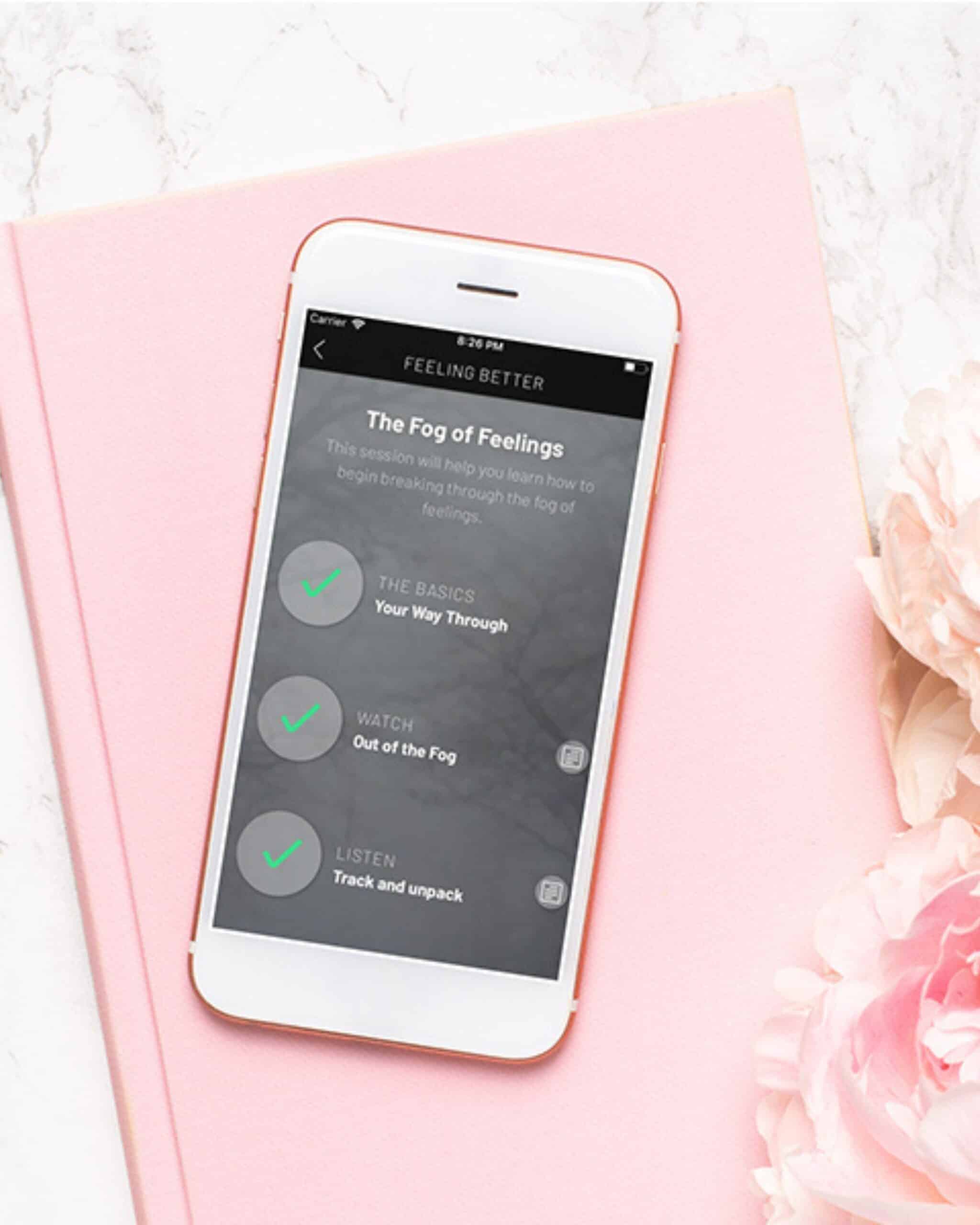
    And to be honest, Sanvello is more than just a meditation app. In the company’s own words, “Sanvello gives you clinically validated techniques to help you manage your moods and thoughts, so you can understand what works for you to feel better.” That’s done through features like daily mood-tracking, community discussion, guided journeys to address your specific challenges and, of course, meditations for every mood!

    There are mindfulness meditations to help you connect with your senses and check in with your body. You’ll also find guided tracks for stressful situations like flying and going to the doctor. The free version of Sanvello gives you access to some meditations, or you can subscribe for $8.99 a month for the whole library and lots of other awesome tools.

    Like I said before, finding an app you’re comfortable with is key to consistency with meditation (if you hate using it, you probably won’t!). Every app has different features and strengths, so don’t hesitate to try a few out before settling on a go-to. Based on my own experience and research, as well as recommendations I’ve gotten from other people, you may also want to check out Oak, Calm, 10% Happier, Insight Timer and The Mindfulness App (just to name a few!).

    Get Sanvello for iPhone here and Android here!

    Psst… Need a quick mood booster? My Pep Talk meditation is just the ticket—download it free today so you can listen whenever you need some stress-busting magic!

    4. ThinkUp: Reprogram Your Mind for Positive Thinking

    Affirmations are a big part of my personal self-care practice, which is why ThinkUp is one of my favorite mental health apps. Whether you’ve got sticky note affirmations posted everywhere in sight or you’ve never even heard the term, this tool is a fantastic way to inject your day with positivity and spark long-term mindset shifts that improve your overall well-being.

    Positive affirmations are self-empowering statements that you repeat to yourself (similar to a mantra) on a regular basis to reprogram or override limiting beliefs. So say you have a recurring negative thought pattern about being unqualified for your new job—a good affirmation might be, “I am capable and qualified. I trust myself to do this work.”

    I’ve found affirmations to be incredibly powerful in all areas of my life—personal and professional situations, relationships with myself and others, goals big and small, and everything in-between. And thanks to ThinkUp, I can have them at my fingertips whenever I want to practice positive thinking or need a quick jolt of reassurance.

    This easy-to-use app gives you access to a whole library of affirmations for channeling self-confidence and gratitude, dealing with anxiety and depression, and so much more. When you find an affirmation that resonates with you (or want to write your own), you can save it to your favorites and organize them into categories. For example, you might have one set of statements to help you relax and another for when you want to spark motivation.

    And here’s the best part: You can record yourself saying the affirmation and save it to play back as part of your practice. It might feel a little silly or uncomfortable at first, but according to ThinkUp, our brains are more receptive to our own voices. Listening back to these recordings, especially when you’re not feeling your best, can be a potent reminder of your inner confidence and wisdom.

    A limited version of ThinkUp is available for free, so start there and see what you think! Then if you want to expand your practice, the premium subscription is $7.99 a month.

    Download ThinkUp for iPhone here and Android here! If you’re looking for an alternative, check out Unique Daily Affirmations.

    5. iBreathe: Get Centered with the Power of Your Breath

    Have you ever caught yourself holding your breath? We don’t just do this when we’re on the edge of our seats watching a scary movie—it can be a sign of stress or anxiety, too. Many folks also experience trouble breathing or shortness of breath during panic attacks.

    Luckily, breathing is something we can improve with practice. We can even turn it into a tool that helps us access a sense of calm and safety when everything seems to be going sideways. This isn’t just some woo-woo nonsense, my friend… it’s science! Slow, deep breathing has been shown to activate your vagus nerve (part of the parasympathetic nervous system), which effectively triggers a relaxation response in your body (source).

    Breathwork has been part of my self-care routine for a long time, so I admit that I was skeptical when I first heard about iBreathe (do I really need an app for such a straightforward practice?!). But as soon as I used it, I saw the power in its simplicity. The app guides you through your choice of breathing exercise (including 4-7-8, Ujjayi and box methods) with simple visuals, vocal queues and haptic feedback. It’s easy to customize and you can even add reminders so you don’t forget to practice!

    I have the free version of iBreathe, but you can remove the ads if you want for $1.99. I always feel more grounded when I start my morning with this app. And when I’m dealing with anxiety, it helps me use my breath to come back to myself. Inhale, exhale… ahhhh!

    Check out iBreathe for iPhone here. It’s not currently available for Android, but Breathly is an alternative that appears to have similar functionality!

    I hope one (or a few!) of these mental health apps becomes a resource for you, dear one!

    And please know that whatever you’re going through, you are not broken. These apps (and any mental health support, for that matter) aren’t designed to make you whole—you’re already complete, just as you are. But if these tools can give you a boost or some support along the way, then that’s a win in my book!

    Your turn: Which mental health apps have made a difference in your life? If you haven’t found one yet, which app from my list will you try?

    Peace & hAPPiness,

  • 12 Cruelty-Free Makeup Brands to Add to Your Makeup Bag

    12 Cruelty-Free Makeup Brands to Add to Your Makeup Bag

    Hiya Gorgeous!

    Do the labels on your go-to makeup products make you do a double-take? What ARE all of those impossible-to-pronounce ingredients, anyway… and are they safe?

    If you’re a makeup lover like me, you might wonder if you’ll ever find healthier alternatives that work just as well as your go-to brands. Because when it comes to makeup, terms like eco-friendly and vegan haven’t always gone hand-in-hand with professional quality. But don’t put your brushes away just yet—beautiful cruelty-free makeup DOES exist, and that’s exactly what we’re talking about today!

    As a kid, watching my mom do her makeup was one of my favorite activities.

    I’d join her in the bathroom every morning—perched on the toilet, transfixed by each and every brushstroke. She was the glamorous teacher and I was the eager student.

    My fascination only grew when I got one of those 70s Barbie styling heads, remember those? She came with her very own makeup palette: bright red, baby blue and pea green (gorg!!). I practiced on her all the time—poor Barbie had her fair share of makeup mishaps. Luckily, she was a very patient customer. 😉

    It wasn’t long until I started begging my parents for my first lip gloss, which was a big N-O until I was 13. But you probably know by now how I feel about that no word… So I’d sneak my Barbie palette onto the school bus and do my bold makeup when she wasn’t looking. And let’s just say it was bold enough to garner more than my fair share of sideways stares!

    As I evolved over the years, so did my taste in makeup.

    My career as a professional actress and dancer motivated me to refine my skills, and I learned a thing or two from the incredibly talented makeup artists I worked with along the way! Today, I feel most like myself with a more natural, toned-down look. And when I’m working from home, running my business and leading my unicorn team from my laptop, I prefer to let my skin breathe and just be me—totally makeup free.

    But don’t get me wrong, I still love makeup! It can be a wonderful creative outlet and way to express ourselves. I’ve just learned that I don’t NEED it to feel beautiful or confident, and neither do you!

    I’m also a lot more conscious about the cosmetics I do and don’t use.

    Since going vegan and better educating myself about my carbon footprint, I pay much closer attention to what goes my makeup, as well as how it’s tested and its impact on the environment. To be honest, sometimes I’m still taken aback by the nasty junk hidden in our personal care products. Not to mention the brands that continue to use animal testing… what?!

    I have good news, though—cosmetics don’t have to come at the cost of your conscience! The cruelty-free makeup brands I’m about to share are changing the face of the beauty industry by making kinder products without sacrificing quality.

    12 Cruelty-Free Makeup Brands to Add to Your Makeup Bag

    1. Thrive Causemetics

    Every single product from this fabulous brand is vegan and cruelty-free. But that’s not all, Thrive Causemetics also gives back with every purchase. That’s right—every single product sold results in a donation to support domestic abuse survivors, women fighting cancer, women seeking a path out of homelessness or women veterans. You can learn more about Thrive’s mission here.

    In my makeup bag: The Brilliant Eye Brightener and Liquid Lash Extensions Mascara make my peepers shine!

    2. Milk Makeup

    What can I say? I’m a sucker for cruelty-free with a side of cute branding! But Milk Makeup’s products aren’t just beautiful on the outside—they’re also vegan and cruelty-free. They even have a list of ingredients they promise never to use up on their website!

    In my makeup bag: The Kush Fiber Brow Gel is super easy to apply and gives my brows a polished yet natural look. And the Flex Concealer provides comfy (not cakey!) coverage all day long.

    3. Mineral Fusion

    You might have spotted this EWG Verified brand at Whole Foods or your local health food store, which means you don’t have to make a separate trip to restock on your faves! All of Mineral Fusion’s products are cruelty-free and made in the US, and you can check out a list of vegan options on the FAQ page on their site.

    In my makeup bag: I love Mineral Fusion’s vegan nail polish in the shade Tiara— it always makes me feel like a queen! ?

    4. Beautycounter

    This cruelty-free makeup brand is raising awareness about something we don’t hear much about—issues with the mica industry. Mica is used in a lot of cosmetics, but it’s often not responsibly sourced (learn more in the informative video here). I love seeing brands use their platforms to educate consumers! Check out Beautycounter’s vegan makeup options here.

    In my makeup bag: This Velvet Eyeshadow Palette is full of gorgeous statement shades with fantastic color payoff. And the Sheer Lipstick in the shade Petal is one of my all-time faves!

    5. Cover FX

    I dig Cover FX for a lot of reasons, but the diverse shade range they offer for foundations is at the top of my list! Many makeup brands exclude folks, especially people of color, by having really limited shade ranges. I support brands like CoverFX because they’re committed to inclusion. Their products don’t come cheap, but it’s worth the investment if you can swing it!

    In my makeup bag: The Natural Finish Foundation and pretty much everything else for that matter—did I mention they’re 100 percent vegan and cruelty-free?

    6. EcoTools

    EcoTools proves that sometimes it IS a good idea to put all your vegan eggs in one basket! They’ve got one mission—making vegan makeup brushes that look, feel and work even better than the alternatives made with animal hair. They also use recycled and renewable materials like bamboo. Even their packaging is made of tree-free paper. EcoTools brushes are also affordable, what more could we ask for?!

    In my makeup bag: The Ultimate Shade Duo for my eyes and the 360 Ultimate Blend set for my face!

    7. Juice Beauty

    This brand lives up to its name by using botanical juice concentrates instead of water as the base for their makeup and skincare. That means their products don’t just look great—they’re also packed with antioxidants and other vitamins, as well as good-for-you phytonutrients and hydroxy acids. Turns out juice is more than just a delicious drink!

    In my makeup bag: The Phyto-Pigments Last Looks Cream Blush in the shade Flush is a gloriously smooth pop of color for my cheeks!

    And more cruelty-free brands for your makeup bag!

    I don’t have them all on hand at once (like I said, my makeup routine is pretty minimalist these days!), but here are some more notable cruelty-free brands that deserve shoutouts!

    8. e.l.f Cosmetics

    e.l.f Cosmetics makes some of the most affordable vegan and cruelty-free makeup out there. I like their 16-Hour Camo Concealer and the Charcoal Hydrogel Under Eye Masks for a soothing treat!

    9. W3ll People’s

    W3ll People’s Hypnotist Eye Pencil is a longtime love of mine (if you’ve been following me for a while, you might remember that it was also featured in my What’s in my Makeup Bag post back in 2017!). It creates the perfect cat eye for date night… meow!

    10. Axiology

    Axiology makes cruelty-free, vegan lipstick in knockout shades. I haven’t yet, but I can’t wait to try one of their Sheer Balms!

    11. Urban Decay

    Urban Decay is always expanding their vegan options—their Naked Skin Color Correcting Fluids are incredible!

    12. Anastasia Beverly Hills

    Anastasia Beverly Hills has some great vegan highlighters—I’m a big fan of the Sun Dipped Glow Kit.

    Conscious Cosmetics 101

    I hope you saw something (or a couple of somethings) that you’re excited to try! You might also be wondering how to find and evaluate your own cruelty-free faves. And lucky for you, that’s what this section is all about! These must-have tips will help you navigate the makeup aisle with ease.

    Cruelty-free vs. vegan

    Many folks assume that if something is labeled as vegan, it must also be cruelty-free (and vice versa). But these terms each have specific implications and are often used independently. Cruelty-free cosmetics have not been tested on animals, whereas vegan cosmetics don’t contain any animal-derived ingredients. I know it can be confusing, but just being aware of the difference will empower you to make buying decisions that align with your values!

    Animal testing

    We covered what cruelty-free means, but I want to be crystal clear: animal testing is a hard no in my book, end of story. Many cruelty-free makeup brands are doing just fine testing their products on humans, so as far as I’m concerned, there’s no excuse to keep hurting innocent animals. Some countries still require animal testing before products can be sold, but I prefer to stick with brands that prioritize kindness over profit.

    Greenwashing

    It’s cool to be eco-friendly these days, right? Many brands really do care about the environment, but some just see green… as in money. Trends like these open up opportunities for brands to capitalize without actually changing their practices.

    Watch out for products that use generic terms like “natural” or packaging that gives the appearance of sustainability without any legit certifications or proof to back up their claims. Same goes for brands that claim to be organic—the FDA doesn’t regulate that term for personal care products like it does for food, so you might need to do a little digging. Knowledge is power, toots!

    Certifications

    We know that labels can be misleading, so what’s the best way to find products you can really trust? Certifications, baby! There are many options out there, such as EWG Verified, NSF Certified, Certified Vegan and Leaping Bunny Certified. You’ll come across a variety of logos and stamps of approval in your cruelty-free makeup search, so I encourage you to do your research and seek out the certifications that resonate with you most.

    Please keep in mind that certifications can be cost-prohibitive, especially for new or smaller brands. If you don’t see the certification you’re looking for, consider asking the brand for more info about their practices. Any company worth its salt will be happy to fill you in. And you never know, maybe your feedback will motivate them to pursue a certification!

    Supply chains

    This is an issue that trips up many cruelty-free makeup connoisseurs, so it might come up for you as you learn more. Vetting brands can get really complicated when you take into account where they get their raw materials, because suppliers aren’t always required to adhere to the same standards as the brand itself.

    But trying to trace every last ingredient in your cosmetics back to the source can be incredibly frustrating, so I don’t recommend it! The best thing you can do is stick with brands that offer plenty of info about their products. Trust me, companies that go the extra mile to ensure consistent standards across their supply chain want you to know about it. And you don’t have to rule out the rest—tell brands you love that you want more transparency. Your voice is powerful!

    Trusted resources

    You might be wondering how to keep track of all these details, not to mention how much research you’ll have to do next time you need new mascara! But don’t fret, dear one. This isn’t about knowing every DO and DON’T off the top of your head. Instead, the key is finding a trusted resource to help with some of the heavy lifting.

    For me, that’s the Environmental Working Group’s (EWG) Skin Deep Database. It contains hazard ratings for nearly 70,000 products and 9,000 ingredients on the market… Can you say wow? All you have to do is enter a new brand you’re considering or an ingredient you’ve never heard of in the search bar and ta da—the info you need to make conscious choices, at your fingertips!

    Enjoy your cosmetics without compromise!

    I shared a lot of info today, so give yourself time to process and learn more about the causes you care about most. And as you explore the world of cruelty-free makeup, please remember that your worth is not defined by your appearance. You are kind, smart, sensitive, loving and everything in between—that’s what matters. Have fun with your makeup but more importantly, have fun with your life!

    Your turn: What’s your favorite cruelty-free makeup or personal care product? Or if you don’t have one yet, which brand from my list will you try?

    Peace & conscious cosmetics,

  • How to Stock Your Fridge: Tips for Shopping, Stocking and Storing Plant-Based Foods!

    How to Stock Your Fridge: Tips for Shopping, Stocking and Storing Plant-Based Foods!

    Hiya Gorgeous!

    Confession time: When I first went vegan, I had no idea what plant-based foods to keep in my fridge. When I took out all the meat and dairy, it turned into a wasteland for leftover macrobiotic experiments and expired condiments!

    Of all the kitchen storage spaces, your fridge has the biggest influence on what and how you eat. When you keep an abundance of fresh fruits, veggies, plant-based proteins, sauces and so on at the ready, you’re saving your future self from mealtime stress (thank you, past self!). You’re more likely to reach for nutritious plant-based meals than last-minute takeout or dishes that leave you feeling like crap.

    Simply put: A thoughtfully stocked fridge makes it easier, tastier and more affordable to maintain a healthy plant-based diet.

    A few months ago, I posted a blog about how to stock your freezer to make plant-based cooking even easier and more delicious (it was one of my most popular posts of last year, so be sure to check it out if you haven’t already!). Before that, I wrote about how to save time and money by filling your pantry with vegan staples, and even shared a free downloadable checklist to simplify your pantry-packing efforts.

    So naturally, I couldn’t wait to bring you this post on stocking your refrigerator to round out the series… and your kitchen!

    We often end up wasting food AND dough (the money kind, not the pizza kind!) because we’re not strategically stocking our fridges. I don’t know about you, but realizing that the mushrooms I bought last week went bad as they languished at the bottom of my produce drawer is one of my least favorite things.

    The good news is that maximizing your food’s freshness isn’t that hard, it’s just a matter of knowing what to stock in your refrigerator and how best to store everything. And once you get that down, you can count on tasty plant-based foods at every meal. Yum!

    Today is all about boosting your fridge-filling expertise. We’ll talk about the benefits of a fully stocked fridge and how it’ll help you simplify mealtime. Then I’ll share 5 essential tips and guidelines for turning your fridge into a plant-based wonderland—these have been game-changers for me and I think they’re going to change the way you feel about your kitchen!

    Then: Part two!

    Your fridge is special. I’d go so far as to say it’s the heart of the kitchen. And like I mentioned earlier, stocking it isn’t as easy to master as your freezer or pantry. That doesn’t mean it’s complicated, but it deserves a more in-depth discussion. That’s why you’re getting not one but two posts on the topic!

    Check out Part 2 here. I’ve whipped up a comprehensive list of my favorite fridge staples. Find out what I always make sure to have on hand, what to look for at the grocery store and how to store everything for maximum shelf life. I also share simple plant-based recipes that incorporate each item from the list so you have plenty of ideas when it comes time to cook.

    Now without further ado, let’s start our fridge-stocking adventure!

    Why is it so important to have a well-stocked fridge?

    As simple as it sounds, the best thing you can do to maintain healthy eating that also satisfies your taste buds is keep a variety of fresh, plant-based foods readily available. That way, you can quickly put together meals that taste good AND make you feel good.

    No more last-minute scrambling or frantic trips to the store! Plus, if frequent takeout or eating out strains your budget (or leaves you wishing for more nutritious homemade options), you’ll be more likely to avoid temptation if your fridge is packed with stuff you genuinely enjoy.

    When I transformed my diet, it took me a while to figure out how to turn plant-based foods into tasty meals. Don’t worry if you’re in that place right now—the first step is getting clear on what to keep in your fridge, what to look for at the grocery and how to store it.

    From there, you’ll learn simple ways to create balanced meals by mixing and matching vegan protein sources, complex carbs and healthy fats. We’ll get to that in part 2 of this blog when we cover specific refrigerator staples and how to use them in recipes. If you are interested in learning more about the basics of plant-based nutrition, I suggest checking out my Crazy Sexy Reset in the meantime!

    It really comes down to this: The more options you give yourself at mealtime, the easier it’ll be to eat the way YOU want to eat.

    How to Stock Your Fridge: Tips for Shopping, Stocking and Storing Plant-Based Foods!

    These guidelines have been absolutely essential in my kitchen over the years. They’ll help you make the most out of your fabulous fridge and everything in it!

    1. Choose seasonal and local food whenever possible.

    Food, especially produce, is tastiest and freshest when it’s in season. If you’ve ever had a tomato in the Northeastern U.S. during the winter, then you know what I’m talking about! Watery, tasteless produce simply isn’t appealing, so why let it take up valuable real estate in your fridge? Plus, sticking with what’s available nearby is a chance to try new plant-based foods and get creative in the kitchen!

    Seeking options made or grown locally is also a reminder to slow down and think about where our food comes from. How far did our groceries have to travel and what impact does that have on the environment? How can we better support local businesses (like farmers and independent stores) with our purchases?

    This doesn’t mean you have to avoid all off-season food or stuff that has to travel. Do what you can! For example, avocados don’t grow in upstate NY, but they’re a staple in my fridge (I keep them at room temp until they’re ripe, then move them to the fridge to prolong their life!). So I get my avos, but I do my best to balance that out with my other choices.

    Also, I love stocking up on in-season produce and freezing it for later. For example, I get all the blueberries I can during the summer so I’m fully stocked until the warmer months return! On Sundays, I move enough berries to the fridge to defrost and enjoy over the course of the upcoming week.

    2. Opt for organic and non-GMO whenever you can.

    Choosing organic, non-GMO plant-based foods is good for your fridge and the environment. Conventional farming practices, like the use of toxic pesticides, negatively impact our world in numerous ways (some of which we probably haven’t even discovered yet). This is a complex issue that we can’t cover in detail today, but this is a good resource if you want to learn more—getting educated on this stuff can be very empowering!

    So why don’t we just eat all organic, all the time? Well, it can be a major burden on your budget, especially depending on the options available near your home. Please don’t put pressure on yourself to be perfect! Do what you can while sticking to prices that are comfortable for you. Because think about it this way: If you’re stressed about money, that’s bad for your health too.

    My favorite resources for deciding what to buy organic and what’s ok to get conventionally grown are the Environmental Working Group’s (EWG) Dirty Dozen and Clean Fifteen lists. Every year, the Dirty Dozen identifies the non-organic fruits and vegetables that are highest in pesticide residues. Prioritize organic for those foods. The conventionally grown fruits and veggies that make it to the Clean Fifteen tend to carry fewer pesticide residues, so it’s safer to get non-organic options from that list.

    3. Be mindful of packaging.

    Some grocery stores have made big improvements in packaging over the last few years. I’ve noticed biodegradable bags in the produce section and reusable totes at checkout. But we still have a responsibility to minimize the packaging we personally consume!

    When possible, avoid filling up your fridge with packaged/pre-chopped produce. I know those options are convenient in a pinch, so I’m not suggesting you ditch them altogether—just keep the extraneous packaging in mind. Bring reusable shopping and produce bags with you everywhere (I keep them in my car so I don’t forget). If you don’t have any, check out my brand recommendations in this article.

    Also, consider this: A lot of produce comes with its own natural packaging! Oranges and bananas have peels, apples and avocados have skin… you get the picture. 🙂

    4. Storage is everything.

    How you store perishable plant-based foods can mean the difference between having fresh ingredients at the ready and finding slimy/moldy/smelly stuff lurking in the back of the fridge when you’re already hungry. Storage really is one of the most important aspects of maintaining a well-stocked fridge.

    I’ll share more detailed storage tips in part two of our fridge-stocking series (coming your way on February 11!). But to hold you over until then, here a few overarching words of advice:

    • Get good-quality storage containers—I prefer glass because it doesn’t absorb smells or colors and allows you to quickly see what’s inside. Glass is also usually easy to clean and safe for the microwave, dishwasher, freezer, etc.
    • Remember that each food has unique storage needs. It’s important to tailor the storage method to the food. For example, I suggest washing leafy greens before putting them away, but most other produce doesn’t need to be washed prior to going in the fridge. I’ll share in-depth storage tips for each item on my list in part two of this series!
    • Try products designed to make food last. I’m not suggesting you go crazy filling up your kitchen with products that promise to extend the life of your food… then you won’t have enough room for the actual food! But certain products are worth trying, like Debbie Meyer GreenBags (or these cotton bags for a plastic-free option). They’re a great replacement for single-use grocery store produce bags AND they make produce last way longer than any other method I’ve tried. This is just an example of what’s available, so go for products that address your needs.

    5. Plan ahead.

    Planning for the week ahead (even loosely) will make mealtime easier AND streamline your grocery list. You don’t have to map out every meal to reap the benefits of planning. I usually start by taking an inventory to see what basic staples I need to restock. I’m talking about items like nondairy milk, Ezekial bread, spinach for smoothies and kale for salads—the stuff I use every week for my more impromptu meals (usually breakfast and lunch).

    Then from there, I choose a few plant-based meals to batch cook, or make when I have more time to spend in the kitchen. I check to see which ingredients I have and add the rest to my list. And voilà… we’re ready for the store!

    Before we wrap up, I want to acknowledge a critical reality: Many folks all over the world face food insecurity every single day.

    Some families simply don’t have the resources to buy enough food for everyone. Others live in food deserts, where access to any fresh food is extremely limited. It’s a privilege to be able to think about stuff like planning ahead, organic vs. conventional, getting nice storage containers and so on. This is a reminder for all of us to acknowledge that privilege, educate ourselves and build awareness, and do what we can to support and help our neighbors.

    I can’t wait to share my favorite refrigerator staples with you!

    In just a couple of weeks, you’ll find out what I ALWAYS keep in my fridge. You’ll also get detailed tips about what to look for when you’re shopping, the best way to store each item and some scrumptious plant-based recipes to put all of that food to use! Until then, you can catch up on my posts about how to stock your pantry here and how to stock your freezer here.

    Your turn: Any guesses about which plant-based foods will make it to my favorite refrigerator staples list? Share your theories in the comments below!

    Peace & fabulous fridges,

  • 14 Vegan Cheese Brands that Will Make You Want to Ditch Dairy

    14 Vegan Cheese Brands that Will Make You Want to Ditch Dairy

    Hiya Gorgeous!

    I love cheese! Grilled cheese, cheese pizza, mac n’ cheese, cheese boards… all of it.

    I know what you might be thinking: “But Kris, I thought you were vegan. Do vegans eat cheese now?!” Well toots, I’m not talking about just any old cheese. I’m talking about vegan cheese, and that’s what today’s article is all about!

    The plant-based food market has taken off over the last couple of years. Vegan alternatives to animal products are popping up at grocery stores and restaurants all over the place. It’s been so exciting to watch this progress. And when it comes to vegan cheese, let me tell you that we’ve come a looooooong way from some of the stuff I tried to stomach back when I first went vegan.

    Most vegans would probably agree that cheese is one of the hardest foods to cut when you’re getting started. I regularly hear from folks who say they’d like to try a plant-based diet, but just can’t imagine giving up cheese. People who are lactose intolerant or allergic to dairy face the same challenge. Luckily, vegan, dairy-free cheeses are easier to find, more varied and much tastier than ever before.

    But with more options come more decisions, so navigating the vegan cheese aisle (here’s hoping that one day there WILL be a whole aisle dedicated to it!) might feel like a guessing game. You don’t want to empty your wallet or compromise on taste. I know that nutrition is top of mind for you too, so you might have questions like, “What is vegan cheese made of?” and “Which vegan cheese brands offer the healthiest options?”

    Well, whether you need slices for your sandwiches, schmear for your bagels, goodies for a fancy cheese plate or any other variety of vegan cheese, I’ve got your back. My team and I have tried and tested lots of brands over the years, and we want to share that wealth of knowledge with you! So today we’re covering…

    • My favorite vegan cheese brands, including info on how they stack up from a health perspective
    • Advice for cooking with vegan cheese and the best options for different purposes (like which shreds melt the best on pizza, how to make the perfect vegan grilled cheese and so on)
    • And resources for making your own vegan cheese, just in case you want to get creative in the kitchen!

    But before we get into all of that goodness, let’s tackle the question that I suspect is on many of your minds…


    Is vegan cheese healthy?

    The short answer is YES! Plant-based cheese can absolutely be a great addition to a healthy diet. That’s especially true when you compare it to its dairy counterpart. Cheese comes from dairy milk and dairy milk comes from cows (or goats). That milk is specifically designed to nourish baby cows and help them grow, just like human mothers’ milk has everything human babies need. For that reason, the proteins in dairy can be hard for people to digest. Many folks don’t even realize that dairy might be causing their persistent, unexplained digestive discomfort.

    Dairy is also often loaded with growth hormones and antibiotics that the factory farming industry uses to churn out as much as they can, as cheaply and quickly as possible. This isn’t true for all dairy products, but it’s the case for many of the options available on grocery store shelves.

    I’m not here to convince you to go vegan. My mission is really just to encourage you to eat more plants. So if you replace even some of the dairy cheese you’d usually eat with plant-based alternatives, then I’ll be doing my happy dance!

    What is vegan cheese made of?

    Critics of vegan alternatives often argue that they’re fake and highly processed. And yes, those products DO exist. But there are plenty of brands out there using wonderful ingredients like nuts, seeds, vegetables, probiotics and more to create vegan cheeses that are just as good (if not better!) than the dairy alternatives. I’ve also noticed more products popping up that are free of common allergens like nuts and soy, so no one has to miss out… phew!

    Why eat vegan cheese?

    I’ve found that including dairy-free cheese helps make a vegan diet more sustainable. That’s a huge win in my book because I believe that a plant-based diet is one of the healthiest, most compassionate ways to eat. The more satisfying and scrumptious we can make it, the better.

    And finally, I’d be remiss not to mention how much healthier vegan cheese is for our planet and furry friends. Many authorities agree that choosing a plant-based diet is the most effective and powerful way an individual can reduce their environmental footprint. And animal agriculture is often inhumane, unsafe and unsanitary—especially when it takes place on factory farms. So every time you choose vegan cheese over dairy, you’re helping to reduce animal suffering. You don’t have to go full vegan to make a difference, just do what you can while keeping this info in mind!

    Sometimes vs. Often: Our Crazy Sexy Cheese Categories

    I worked with my fabulous nutrition team to put each of the brands I’m sharing into one of two categories: Sometimes or Often. These are our recommendations for how frequently to include them in your diet—emphasis on recommendations! You know yourself best, so ultimately it’s up to you (and your integrative doc) to decide what you eat and how often. You might see certain ingredients that you prefer to avoid and that’s ok! The good news is, there are plenty of options available, so there’s a vegan cheese brand here for everyone.

    The vegan cheeses in the Often category include only simple, natural and whole-food ingredients. As far as our Crazy Sexy team is concerned, these options can be regular staples in a healthy plant-based diet. Yum!

    The Sometimes category is for plant-based cheeses we also enjoy, but not necessarily on an everyday basis. Their nutritional profile might not be quite as sparkling as the Often options, or they might include certain processed ingredients that some people prefer to limit.

    But you can rest assured that this list is free of cheeses that I’d never eat. The options in the Sometimes category are fine in moderation. I wouldn’t share something if it contained ingredients I avoid altogether… and I did exclude some brands for that very reason.

    Now that you know how the categories work, let’s sink our teeth into some creamy plant-based treats!

    14 Vegan Cheese Brands that Will Make You Want to Ditch Dairy

    Kite Hill: Best Vegan Cream Cheese (Often)

    You might have seen Kite Hill’s line of almond-based dairy alternatives at your local grocery store. This wonderful brand has continued to expand over the last couple of years, so their yummy yogurts, dips and cheeses have gotten easier to find. Lucky us!

    I love Kite Hill because all of their products are gluten- and soy-free, and non-GMO. They also don’t use any artificial flavors, colors, preservatives and sweeteners. You’ll notice xanthan and guar gum in their ingredients lists—both are plant-based and considered a better option for thickening and stabilizing than many other additives.

    Why I love it: Kite Hill makes the best vegan cream cheese I’ve ever had. It’s perfectly light and creamy at the same time. My favorite flavor is the chive, but they also offer plain, everything and jalapeño!

    Violife: Best for Vegan Grilled Cheese (Sometimes)

    This is another vegan cheese brand that has gained popularity in the U.S. over the last couple years. And rightfully so—their slices and shreds melt beautifully, making them perfect for any of your favorite ooey gooey dishes. I also love that Violife is available in other countries around the world… yay for accessibility!

    Violife’s products have been certified by the non-GMO project and don’t contain any gluten or soy. They’re also free from preservatives. We categorized them under Sometimes because Violife does use non-GMO modified potato and corn starches, which some people may prefer to limit or avoid. The Just Like Feta block doesn’t contain any modified food starches though, so that one makes it to the Often category!

    Why I love it: Violife’s Mature Cheddar and Smoked Provolone Slices make the meltiest, most delicious vegan grilled cheese ever! But they do melt much more slowly than dairy cheeses, so the key is to cook ‘em low and slow. Keep the heat at medium-low or even low, cover your pan and be patient. Just make sure to watch your bread closely and flip it if it’s getting too crispy.

    Miyoko’s: Best Artisan Vegan Cheese for Cheese Boards (Often)

    Miyoko Schinner is a legend in the vegan world. She was considered an expert on plant-based cheese long before her brand showed up in grocery stores (you may have heard of her cookbook, Artisan Vegan Cheese). So it goes without saying that I was pretty excited when I heard that she was putting out her own cashew cheeses… and they did not disappoint!

    Miyoko’s products are all organic and non-GMO. They’re made with great ingredients like organic rice miso, fermented rosemary, plum and oregano (natural flavor preservation!), and live cultures. These vegan cheeses were made to shine on an appetizer platter. I’d go with the Classic Double Cream Chive and Smoked Farmhouse paired with whole grain crackers, fig jam and olives. Ok, now I’m drooling!

    One thing to keep in mind: In my experience, Miyoko’s cheeses are all very tangy. That’s not necessarily a bad thing, but something to be aware of if you have an aversion to tangy foods.

    Why I love it: Miyoko’s has been teasing nut-free products for a while and it looks like they’re almost here! I’m looking forward to trying the new pepper jack and cheddar options.

    Daiya: Best Vegan Cheese for Pizza (Sometimes)

    If you’ve had any exposure to the vegan food world, you’ve probably heard of Daiya! This brand was here for us long before the dairy-free cheese boom, so of course I had to shout them out. You can find Daiya in most grocery stores, which makes them a great go-to for last-minute meals. We categorized Daiya as Sometimes because they do use safflower oil, which isn’t the healthiest oil around. Their cheeses also contain vegetable glycerin made from other processed oils.

    There’s also a Daiya divide in the plant-based community. Some people love it, some people… really don’t. The main complaint I’ve heard is usually about the taste and texture, so you’ll have to try it for yourself. I think it’s a good option, but if I had the choice between Daiya and something like Violife, I’d definitely go for the latter.

    Why I love it: Daiya comes out ahead of other brands in one important department—the Mozzarella Style Shreds are the best vegan cheese for pizza. In my experience, they melt faster and more evenly than other shreds. Let me know what you think if you try it out on pizza night!

    Treeline: Best Spreadable Vegan Cheese (Often)

    Treeline makes artisan cheeses good enough to share cheeseboard space with Miyoko’s, and that’s no small feat! All of their products are certified non-GMO and don’t contain any gums, thickeners, artificial preservatives or oils. They’re also 100 percent gluten- and soy-free.

    Treeline has two types of plant-based cheese: The soft, French-style nut cheeses make a perfect snack when spread on crackers or a crusty baguette. Then there are the aged nut cheeses, which are more firm and pair well with fruit for an elevated appetizer. I love the Cracked Pepper flavor!

    Why I love it: Treeline’s soft cheeses have a hidden talent—they can transform into mouthwatering sauces! Take a peek at this recipe for an example.

    Whole Foods 365: Best Budget-Friendly Vegan Cheese (Sometimes)

    Whole Foods knows the plant-based market is taking off, so why not get in on the action? I wasn’t sure what to expect when they released their slices and shreds, but I must say that I was pleasantly surprised! These vegan cheeses melt well, and the slices are also good on cold sandwiches.

    Whole Foods says that all plant-derived ingredients in their 365 products are sourced to avoid GMOs. That sounds to me like they do their best to avoid GMOs but aren’t guaranteeing they never use them—but I’m just reading between the lines! Their vegan cheeses do contain modified potato and tapioca starches.

    Why I love it: The 365 Plant-Based Smoked Gouda is right on the money flavor-wise. And speaking of money, this house-brand alternative is comparable to Violife but notably cheaper.

    Even more vegan cheeses to tempt your taste buds…

    I explored six of my go-to brands in-depth to help you learn what to look for at the store, as well as the many ways you can use vegan cheese. But there are SO many other fabulous options out there, I couldn’t possibly highlight them all in this article! That said, here are a few other brands that are worth checking out:

    Sometimes:

    • Field Roast’s Chao slices are delectable on sandwiches. I love the Tomato Cayenne flavor! These dairy-free cheeses are made with fermented tofu, so skip them if you’re sensitive to soy.
    • Follow Your Heart is another staple in the vegan world. They have a great variety of cheese slices—the Pepper Jack and Garden Herb are my personal faves. Follow Your Heart does use modified food starches as well as less-than-ideal oils like canola and soybean.
    • When I think of So Delicious, I usually think of their plant-based yogurts. But this brand also offers plant-based cheese shreds that some vegans swear by. They do contain palm oil and we weren’t able to find out if it’s sustainably sourced.

    Often:

    • The Honest Stand makes delightful dips with all natural, organic veggies and nuts. What could be better? We love the Cheddar Style Dip over here at Team Crazy Sexy.
    • Trader Joe’s Cashew Fiesta Dip has a unique strength: It’s good hot OR cold. I like to warm it up in the microwave (just 30 seconds at a time so it doesn’t burn), then stir in some salsa and serve with veggies or organic tortilla chips.
    • Brie is a must for most cheese lovers, and wildbrine has you covered with their cultured cashew alternative. This vegan brie is organic, gluten-free and comes in three varieties (classic, beet and shiitake). Bonus: wildbrine cheeses are made in-house with their own probiotic cultures.
    • Reine Royal’s in-store availability is limited, but they have an online store filled with lots of enticing options. This brand uses stellar ingredients too, and everything is made without fillers, starches, gums, preservatives or artificial ingredients. I can’t wait to try the Fauxgonzola!
    • Spero is special because they make cheeseboard-worthy treats with sunflower seeds. Many of the artisan-style cheeses on the market use almonds or cashews, but now folks with nut allergies can enjoy fancy vegan cheese too. The Goat gets five stars from me!

    Wondering how to make vegan cheese?

    I’m grateful for all of these vegan cheese brands because they’re as convenient as they are delish. But depending on where you live, your access to these products might be limited. Plus, there’s nothing quite like homemade food. You get a sense of pride from knowing you made it yourself, and you have total control over what goes into the recipe. Plus, you’re saving on packaging, which Mother Earth certainly appreciates!

    Making cultured vegan cheese does take time, but it can be a really rewarding experience. And if that’s not for you, there are plenty of quicker recipes to choose from. If you want to learn how to make vegan cheese, check out these cookbooks:

    Vegan cheese for everyone!

    It would be an understatement to say that I’m excited about the progress we’re seeing in the vegan cheese world… I’m over the moon! Making plant-based foods more accessible is the best way to introduce folks to how delicious and diverse a vegan diet can be. And if trying a surprisingly yummy dairy-free cheese convinces even a small percentage of people to choose plant-based meals sometimes, the environmental savings could be huge. Not to mention how many innocent animal lives could be spared! Who knew that kindness could taste so good?

    Your turn: What other vegan alternatives should I write about? Ice cream, milk, burgers?! Let me know what you most want to learn about in the comments below!

    Peace & cheesy choices,