
Blog

  • Find the Best Natural Sunscreen for You

    Find the Best Natural Sunscreen for You

    Hi Sweet Friends,

    I love summer. Bare feet. Swimming holes. Veggie gardening. And the soul-warming sun. In my earlier days, I had a dangerous love affair with those radiant rays. Sunscreen? Yeah, right. Nothing was going to stand between me, my baby oil, a Body Glove surfer bikini and a golden tan (or rather, a lobster-red sunburn!).

    Today, I’m much wiser, but not just about the importance of wearing sunscreen. I’m also aware that we all need to be savvy consumers when choosing a safe, natural sunscreen.

    When it comes to sun exposure and protection, there are a lot of questions to answer. How much basking in the sun is too much? Are there benefits to not wearing sunscreen sometimes? What kind of protection does sunscreen provide? Which ingredients should I avoid? It can be downright mind-boggling to choose a safe, natural sunscreen that feels good AND gets the job done.

    That’s why I rely on the Environmental Working Group’s (EWG) Guide to Sunscreens. Every year they do the hard work of analyzing hundreds of sunscreens to uncover health and environmental concerns—and help you choose the best product for you.

    Today, I’m digging into EWG’s latest findings, sharing some of their top-rated sunscreen choices and giving you my five essential tips for having a safe relationship with the sun. Hold onto your sun hats, folks, let’s dive in!

    Some sun IS good for you!

    Vitamin D is an essential hormone for healthy bones, immune function and blood cell formation. Luckily, your body produces vitamin D every time you step into the sunlight. Easy, right? Just keep in mind that you don’t need much unprotected sun exposure to meet your needs. According to the World Health Organization (WHO), 5-15 minutes a few times a week is sufficient to maintain healthy vitamin D levels.

    Getting some sunshine and fresh air is also great for your mood. There’s nothing quite like soaking up some good old-fashioned rays to turn that frown upside down. But that doesn’t mean it’s safe to sit out and bake sans sunscreen for hours on end. That’s where a great natural sunscreen comes in (stay tuned—I’ll help you find one later on in this article!).

    The risks of sun exposure

    The truth is, the sun can have some serious damaging effects (no matter how beautiful it is!). Ultraviolet A (UVA) and Ultraviolet B (UVB) are the two types of sun rays that travel through the earth’s atmosphere and shine down on your glorious skin. They’re responsible for the golden tan so many of us try to attain each year. But if you think that this sun-kissed tone is healthy, think again. When your skin darkens, it’s actually a warning sign that your body is trying to prevent further DNA damage. (Pssst… Don’t worry if you can’t bare to ditch that glow—check out my guide to safe self-tanner here.)

    This is just one example of the ways UVA and UVB impact your health. Now let’s explore the difference between the two so that we know why it’s important to protect our skin from both.

    UVA rays penetrate the top layer of your skin. They’re often to blame for wrinkles, leathery skin, sagging and sun spots. They can bust through clouds on a gloomy day, seep through your car windows and even sneak through some clothing. Although UVA rays are less likely to give you a sunburn, they’re still linked to increasing your risk of skin cancer because they can damage your basal and squamous skin cells.

    UVB rays impact the top layer of your skin. They’re one of the major causes of skin cancer and your worst enemy when it comes to sunburns. UVB rays are strongest between 10 a.m. and 4 p.m., especially during the summer months.

    Now that we’ve learned about UVA and UVB rays, let’s chat about how find to the perfect natural sunscreen for you!

    Decoding the bottle

    What do all of those letters and numbers mean, anyway? First things first: Let’s get to the bottom of those often confusing sunscreen labels.

    Sun Protection Factor (SPF)

    SPF (short for “sun protection factor”) measures how long the sunscreen protects your skin from sunburn caused by UVB rays. So, for example, if your skin would typically burn after 10 minutes in the sun, a sunscreen with SPF 15 should allow you to stay in the sun 15 times longer (150 minutes) before your skin would start to burn.

    Keep in mind that SPF doesn’t tell the whole story when it comes to the effectiveness of your sunscreen. Higher SPF is not always better—in fact, it can be misleading (source). Also, sweating, swimming and other physical activities can reduce the potency of the SPF, which means you may need to apply it more often. This resource from the Cleveland Clinic has some great application tips to help you get maximum protection!

    UVA and UVB Protection

    Your sunscreen may be protecting you from sunburn by blocking UVB rays (if you’re re-applying it often enough and using a sufficient amount), but you’re still vulnerable to skin damage if you’re not protected from UVA rays as well. I suggest looking for a sunscreen that has protection from both so you’re totally covered! And that shouldn’t be too hard to find—EWG reported that 99.3% of the products that appear in their 2018 Sunscreen have UVA filters, which is an 18% increase since 2007 (source). Wahoo!

    Mineral vs. Synthetic

    EWG also noted the rise of mineral-only sunscreens in this year’s Sunscreen Guide. They rate these products more favorably than their non-mineral alternatives because they’re less likely to contain oxybenzone (a harmful chemical we’ll chat more about later). They’re also stable in sunlight and have a good balance of UVA and UVB protection.

    Mineral sunscreens aren’t always free and clear, though—we still have to be aware of the potential challenges they present. So, let’s chat about how to choose a natural sunscreen that feels great and keeps your incredible epidermis out of harm’s way!

    How to select a safer natural sunscreen.

    When it comes to choosing any personal care product, it’s important to be your own health advocate. Knowledge is power, so you’ve taken a great first step just by reading this post (don’t forget to bookmark it so you can refer back later!).

    Here’s what you’ve gotta keep in mind: There are chemicals in many personal care products, sunscreen included, that have been linked with cancer, birth defects and a variety of other health issues. And it doesn’t stop there—some of the ingredients are harmful not only to us, but to the environment, too.

    I know you want to protect yourself, your family and the environment. So, here are a few red flags to look out for:

    Vitamin A (retinyl palmitate or “retinol”)

    This ingredient has been linked to the faster growth of skin tumors when applied and exposed to sunlight. And guess where it’s found? That’s right, in sunscreen! It may also lead to vitamin A toxicity. Yes, even though it’s good for you, there’s still such a thing as too much. Luckily, EWG does report that the number of sunscreens containing this problematic ingredient has dropped by more than half since 2010. That said, I still suggest keeping an eye out for it until companies stop using it or can prove it’s safe. You can read more about Vitamin A in sunscreen here.

    Oxybenzone

    This toxic chemical, which EWG found in almost 65 percent of non-mineral products it evaluated this year, is perhaps the most troubling sunscreen ingredient. It comes with a whole host of environmental and health concerns, including hormone disruption (source) and coral reef damage. The good news is, there are plenty of companies that don’t use oxybenzone!

    Powder or spray sunscreens

    As convenient as these products are, they pose a couple of challenges. First, the coverage you get is not always as consistent—it’s much easier to miss a spot. Second, you’re more likely to inhale them than you are a lotion. Needless to say, the chemicals we’ve been chatting about are not edible. Until companies can do more to assure as that sprays and powders are safe, keep this information in mind when you’re buying and applying.

    Nanoparticles

    Remember what I said before about mineral sunscreens? They’re a great choice, but they’re not perfect. Here’s the deal: Old-school mineral sunscreens were often known for their white, chalky look (SO not cute!). To remedy this, many brands have started using nanoparticles. The problem is, these babies are not well-regulated and vary greatly in their size, shape and so on—all factors that may impact the protection power of the sunscreen. Their effect on the environment is also not well understood. EWG goes into more detail about nanoparticles here, but the short story is that more research needs to be done to make sure they’re totally safe.

    Your perfect natural sunscreen

    222 products met EWG’s criteria for their Best Beach and Sport Sunscreens category this year. Here are some that stand out to me (all brands listed are cruelty-free, but make sure to do your research if you’re looking for a 100% vegan product!):

    • Alba Botanica (multiple recommended, including non-mineral options*)
    • Beautycounter (multiple options)
    • Goddess Garden (multiple options)
    • Badger (multiple options)
    • COOLA (multiple recommended, including non-mineral options*)
    • JASON Mineral Sunscreen, SPF 30 (plus four non-mineral options*)
    • Juice Beauty Sport Sunscreen, SPF 30

    *Approximately two-thirds of the non-mineral sunscreens EWG analyzed contain oxybenzone. These recommendations are among the 23 oxybenzone-free non-mineral sunscreens that EWG is able to recommend.

    And here are some of the products featured in the Best Moisturizers with SPF category:

    • Andalou Naturals Daily Defense Facial Lotion, SPF 18
    • Drunk Elephant Umbra (both Sheer and Tinte) Physical Daily Defense, SPF 30
    • MyChelle (multiple options)
    • W3LL PEOPLE (multiple options)

    How to have a healthy relationship with the sun

    Applying natural sunscreen regularly when you’re out in the sun is important, but it’s not the answer to complete sun protection. You also need healthy sun habits!

    Here are five ways to stay safe while you’re enjoying those radical rays.

    1. Get your D. Spend 5-15 minutes in the sun (sans sunscreen) a few times per week to meet your vitamin D needs.

    2. Buy safer sunscreen. Check labels for toxic chemicals and use EWG’s guide to choose the best natural sunscreen for you. Look for broad spectrum (UVA/UVB) coverage and a SPF of 15-50.

    3. Use sunscreen responsibly. Apply the recommended amount (usually 1.5 oz) 30 minutes before sun exposure. Re-apply according to the SPF or more often if you’re sweating or swimming.

    4. Cover up! The best protection from the sun is complete protection. Cover up with a hat, long sleeves, a shady tree or an umbrella to give yourself a break from those rays. And don’t forget sunglasses—your eyes need protection, too!

    5. Always be prepared. Carry sun protection and sunscreen with you at all times. You never know when you or someone you’re with will need it!

    Here’s the bottom line: Sunscreen and sun protection are still imperfect sciences. Some companies are making progress, and some have work to do. And when it comes to choosing the best possible protection for you, your family and the environment—a little awareness (check—you got that from this article!) and common sense go a long way.

    Now, go have a blast this summer, sweetheart—you deserve it!

    Your turn: What are your tips for safe fun in the sun? Do you have a favorite natural sunscreen? Let me know in the comments below!

    Peace & fun in the sun,
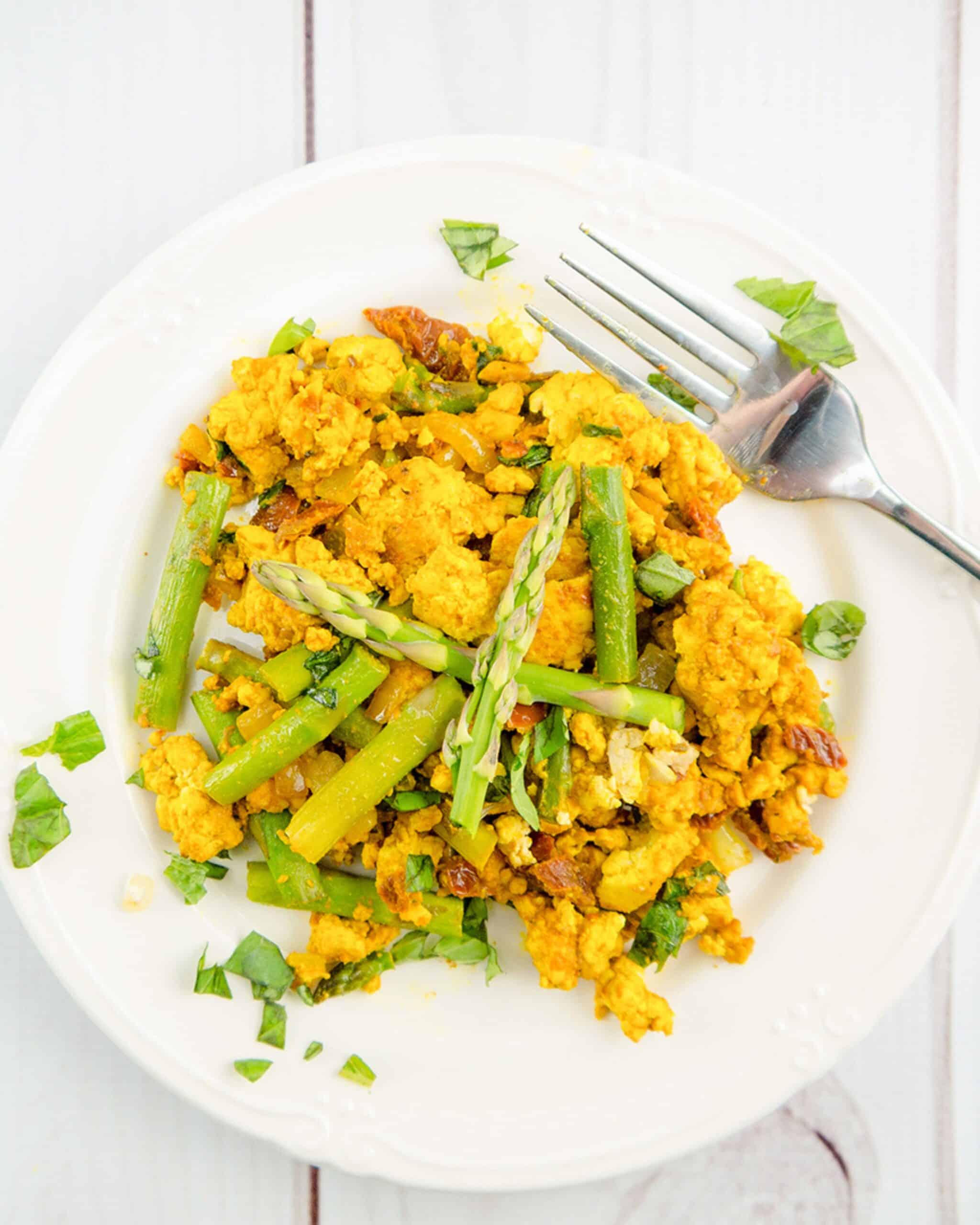
  • Country Tofu Scramble

    Country Tofu Scramble

    Ingredients

    • 2 tablespoons olive oil
    • 1 cup white onion, finely diced
    • 1/2 bunch asparagus
    • 14- or 15-ounce block extra firm tofu (1 block), crumbled
    • 1/4 cup sun-dried tomato halves packed in oil, diced (or dried and softened in water)
    • 3 tablespoons nutritional yeast
    • Pinch of sea salt
    • 2 tablespoons tamari
    • 1 tablespoon turmeric
    • Freshly ground black pepper, to taste
    • 1/4 cup coarsely chopped basil


    Directions

    1. Add oil to hot sauté pan. Add onion and reduce heat to medium. Saute until onion is translucent and golden.

    2. Add asparagus, crumbled tofu and sun-dried tomatoes and cook on high heat for 3 minutes.

    3. Add nutritional yeast, sea salt, tamari, turmeric and black pepper. Continue to cook 3 to 5 minutes. Serve.

    Notes:
    Storage tip: Leftover scramble will keep overnight in an airtight container in the fridge. Mhmmm, more for tomorrow!

    Make it soy-free: Replace the tofu with 1-1/2 cups (1 can) of cooked chickpeas and substitute coconut aminos (available at health food stores and through online retailers such as Amazon) for the tamari.

    Photo Credit: Andrew Scrivani
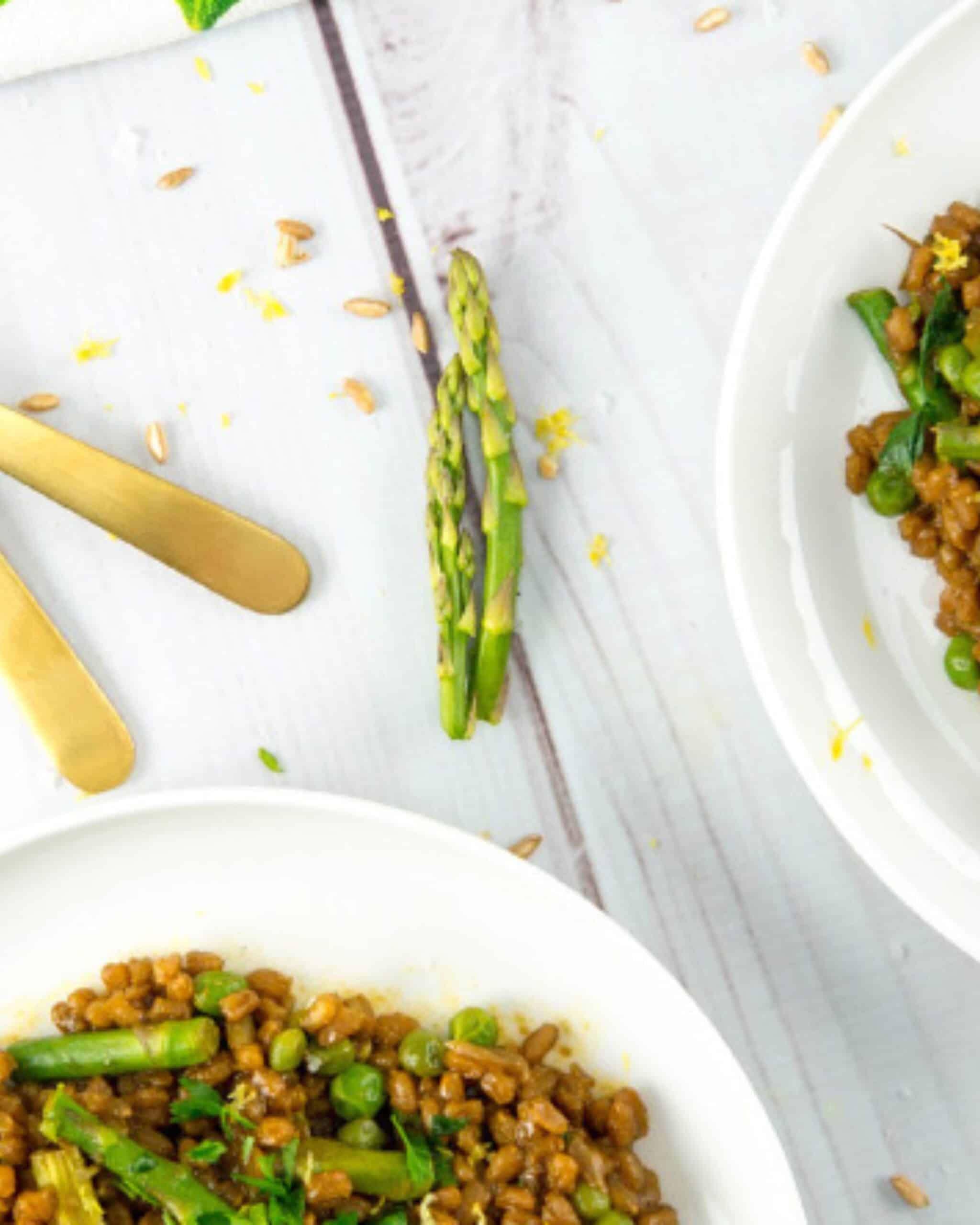
  • Vegan Risotto with Asparagus and Lemon

    Vegan Risotto with Asparagus and Lemon

    Ingredients

    • 4 cups low-sodium vegetable stock, warmed
    • 2 tablespoons extra virgin olive oil
    • 2 shallots, finely chopped
    • 2 cloves garlic, minced
    • 1 1/2 cups pearled/quick cooking farro*
    • 1/2 teaspoon salt
    • 1/8 teaspoon black pepper
    • 1/2 bunch asparagus, trimmed and chopped into 1” pieces (about 1 cup)
    • 1 cup frozen green peas
    • Zest of 1 fresh lemon (about 2 teaspoons)
    • 2 tablespoons finely chopped fresh parsley
    • 1 tablespoon nutritional yeast (optional)


    Directions

    1. In a small saucepan, heat the stock and keep warm over low heat.

    2. In a large, heavy bottomed pot, heat extra virgin olive oil over medium heat. Add shallots and garlic and cook, stirring frequently, until shallots are translucent, about 2-3 minutes.

    3. Add farro and cook an additional minute, stirring often. Add salt, pepper and 1 cup of vegetable stock. Let simmer, stirring frequently, until most of stock has been absorbed, about 4-5 minutes. Continue adding the remaining stock, 1 cup at a time, stirring frequently, for approximately 20 minutes, or until farro is cooked through and slightly chewy.

    4. Add chopped asparagus and frozen peas with the last addition of stock – let simmer, while stirring frequently, a final 6-7 minutes, or until stock has been absorbed, asparagus is crisp tender and peas are warmed through.

    5. Remove from heat. Stir in lemon zest, parsley, and nutritional yeast (if using). Add additional salt and pepper to taste, if necessary.

    *Notes: If using whole farro, be sure to soak farro overnight and drain/rinse when ready to use.
    For gluten free option, use 1 ½ cups of short grain brown rice.

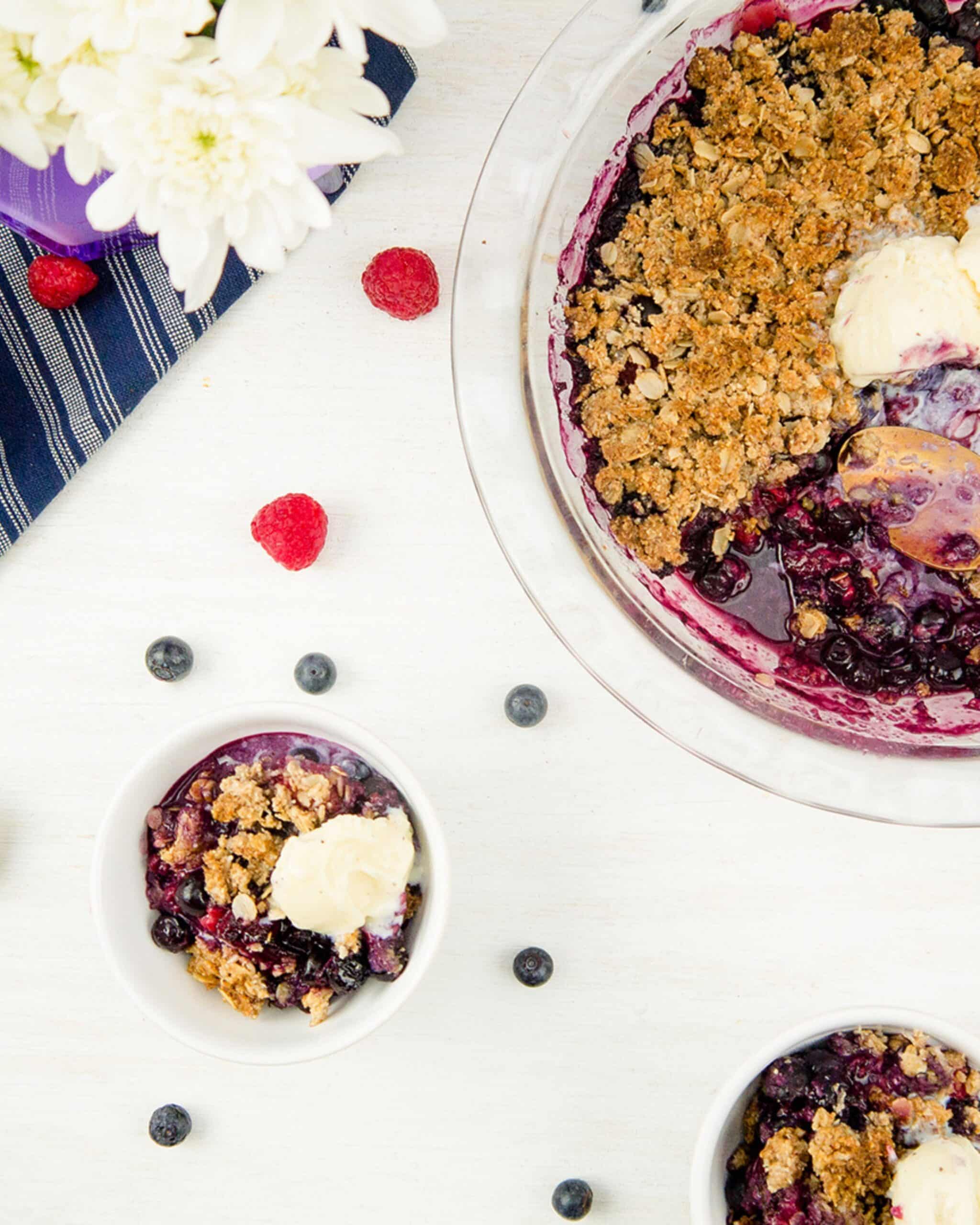
  • Summer Mixed Berry Crisp

    Summer Mixed Berry Crisp

    Ingredients

    Mixed Berry Filling

    • 1-1/2 cups (6 oz) fresh raspberries
    • 3-1/2 cups (18 oz) fresh blueberries
    • 1 teaspoon pure maple syrup
    • 1 teaspoon arrowroot powder (or organic cornstarch)
    • 1/2 teaspoon lemon zest
    • 1 teaspoon vanilla extract

    Crisp Topping

    • 3/4 cup almond flour
    • 1/2 cup old fashioned rolled oats
    • 1/4 cup unsweetened shredded coconut
    • 1/2 teaspoon cinnamon
    • 1/4 teaspoon salt
    • 1/4 cup solid coconut oil
    • 2 tablespoons pure maple syrup

    Directions

    1. Preheat oven to 350 degrees Fahrenheit.

    2. In a large bowl, gently toss together the raspberries, blueberries, maple syrup, arrowroot powder, lemon zest and vanilla extract. Pour berry mixture into a pie plate.

    3. In a separate bowl, whisk to combine the almond flour, rolled oats, salt, cinnamon and shredded coconut. Using a fork, work in the solid coconut oil and maple syrup until the topping resembles a coarse meal. Sprinkle evenly on top of the berry mixture.

    4. Place the filled pie dish in preheated oven and bake until the fruit is bubbling and the topping is golden brown, about 40 minutes. Remove from oven and let cool 10-15 minutes before serving. Serve warm, room temperature, or cold—alone or with vegan ice cream!

  • Summer Mixed Berry Crisp (video)

    Summer Mixed Berry Crisp (video)

    Hiya Gorgeous!

    When I think of summer, I think of berries. And when I think of Fourth of July barbecues, I think of red, white and BLUEBERRIES!

    See what I did there? 😉

    But seriously, there is just nothing better than fresh berries. They’re good for you, delicious and super versatile. Think about it—you can eat berries for breakfast, lunch, dinner and even dessert!

    Speaking of dessert…

    I’ve got one that’s gonna knock your flip flops off! Whether you need something to keep in your fridge for a tasty (yet healthy!) indulgence at the end of of the day, or a crowd-pleasing dessert for an upcoming holiday gathering, my Summer Mixed Berry Crisp is about to be your new favorite.

    This dish pairs tart, juicy berries with a sweet crisp topping for a festive, flavorful and perfectly seasonal treat. It’s loaded with great-for-you antioxidants, vitamins C and K, cancer and heart disease-fighting nutrients and lots of other fantastic health-giving goodies. Plus, raspberries and blueberries have unique anti-inflammatory phytonutrients that don’t appear anywhere else in the plant kingdom. How cool is that?!

    Now, here’s where it gets unbelievably mouthwatering. I love serving the Summer Mixed Berry Crisp warm with a scoop of dairy-free ice cream. You can grab your favorite pint at the store or make some super easy homemade banana ice cream! Toss one frozen banana (cut into chunks) and 1/8 teaspoon vanilla extract into a food processor or high-speed blender, then blend on low until smooth and serve. It’s melty, it’s ooey-gooey, it’s gonna make all of your wildest dessert dreams come true.

    I’ll be whipping up a double batch of this goodness for the Fourth of July festivities next week. Wanna get in on the fun? Press play below for the recipe!

    Summer Mixed Berry Crisp

    Makes: 6 servings

    Ingredients

    Mixed Berry Filling:
    1-1/2 cups (6 oz) fresh raspberries
    3-1/2 cups (18 oz) fresh blueberries
    1 teaspoon pure maple syrup
    1 teaspoon arrowroot powder (or organic cornstarch)
    1/2 teaspoon lemon zest
    1 teaspoon vanilla extract

    Crisp Topping:
    3/4 cup almond flour
    1/2 cup old fashioned rolled oats
    1/4 cup unsweetened shredded coconut
    1/2 teaspoon cinnamon
    1/4 teaspoon salt
    1/4 cup solid coconut oil
    2 tablespoons pure maple syrup


    Directions

    1. Preheat oven to 350 degrees Fahrenheit.

    2. In a large bowl, gently toss together the raspberries, blueberries, maple syrup, arrowroot powder, lemon zest and vanilla extract. Pour berry mixture into a pie plate.

    3. In a separate bowl, whisk to combine the almond flour, rolled oats, salt, cinnamon and shredded coconut. Using a fork, work in the solid coconut oil and maple syrup until the topping resembles a coarse meal. Sprinkle evenly on top of the berry mixture.

    4. Place the filled pie dish in preheated oven and bake until the fruit is bubbling and the topping is golden brown, about 40 minutes. Remove from oven and let cool 10-15 minutes before serving. Serve warm, room temperature, or cold—alone or with vegan ice cream!

    And finally, a very special thanks to our talented Chef Lauren and the rest of the Test Kitchen Tuesday crew for helping to create this spectacular dish!

    Your turn: What’s your favorite guilt-free dessert or healthy dish to bring to a summer get-together? Will you try the Summer Mixed Berry Crisp?

    Peace and bodacious berries,

  • Forget Confidence, Choose Courage (video)

    Forget Confidence, Choose Courage (video)

    Hiya Gorgeous!

    Starting when we’re very young, we’re told to be confident.

    From first days of school to first dates, big tests to big meetings, we’re encouraged to be confident, get confident, act confident—no matter what.

    But where’s all this confidence supposed to come from? We’re told to be confident, but not how. We have to figure it out on our own. I know I’ve spent years building those tools, and I’m sure you can relate!

    Of course, it’s human nature to crave certainty. There’s something incredibly comforting about knowing the outcome—about being sure. We often seek confidence because it makes us feel like we can go into new, scary or unknown situations with less doubt.

    But what if we’re actually focusing on the wrong thing?

    I’ve learned over the years that very few things in life are certain.

    When I was diagnosed with incurable Stage IV cancer, I wasn’t confident I’d live more than another 10 years. Any of the certainty I had about where my life was headed disappeared. So I stopped seeking confidence (and looking back, I’m so glad I did!). I had to find another way to move forward and take the chances necessary to improve my health.

    Maybe you’ve also been faced with a decision or opportunity that had the potential to impact your life in a big way. And I bet that no matter how much thinking you did, how many pro/con lists you wrote and how much advice you got from trusted confidants, you eventually had to take the first step without being 100% sure of the outcome. Well, while you may not have realized it at the time, something deep in your bones helped you put one foot in front of the other.

    It was courage, not confidence.

    That’s what drove me to start taking better care of myself after my diagnosis and why more than a decade later, my life is more connected and magical than ever before. And guess what? It’s also the secret force that helps you make decisions and keep moving, even in times of fear and uncertainty.

    And get this—when you consciously choose courage, incredible things start to happen. That’s exactly what my new video is all about. Press play below!


    Here’s what I hope you’ll remember: If you choose courage, life will open up for you.

    You’ll find it in you to make the changes you’ve been waiting for—to take the first step toward the better, healthier life you deserve. It’s all possible, so let your imagination run wild, sweetheart!

    And special shout-out to my friend Dani Shapiro for informing and inspiring this awesome conversation!

    Your turn: Ok, this may seem cheesy, but can we do a pinky swear? The next time you want to hold yourself back because you don’t feel confident enough, will you choose courage and take the leap? Give me a big YES in the comments below.

    Peace and courage,

  • Country Tofu Scramble (video)

    Country Tofu Scramble (video)

    Hiya Gorgeous!

    We take breakfast seriously in our house. Our first meal of the day has a big job to do, after all! It has to wake up our bodies, fuel our morning activities AND keep us full until lunch. So, even if we’re in a rush in the morning, we make it a point to grab something healthy and fulfilling. Whether it’s a smoothie, overnight oats or a tofu scramble, my hubby and I are always experimenting with new ways to save time AND tickle our taste buds!

    But I’ve gotta say, some of my favorite morning meals are actually brunches. There’s something that feels special about it, even if it’s just breakfast a few hours later than usual.

    So when I get a free weekend morning (which doesn’t always happen—I’m sure you can relate!), I jump at the chance to whip up something extra mouthwatering. I head to the kitchen and brew a pot of my favorite tea. Then, I take my time cooking and really savor every moment. Every smell, every stir, every sizzle!

    The Country Tofu Scramble is one of my favorite brunch centerpieces. It’s healthy and easy to put together, but it tastes deliciously indulgent. The sun-dried tomatoes and asparagus give it a delectable flavor—not to mention beautiful pops of color! The fresh basil smells amazing and brings the whole dish together. I like to serve it up with a fruit salad and whole grain toast or some home fries and a green juice! You’re gonna love it.

    And this tofu scramble isn’t just for brunch. It’s also simple enough to put together for a quick weekday bite—you can even make it handheld by putting it in a wrap. There’s nothing better than having a versatile recipe like this on-hand for those days you just can’t figure out what to cook.

    Ready to scramble it up? Hit play below!

    Country Tofu Scramble

    Prep time: 15 minutes | Cook time: 15 minutes | Total time: 30 minutes
    Makes: 4 servings

    Ingredients

    • 2 tablespoons olive oil
    • 1 cup white onion, finely diced
    • 1/2 bunch asparagus
    • 14- or 15-ounce block extra firm tofu (1 block), crumbled
    • 1/4 cup sun-dried tomato halves packed in oil, diced (or dried and softened in water)
    • 3 tablespoons nutritional yeast
    • Pinch of sea salt
    • 2 tablespoons tamari
    • 1 tablespoon turmeric
    • Freshly ground black pepper, to taste
    • 1/4 cup coarsely chopped basil


    Directions

    1. Add oil to hot sauté pan. Add onion and reduce heat to medium. Saute until onion is translucent and golden.

    2. Add asparagus, crumbled tofu and sun-dried tomatoes and cook on high heat for 3 minutes.

    3. Add nutritional yeast, sea salt, tamari, turmeric and black pepper. Continue to cook 3 to 5 minutes. Serve.

    Notes:
    Storage tip: Leftover scramble will keep overnight in an airtight container in the fridge. Mhmmm, more for tomorrow!

    Make it soy-free: Replace the tofu with 1-1/2 cups (1 can) of cooked chickpeas and substitute coconut aminos (available at health food stores and through online retailers such as Amazon) for the tamari.

    Make it nightshade-free: Substitute 1/4 cup of chopped olives (water or oil packed) for the sun-dried tomato.

    And finally, a very special thanks to our talented Chef Lauren and the rest of the Test Kitchen Tuesday crew for helping to create this spectacular dish! Photo credit: Andrew Scrivani.

    Your turn: What’s your favorite morning meal? Let me know in the comments below!

    Peace and scrumptious brunch,

  • How to Get Off the Fence and Make a Decision (video)

    How to Get Off the Fence and Make a Decision (video)

    Hiya Gorgeous!

    Did you know that the average person makes over 35,000 decisions a day? A day! Sound unbelievable? I thought so, too. But the more I mulled it over, the more I realized how much the decisions we’re faced with really start to add up.

    Sometimes we’re consciously making tough decisions about how to manage our finances, deal with a health crisis or resolve a challenge at work. And then there are the less obvious decisions—what kind of tea to make, if we should take the dog out before or after breakfast, which words to use in an email… The list goes on!

    Here’s the thing: Each time our brains go through the decision-making process, they’re performing what’s called an “executive function.” And our capacity for executive functioning does have a limit. Yes, even our beautiful brains need a rest sometimes! If you’ve ever struggled to choose a restaurant for dinner at the end of a long day, you know exactly what I’m talking about.

    There’s even a term for it—decision fatigue!

    So, this all got me thinking. Many of us (myself included!) can have trouble making decisions. Maybe it’s because we’ve been faced with too many on a given day, or maybe it’s because certain decisions are just plain difficult—either way, we’ve gotta make ‘em! And that can be super stressful.

    But ya know what’s stressful, too? Procrastination! Putting off decisions, no matter how hard they are, can make matters worse.

    My 2-Step Decision-Making Process

    I want to share something that’s helped me simplify my own decision-making process. When I’m working through a particularly tough decision or I just can’t seem to make up my mind, I ask myself two questions:

    1. Will this tire or inspire me?

    In other words, will the outcome I’m considering drain me or fill me up? It’s OK to be picky sometimes! We’ve got a limited amount of energy, so we should dedicate it to the things that truly matter to us.

    2. What does my body have to say about it?

    Call it instinct, call it a gut feeling—our bodies can usually feel the right decision long before our brains get on board. All we have to do is listen!

    I want to give you the scoop on these questions, how you can use them to simplify your decision-making process and what to look out for when you answer them yourself. I’m covering that and more in my latest video—press play below to watch!

    Thanks for watching, gorgeous! I hope these questions help you simplify the decision-making process so you can dedicate your energy to the things you love. And remember this: Nobody knows you better than you. When it comes to making decisions, trust yourself—I know I do!

    Your turn: Do you have a decision you can use this strategy for? Take a minute and check in. Then let us know what you decided in the comments below!

    Peace and getting off the fence,

  • The Benefits of Green Tea for Your Skin

    The Benefits of Green Tea for Your Skin

    Hiya Gorgeous!

    You’ve probably noticed by now that I get pretty excited about all things skincare. I love testing out new cruelty-free products and learning about fun DIYs. And when I find something that’s really good, I just have to tell you about it!

    So when our fabulous beauty editor, Danielle Shine, filled me in on all of the incredible benefits of green tea for skin, I knew we had to share it with you.

    Now before I hand it over to Danielle, I want to clear one thing up. If you’re not a fan of drinking green tea, this blog is still for you! There are tons of ways to get the benefits of green tea without sippin’ on it. Danielle has even included a recipe for her favorite DIY matcha face mask!

    Take it away, Danielle!

    The Benefits of Green Tea for Your Skin

    by Beauty Editor Danielle Shine

    Holy mother of green tea goodness!

    I’ve always been #obsessed with drinking green tea. I love the fact there are so many varieties and flavors. Plus it’s so good for us, right? But I wanted to know more about the benefits of green tea! So, I went down a rabbit hole of research, and what I found out has absolutely blown my mind in the BEST way. Naturally, I just had to share this info with you, too!

    But before you read any further, why not go grab yourself a cup of this gorgeous green drink? Let’s dive in!

    Green tea can safeguard your skin from sun damage.

    Most of us have felt the burn that comes with too much exposure to the sun. It’s painful, yes, and can also cause some serious long-term damage like premature aging and skin cancer. But what if I told you that sipping on green tea, or slathering it on your skin via a great body cream could help? It’s true!

    Research suggests that green tea’s potent polyphenols (also known as ‘catechins’) have chemopreventive and photoprotective qualities (study). This means drinking or applying green tea (any kind will do) directly to your skin may help prevent UV light-induced skin disorders. Score!

    But hang on a sec! Before you nix your sunscreen entirely and sip on green tea instead, you must know that although this great green stuff is all kinds of amazing for your skin, it’s still no substitute for sunscreen. Consider it the Robin to your Batman—great backup when you need it most.

    Green tea can help ward off the effects of pollution.

    Particle pollution, or particulate matter, is the term for the teensy-tiny solids and liquids secretly floating around in the air we live, work and play in. The types of particle pollution vary depending on where you live—big cities are the worst with all the car fumes, construction dust and other stuff floating around.

    Wherever you call home, the main thing you need to know is you come into contact with particle pollution every single day. And as small as they are, these invaders can do a number on your skin.

    Now, before you decide to never leave the house again, just get some green tea and you’re good to go! One of the many benefits of green tea is that it contains one of the most potent polyphenols ever: epigallocatchin‐3‐gallate (let’s call it EGCG for short!). EGCG works wonders against all kinds of pollutants that cause premature aging, inflammation and a whole host of other skin invaders and degraders.

    Green tea can help clear up your skin.

    Lucky for us, the amazing antioxidants found in green tea target all kinds of inflammatory free radicals in our skin by attacking them on a cellular level, which is so sci-fi-cool! They work FAST to help stop breakouts before they even start. And on the topic of breakouts, I’ve got to give a shout out to green tea’s tannins, too! Y’know that slightly bitter, astringent flavor most green teas have? Tannins! These marvelous bits of matter can shrink yo’ pores and reduce the production of sebum (the naturally oily stuff your skin makes that can cause pimples when pores get blocked).

    On that note, here’s something I’d love for you to keep in mind: Inflammation of the skin can be stressful, painful and even embarrassing, but you must know it’s always an important message from your body. It’s flagging an issue whilst healing it at the same time. As hard as it can be, be open to listening to and loving every inch of your body. Embrace and get to know any inflammatory signals it sends you, and check with your doc if you suspect something’s up.

    Now, let’s treat your skin to the benefits of green tea with my super simple DIY face mask…

    Danielle’s DIY Matcha Face Mask

    You need:

    • 1 tablespoon plain, full-fat, non-dairy, probiotic-rich yogurt. Choose a brand with the highest amount of probiotics you can find OR crack open one probiotic capsule and mix the powder in with the yogurt. Avoid watery yogurts with lots of refined sugar, preservatives or other processed additives—a brand with a minimal list of ingredients is your best bet!
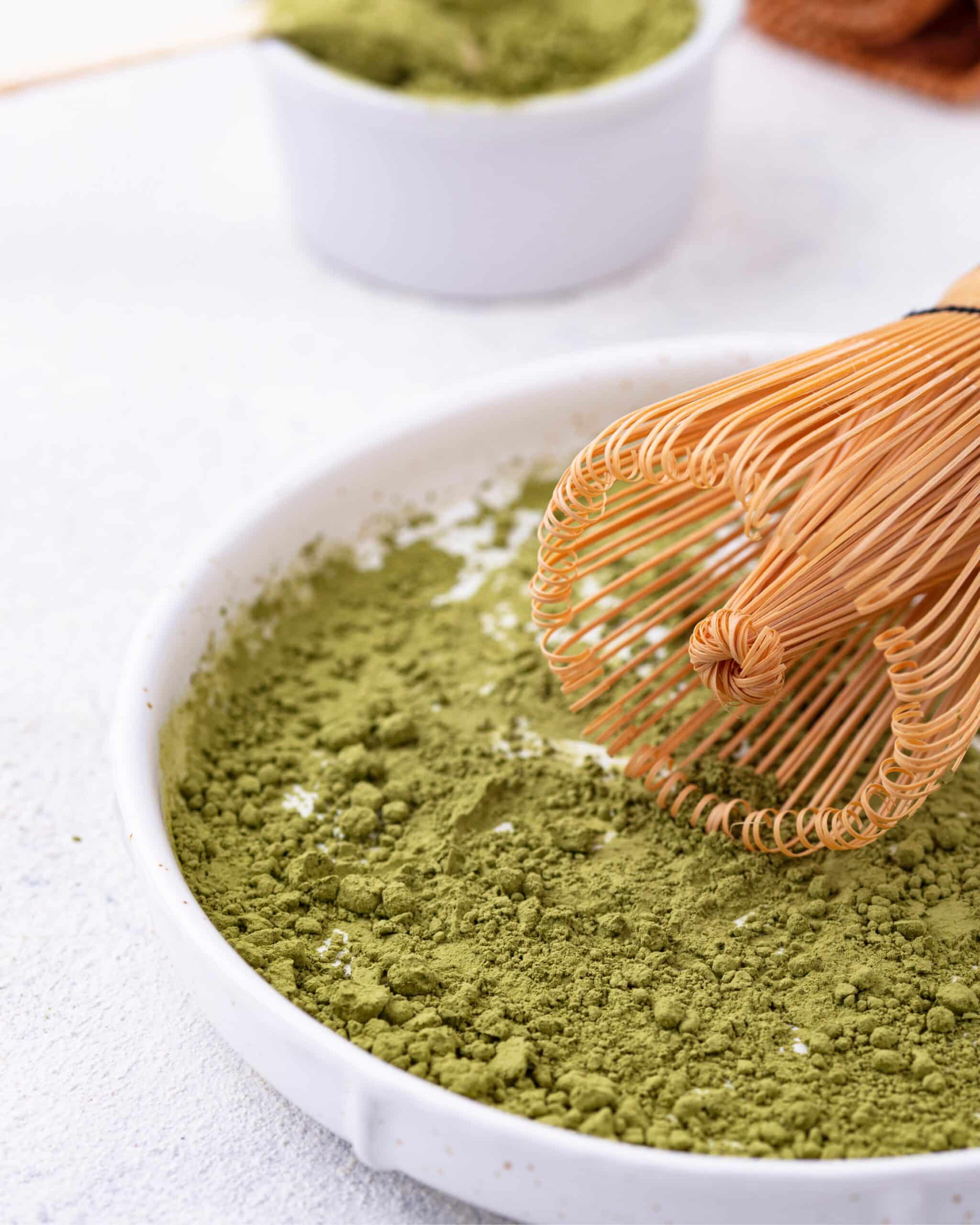
    • 1 teaspoon finely ground green tea leaves/green tea powder. I used matcha powder for my mask, but any type of green tea will do. Opt for loose leaf (or just pop open a tea bag’s worth) and grind it in your coffee grinder to a fine powder.

    You do:

    • Mix everything together, then paint onto your fantastic face with a clean makeup brush.
    • Leave for 10 minutes, just enough time to sip some green tea and maybe squeeze in a little meditation, too! Any of these will work wonders.
    • When suitably relaxed and feelin’ fine, remove mask with a washcloth soaked in warm, skin-friendly-soapy water. Look in the mirror, admire your beauty and resume life with healthier, happier skin. Repeat once or twice a week.

    Until next time, here’s cheers! I’m headed to the kitchen to make myself some tea.

    Wow, thanks Danielle!

    And thank YOU, gorgeous! I hope you’ve enjoyed learning about the benefits of green tea. Remember, you don’t have to drink the green stuff to take advantage of its curative superpowers!

    Your turn: How do you like to get your green tea? Let me know in the comments below! And if you whip up Danielle’s DIY matcha face mask, share a picture of your gorgeous green face on Instagram—tag me @crazysexykris!

    Peace & green goodness,