Blog

  • Healthy Hair Dye 101 (What You Need to Know)

    Healthy Hair Dye 101 (What You Need to Know)

    Hiya Gorgeous,

    We talk a lot about healthy beauty here at KrisCarr.com. Foundation, mascara, nail polish, you name it, we’ve either covered it or it’s in the works! Today, I’m tackling one of the trickier topics that readers ask me about time and time again—hair dye!

    You’re probably hip to the fact that the chemicals that color your hair can have some not-so-sexy effects on your health.

    Over the years, I’ve had trouble finding safe and effective options. In other words, I needed this info just as much as you!

    And that’s why I asked Sophie Uliano, my go-to organic beauty expert to help out. Sophie is a New York Times best-selling author and internationally renowned Green and Healthy Living expert. Her latest book, Gorgeous for Good, is a 30-day skin-to-soul program aimed at completely transforming the way you feel.

    Whether you’re trying to cover up pesky greys or just want to revamp your look with a fun new style, I hope this blog helps you make healthier choices. Ready? Let’s comb through this tangled topic together…

    Kris: What are the worst offenders when it comes to chemicals found in common hair products? Basically, when we’re reading labels what should we stay away from?

    Sophie: The most common “offender” would probably be phenylenediamine (PPD), also known as paraphenylenediamine, p-phenylenediamine or 1,4-benzenediamine. PPD is an organic compound used in hair dyes, as well as in rubber chemicals, textile dyes and pigments. Manufacturers like it because it has a low relative toxicity level and a high temperature stability. This chemical allows the dye to stay on your hair despite numerous washes. One big reason you want to avoid PPDs is that repeated exposure can cause you to develop allergic skin sensitization, which is basically when your immune system reacts to the chemicals on your skin.

    Here’s the deal: In the past, you may not have had any symptoms of skin sensitivity to hair dye. And then one day while sitting in the salon chair, BAM! The dye is applied, your eyes start to water, you feel a burning sensation on your scalp and a red irritation begins creeping down from your hairline. This is how “skin sensitizers” work. Your body builds up a resistance toward the chemicals over time, and then one day you get a full-blown allergic reaction.

    Even worse, you can become cross-sensitized. This means that you might also suddenly become allergic (and I mean severely allergic) to PPD’s chemical cousins, which can be found in textiles, inks, medication dyes, food dyes, perfumes and more.

    Kris: So if you’re not a fan of your natural hair color, what’s the best way to dye your hair while also reducing or avoiding harmful effects of PPD and other chemicals?

    Sophie: You’re better off using a hair dye that is free of PPD and ammonia. A line that I love for stylists (turn your stylist on to these guys!) is Simply Organic’s Hnectar hair color. You also might want to look at Radico Colour Me Organic for home dyeing with 100% natural and organic ingredients. (I actually think it’s better and less expensive to dye your hair at home!)

    Kris: Are there different suggestions for blondes, brunettes or redheads?

    Sophie: Blondes are often the toughest because without bleach it’s very hard to get that bright “lift” without brassy tones. If you want very blonde hair, you might want to consider using a safe, organic base color, and then have a smattering of bleach highlights added. The organic natural shades (especially with henna) are pretty amazing for both brunettes and redheads.

    Kris: Do different approaches to dyeing your hair (highlights, roots only, full-process, bleaching, ombre) impact your health differently?

    Sophie: Absolutely. If a “single-process/full-process” base color is applied, it sits directly on your scalp for a period of time. This is where the real damage to your health occurs. This is why I strongly recommend a safe, non-toxic base. Highlights and low-lights rarely come into contact with your scalp, so they aren’t nearly as detrimental. That being said, bleach gives off fumes that you inhale, and bleach in general isn’t the most eco-friendly ingredient either!

    Kris: What’s the difference between store-bought and salon hair dye products when it comes to toxicity and effectiveness?

    Sophie: It’s easier to check out the ingredients in store-bought dyes because the ingredients are listed on the box. If you purchase from a certified organic company, and you’ve done your homework on ingredients, you should be fine toxicity-wise. Most of the safer companies will clearly use verbiage such as “free of PPD” etc. Some brands display a laundry list of chemicals that they don’t use, which is also useful.

    As far as efficacy is concerned, you just have to try them out. Hair color is so personal—what works for me might not work for you, and vice versa. Most store-bought dyes will work (as in dye your hair for the specified amount of time), but shades in different brands vary.

    When it comes to salon dyes, you have to dig deeper. If you have a close relationship with your stylist/colorist, you could ask him/her what brand they use. Most stylists use the brands that give the best aesthetic results, but that aren’t necessarily the healthiest.

    You then have two choices at the salon: You can ask your colorist if they would be willing to try out an organic brand (you might have to show them the website), or you can do a Google search to find an “organic” hair salon in your area. I got my stylist to train to use a brand I like and trust. Many of the really great brands like Simply Organic (mentioned above) provide special training for salons.

    Kris: I’d also love to know your recommendations for shampoo and conditioner. What are the top three brands you trust?

    Sophie: I love Intelligent Nutrients, Onesta and Living Nature.

    Kris: And is there a DIY haircare recipe you’d recommend for keeping hair healthy?

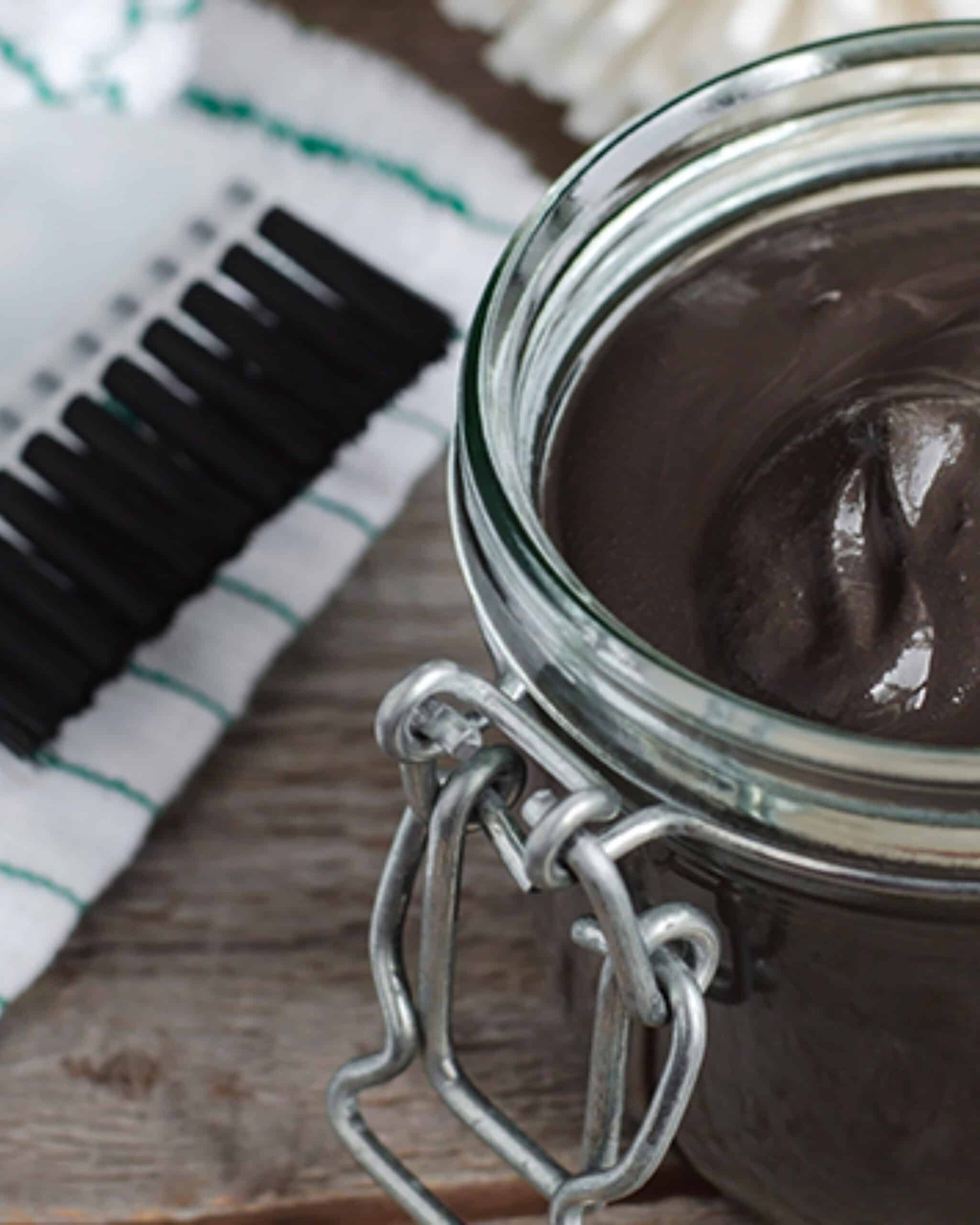
    Sophie: Yes, this mask is magical!:

    • 2 tablespoons raw coconut oil
    • 1/2 ripe avocado
    • 2-4 drops lavender essential oil (optional)

    Mix the ingredients into a smooth paste. Apply from roots to tips of your hair, making sure you massage it into your scalp too. Wrap your hair in a towel and leave for at least 20 minutes. Rinse off with a sulfate-free shampoo. No need to condition.

    For extra shine, you can do an apple cider vinegar rinse—just mix equal parts vinegar and water and use as a final rinse.

    Kris: Thanks, Sophie!

    If you have doubts about your dye, I hope this interview sheds some light on healthier hair care options and inspires you to revamp your hair color strategy if needed.

    Your turn: Do you color your mane? If so, what non-toxic and effective hair dye options have you found? I know our community would love to know!

    Peace & Non-Toxic Tresses,
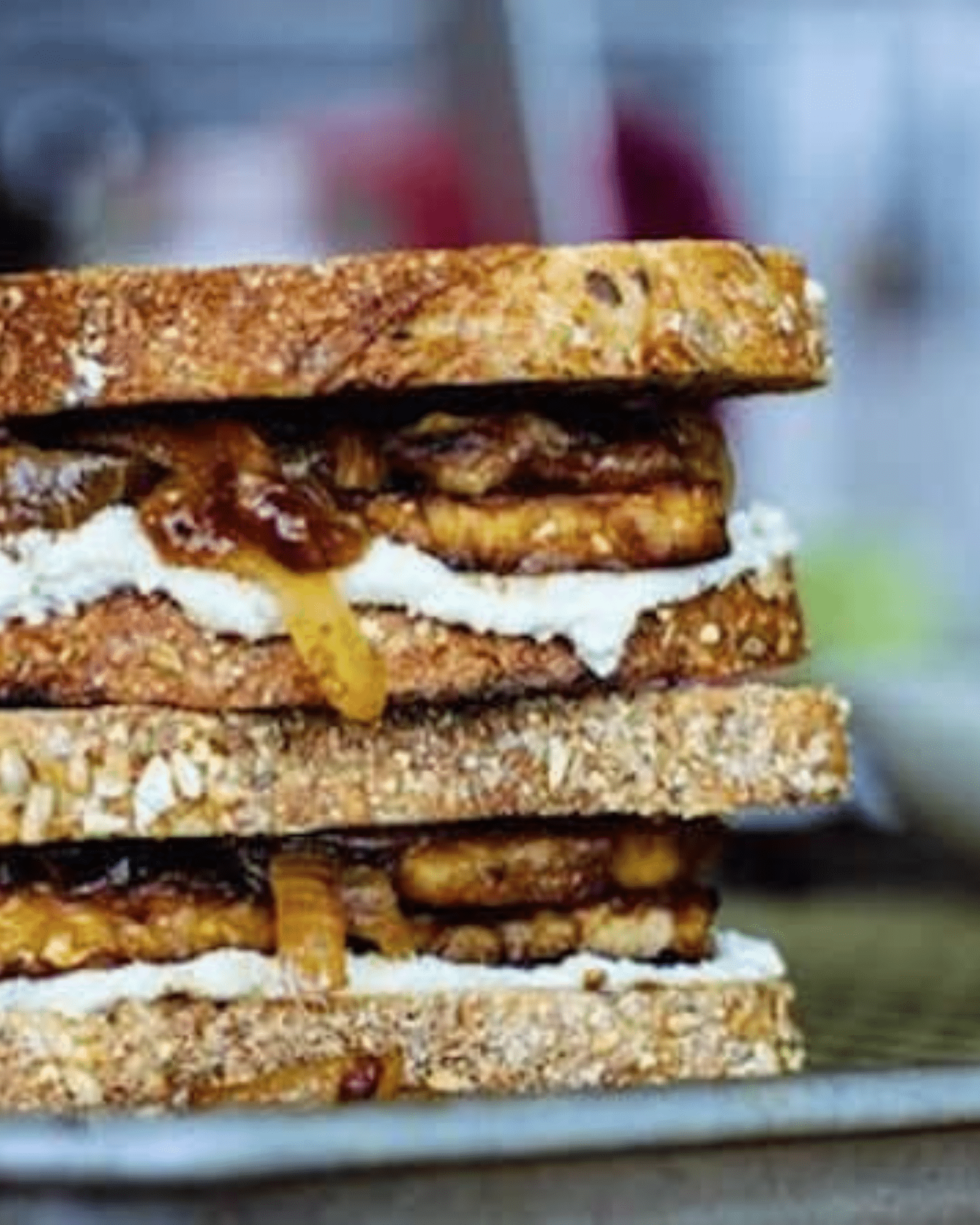
  • Vegan Maple Tempeh Sandwiches

    Vegan Maple Tempeh Sandwiches

    Vegan Maple Tempeh Sandwiches

    Ingredients

    • 1 medium onion, sliced
    • 1 1/2 apples, chopped
    • 2 tablespoons olive oil
    • Salt to season the onions and apples, to taste
    • One block of tempeh, sliced
    • 1/3 cup tamari
    • 1/4 cup maple syrup
    • 2 tablespoons coconut oil, melted + 1 teaspoon for cooking
    • Cashew cheese, for spreading
    • 4 slices multigrain sourdough bread or gluten-free bread of choice


    Directions

    1. In a large, wide pan, heat the olive oil on medium heat. Sauté the onions until they begin to soften and become translucent, around 10-12 minutes. Add the apples and stir to prevent them from sticking to the pan. Add a few tablespoons of water or oil if necessary to prevent sticking. Cook until the apples are tender and the onions are caramelized. They should be golden brown.

    2. In a medium bowl, whisk together the tamari, maple syrup and melted coconut oil. Dip each of the slices into the marinade to evenly coat and leave the slices in the marinade for at least five minutes.

    3. Heat up a pan on medium-low heat. Add a teaspoon of coconut oil and sear the tempeh until each side is browned. Place the slices of bread in your toaster and remove the tempeh from the heat.

    4. Spread two slices of bread with cashew cheese. Place the tempeh on the cashew cheese and top with the caramelized onions and apples and the other slice of bread.

  • Seasoned Radish Chips

    Seasoned Radish Chips

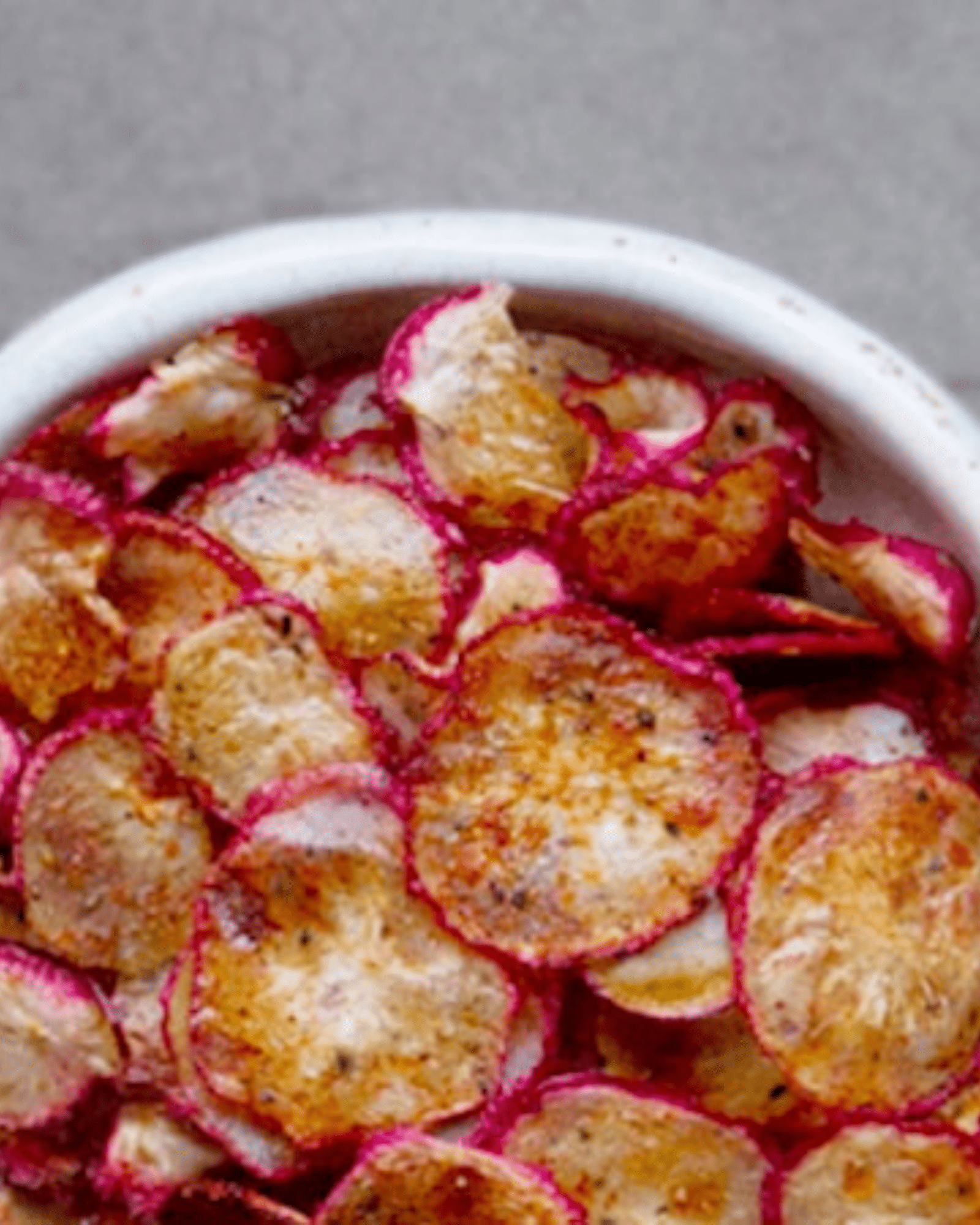
    Seasoned Radish Chips

    Ingredients

    • Small bunch of baby radishes
    • 1 tablespoon olive oil
    • Sweet paprika, salt and pepper, to taste


    Directions

    1. Preheat oven to 350° Fahrenheit (fan).

    2. Ideally using a mandolin, slice radishes thinly.

    3. Pop slices into a bowl a drizzle over a little olive oil (approximately 1 tablespoon). Use your hands to gently toss the radish slices, coating them evenly in the oil.

    4. Lay out slices on a baking parchment-lined tray. If desired, lightly sprinkle the slices with salt, sweet paprika and a little pepper (of course, radishes are peppery already, so do use it sparingly).

    5. Bake chips for 10 minutes at 350° Fahrenheit (fan) then turn your oven down to 210° Fahrenheit (fan) and allow the chips to bake for another 15 minutes, checking at 5-minute intervals to ensure they are crisping up and not turning too dark.

    6. Remove tray from oven and allow slices to cool on the tray. These last steps prevent the need to flip the slices during baking, which is fiddly and time-consuming.

    7. Eat chips as they are or use them as a garnish on mashed root vegetables, soups (in place of croutons), salads, etc.

  • Vegan Peanut Butter Cups

    Vegan Peanut Butter Cups

    Vegan Peanut Butter Cups

    Ingredients

    For the chocolate base:

    • 1/2 cup non-dairy chocolate chips
    • 2 1/2 tablespoons coconut butter

    For the peanut butter topping:

    • 2 tablespoons coconut butter
    • 1/3 cup natural unsalted peanut butter (*see note)
    • 3 1/2 tablespoons coconut sugar
    • 1/4 rounded teaspoon sea salt
    • 1/2 teaspoon pure vanilla extract or 1/4 teaspoon vanilla bean powder


    Directions

    1. Line a mini-muffin pan with 15–18 small muffin liners.

    2. To make the chocolate base: Set a heat-proof bowl over a small pot or double boiler with a few inches of water in it. Turn heat to medium. Add chocolate chips and coconut butter to the bowl. Stir through until well combined and melted. Remove from heat, and spoon roughly one tablespoon of chocolate mixture into each liner. Once finished, transfer the pan to the fridge to cool completely. Reserve saucepan with hot water or double boiler (still with just a small amount of water in it).

    3. To make the peanut butter topping: Add the coconut butter to another small bowl, place over the saucepan/double boiler, and allow it to melt. If needed, turn on low heat to help melt.

    4. Meanwhile, prepare the peanut butter mixture. In a mini food processor, puree the peanut butter, coconut sugar, salt and vanilla. Add the melted coconut butter to the peanut butter mixture and puree until fully incorporated.

    5. To assemble: Once chocolate cups are chilled and firm, spoon about 1 1/2 tablespoons peanut butter mixture on top of each of the chocolate cups. I use a small cookie scoop, and then gently smooth out the peanut mixture to cover the chocolate. Place the cups in the fridge until completely chilled, about an hour.

    *Peanut Butter Note: You bet you can substitute a nut butter—try almond or cashew! If your peanut butter/nut butter does contain salt, reduce the salt measure to just under 1/8 teaspoon.

  • Butternut Squash Nut Burgers With Roasted Garlic Aioli

    Butternut Squash Nut Burgers With Roasted Garlic Aioli

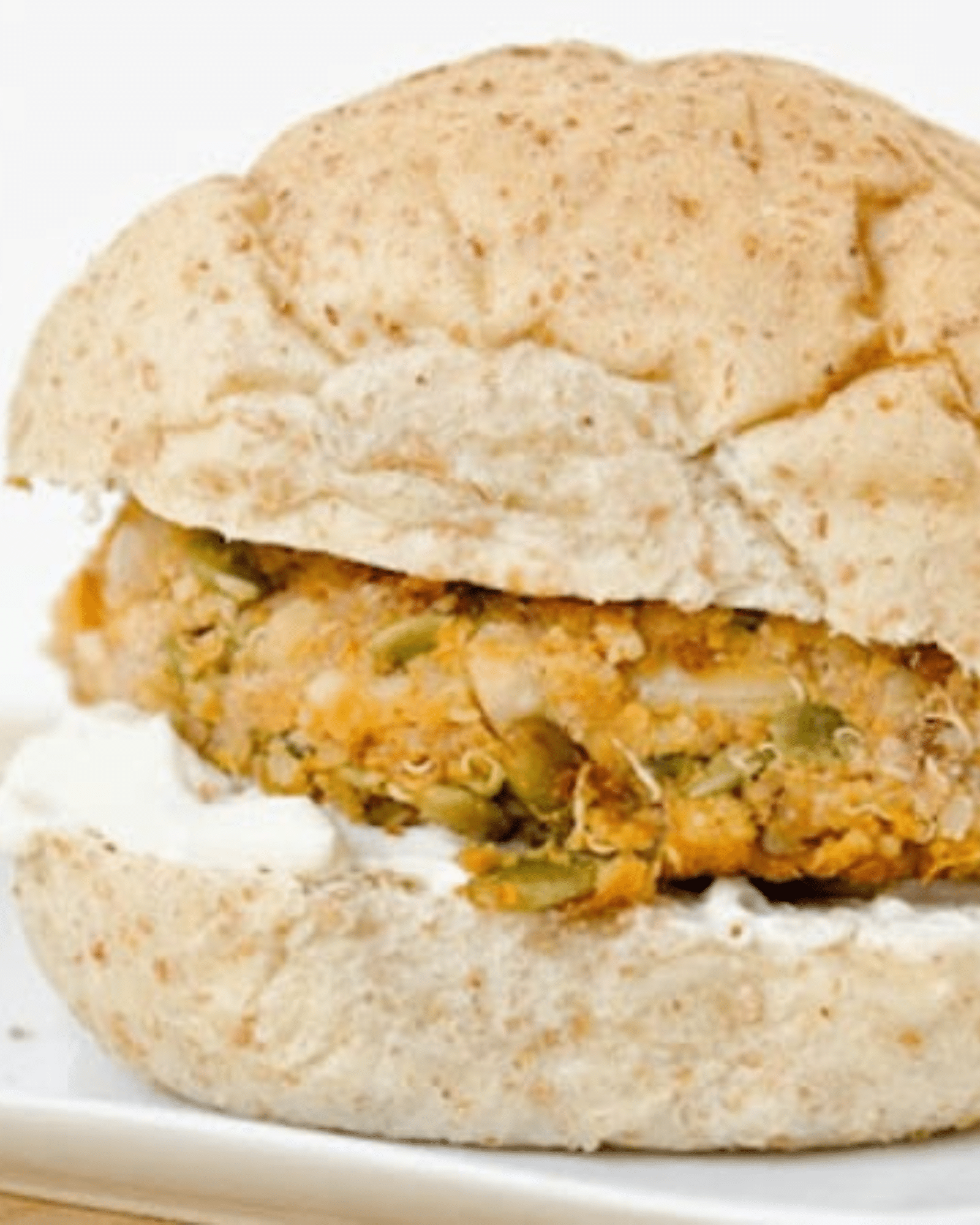
    Butternut Squash Nut Burgers With Roasted Garlic Aioli

    Ingredients

    • 1 large butternut squash, peeled and diced into 1/2-inch pieces
    • One 540 ml can of white kidney beans, drained and rinsed
    • 1/4 cup of uncooked quinoa; rinsed
    • 1/2 cup of water
    • 1 shallot, minced
    • 1 clove of garlic, minced
    • 1 cup of pumpkin seeds
    • 1 cup of chopped walnuts
    • Pinch of cayenne pepper
    • Salt and pepper, to taste
    • 1 cup of whole wheat bread crumbs (or gluten-free bread crumbs)
    • 12 whole wheat burger buns (or gluten-free burger buns)
    • Roasted Garlic Vegan Aioli (recipe to follow)
    • Garnish: sprouts, finely sliced red onion, dijon mustard, tomato slices

    For the roasted garlic vegan aioli:

    • 1 block of soft organic tofu, drained of excess water
    • 1 head of garlic, roasted
    • 2 tablespoons of cider vinegar (or 1 tablespoon of fresh lemon juice)
    • 1/4 cup of olive oil
    • Salt and pepper, to taste


    Directions

    1. Roast the garlic: Preheat oven to 350 degrees Fahrenheit. Slice the top off of the head of garlic. Place garlic in a pocket of tinfoil. Drizzle with olive oil and sprinkle on some salt. Pinch the tinfoil around the garlic leaving a little bit of room for steam. Place garlic in oven and allow it to roast for about 35 minutes, or until soft. Remove from oven and allow to cool.

    2. Cook the butternut squash: In a large saucepan, bring 6 cups of water to a boil. Add the butternut squash and reduce to low. Cook the squash until it is tender (about 15 minutes). Drain and set aside.

    3. Cook the quinoa: While the squash is cooking, bring 1/2 cup of water to a boil in a small saucepan. Add the quinoa, cover and simmer on low for 15 minutes. Remove from heat and set aside.

    4. To make the burgers: In a mixing bowl, smash the cooked butternut squash, white kidney beans and quinoa together using a potato masher. Using a wooden spoon, mix in the shallots, garlic, walnuts, pumpkin seeds, cayenne pepper, salt and pepper.

    5. Add bread crumbs as necessary until the mix holds together well. Mould bits of the mixture into patties about the size of a hockey puck. You will get about 12 patties from this recipe.

    6. In a large skillet, heat 1 tablespoon of oil over medium-high heat. Make sure to spread the oil around the entire pan to ensure even cooking. Place patties onto the skillet and pan-fry the burgers for about 4 minutes per side (or until the sides are crispy and the burgers are cooked through). Note: I added a bit more oil between each batch to ensure even browning.

    7. To make the aioli: Remove the roasted garlic cloves from the skin. Mash well with a fork.

    8. Using a blender or food processor, mix the mashed roasted garlic, organic tofu, vinegar, olive oil, salt and pepper until smooth.

    9. Serve each butternut nut burger on a toasted whole wheat or gluten-free bun. Slather on some of the delicious roasted garlic aioli. Top with some fresh tomato slices and some sprouts. Add dill pickles for good measure.

    10. Enjoy!

  • Sunflower Mac & Cheese

    Sunflower Mac & Cheese

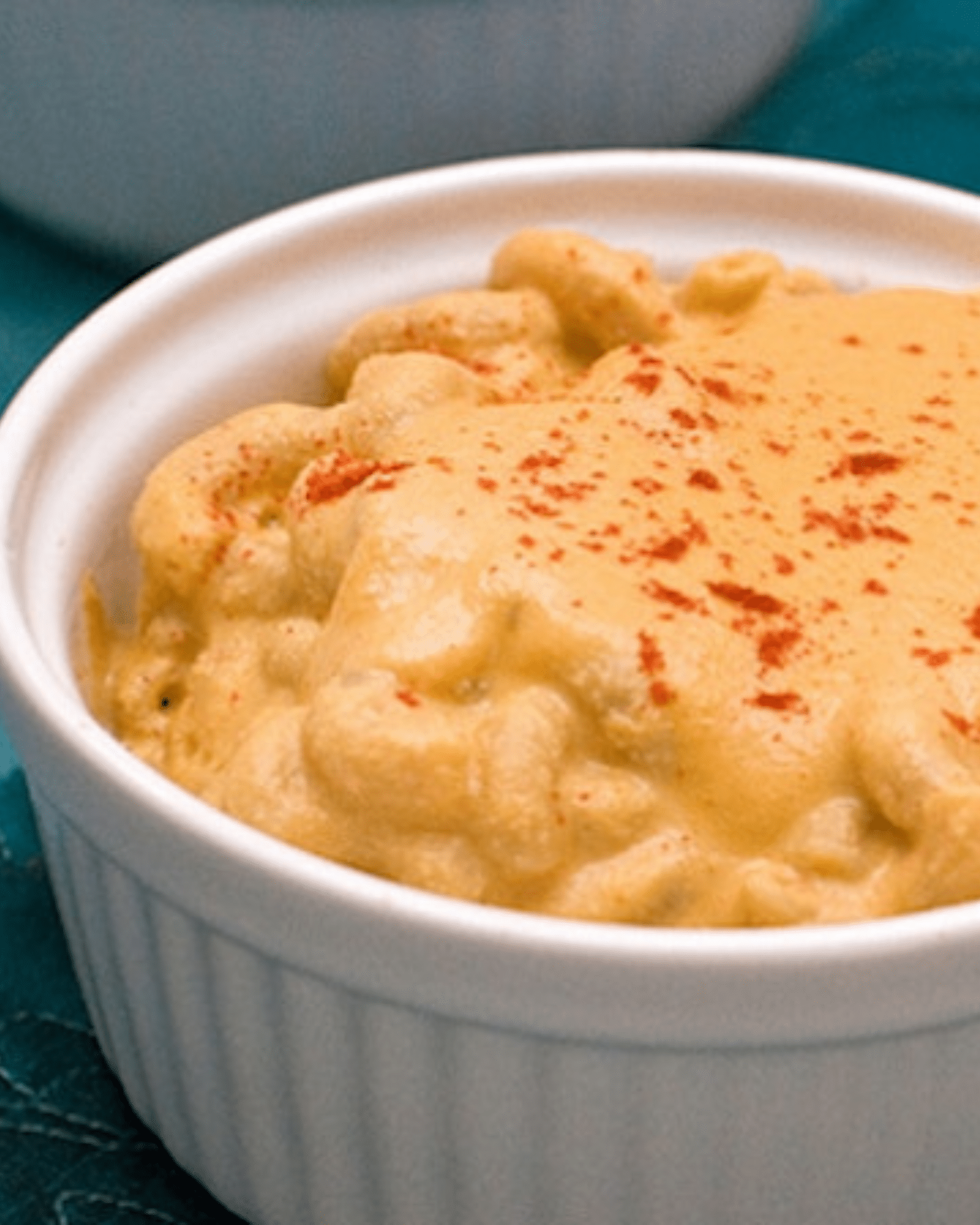
    Sunflower Mac & Cheese

    Ingredients

    • 8 ounces macaroni pasta (use brown gluten-free, if desired)
    • 1 cup unroasted sunflower seed kernels, soaked (see directions)
    • 1 tablespoon olive oil
    • 1/2 cup thinly sliced carrots
    • 1 small onion, diced
    • 3 cloves garlic, minced
    • 1/2 teaspoon salt
    • 3 cups vegetable broth
    • 2 tablespoons organic cornstarch
    • 1/4 cup nutritional yeast
    • 2 tablespoons tomato paste
    • 1 tablespoon lemon juice
    • Sweet paprika, for sprinkling


    Directions

    1. Place sunflower seeds in a bowl and submerge in water. Let soak for about 2 hours and up to overnight. Drain well.

    2. Boil a pot of salted water for your pasta.

    3. Preheat a sauce pot over medium heat. Sauté carrots and onions in oil with a pinch of salt for about 10 minutes, until onions are translucent and carrots are slightly softened. Add garlic and sauté for 30 seconds or so, then remove from heat.

    4. Place the carrots and onions in a blender or food processor. Add vegetable broth, corn starch, nutritional yeast, tomato paste and sunflower seeds. Blend until very smooth. This could take up to 5 minutes depending on the power of your machine, so give your blender motor a break every minute or so and test the sauce for smoothness. It should be very smooth, with only a slight graininess.

    5. If your water is boiling, prepare the pasta according to package directions.

    6. In the meantime, transfer the sauce back to the sauce pot. Turn the heat up to medium and let cook, stirring very often, until thickened. This should take about 15 minutes. Add the lemon juice and taste for salt and seasoning.

    7. The pasta should be done while the sauce is thickening, so drain and place back in the pot you cooked it in. Set aside.

    8. When sauce is thick, pour most of it over the pasta, reserving some to pour over individual servings. Mix it up, and serve with extra sauce and paprika for sprinkling.

    9. Enjoy!

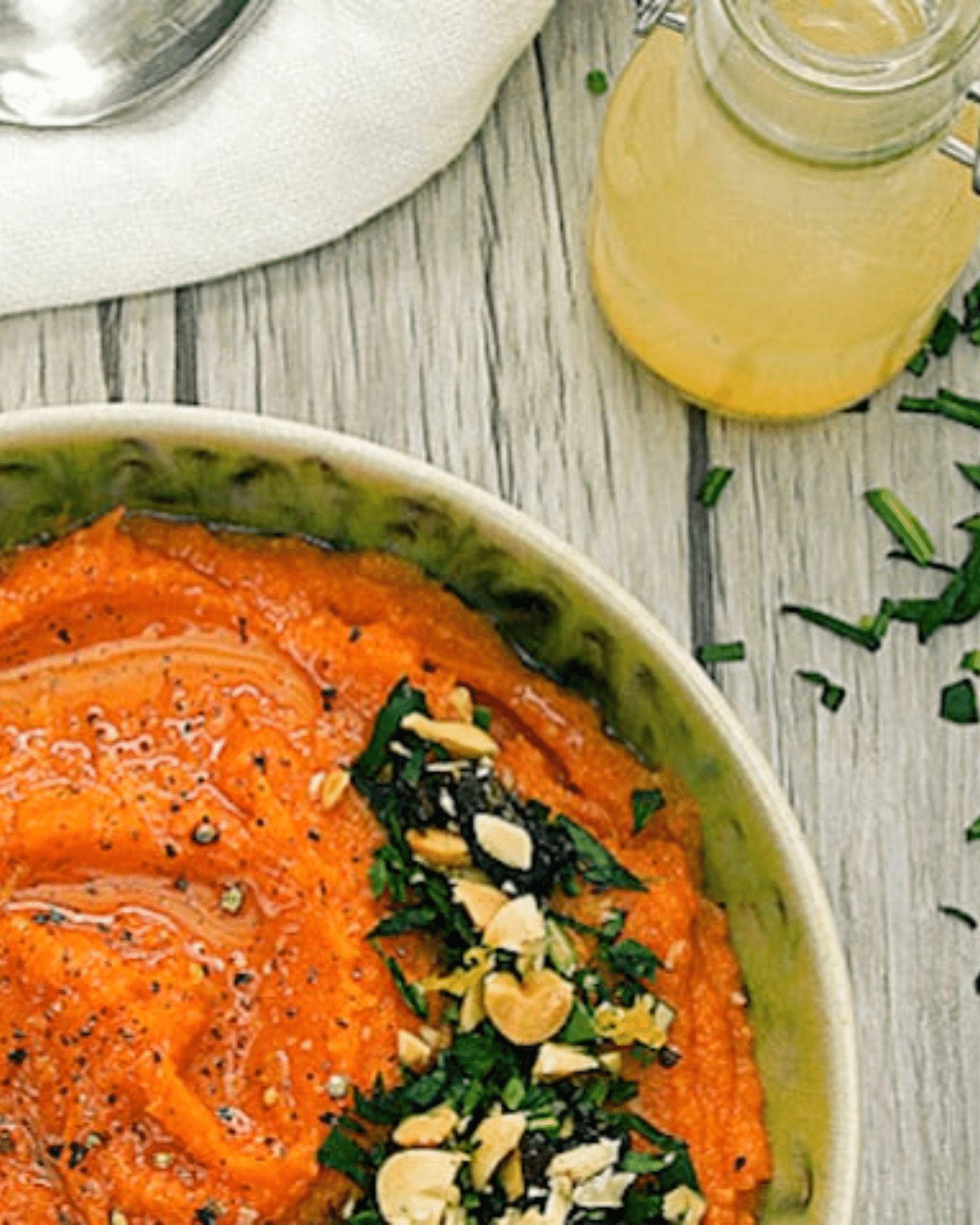
  • Sweet Potato Hummus

    Sweet Potato Hummus

    Sweet Potato Hummus

    Ingredients

    • 2 large sweet potatoes
    • 1 teaspoon olive oil
    • 1/2 teaspoon lemon juice
    • Lemon zest from half a lemon
    • Salt, to taste
    • Black pepper, to taste


    Directions

    1. Heat the oven to 482 degrees Fahrenheit.

    2. Put the sweet potatoes in a baking dish and put it in the oven for 45 minutes.

    3. Take out the sweet potatoes and let cool for a moment before you cut them in two and start eroding the soft content into a bowl.

    4. Add all the other ingredients and give it a good mix.

    5. Enjoy!

  • Top Causes + Symptoms of Hashimoto’s Disease

    Top Causes + Symptoms of Hashimoto’s Disease

    Hiya Dear Friend,

    Today we’re going to explore a health challenge that affects millions of Americans, particularly women: Hashimoto’s thyroiditis—a type of hypothyroidism.

    In the past, I’ve given you a big picture look your thyroid health (get those details here). But did you know that most women with hypothyroidism don’t even know they have it? If you happen to be one them (or if you know you have this condition already), I hope this blog gives you clarity and helps you move towards greater health.

    We’re going to focus primarily on Hashimoto’s thyroiditis today because this type of hypothyroidism accounts for about ninety percent of all cases in the US. Hashimoto’s is caused by an autoimmune attack on the thyroid. And it is by far the most prevalent cause of a slow functioning thyroid. But before we get to the top four Hashimoto’s triggers, let’s review some thyroid basics.

    Your butterfly-shaped thyroid gland is the master thermostat for your body, determining, among many things, the rate of your metabolism, your energy levels and how well you’re burning fat.

    Hashimoto’s occurs when your thyroid gland slows down.

    If you’re dealing with this condition, you could experience a variety of symptoms including: Feeling tired, sluggish, cold and achy. Experiencing depression or anxiety. Difficulty managing your weight gain (no matter how disciplined you are. In addition, your body starts to store fat—some of it in the form of harmful cholesterol). Folks have problems with their hormones, including irregular or heavy periods, and even fertility troubles. Not to mention constipation, dry skin, sleep problems and even hair loss. Oiy!

    Do these symptoms sound familiar? If so, Hashimoto’s could be the culprit. That’s why I’ve invited Aviva Romm, Integrative M.D. to give us the 411 on some of the biggest Hashimoto’s triggers. Aviva is a Yale-trained M.D. and Board Certified family physician, midwife and herbalist who is focused on helping women not only heal their bodies and minds, but transform their lives.


    Take it away, Aviva!

    Top 4 Causes of Hashimoto’s Disease

    Thanks, Kris. As a functional medicine doctor and herbalist, my approach to thyroid health is to look for the root causes. Because when we know what led to the problem, we can create a more effective and holistic treatment plan. And in some cases we can reverse it and prevent other conditions from developing. While sometimes medications may be necessary to treat your thyroid condition, knowing the root cause will increase your chances of improving your health.

    Celiac Disease

    Celiac disease is a frequently misdiagnosed autoimmune condition. It’s also a common underlying cause of Hashimoto’s disease. When you have celiac disease, your body produces antibodies in reaction to gluten. These antibodies can attack the thyroid gland, as well as the thyroid receptors on your cells. This leads to a drop in thyroid hormone production and can prevent your body from using the thyroid hormones you’re still producing. Learn more about how to identify whether you have celiac disease here.

    Leaky Gut Syndrome

    Leaky gut syndrome is when your intestinal lining acts less like a barrier, and more like a sieve, allowing proteins to enter your bloodstream. This triggers the production of antibodies and causes an autoimmune reaction in your thyroid (aka Hashimoto’s). Gluten and other food intolerances, antibiotic and ibuprofen use, ulcerative colitis and Crohn’s disease are all linked to leaky gut syndrome. To find out more about leaky gut, check out this blog.

    gluten-free recipes thyroid

    Adrenal Overdrive

    Your adrenals, like your thyroid, are glands. They produce hormones and chemicals your body needs to function properly, including cortisol, adrenaline and aldosterone. These hormones control things like your blood sugar, insulin, fight-or-flight reaction, inflammation and blood pressure. So how are your adrenals connected to Hashimoto’s?

    When you’re chronically exhausted, are calorie restricting or have chronic inflammation or infections, your adrenal glands tell your thyroid slow down. Why? So that your body can save energy for important tasks, like keeping inflammation at bay and storing fat so you have more energy to burn when needed. Slow thyroid equals Hashimoto’s and all the issues that come with it. And if adrenal overdrive becomes chronic, it can lead to an autoimmune disease, which will further deteriorate your thyroid health.

    Here are some steps you can take to identify adrenal overdrive: work with your doctor to do a 24-hour saliva test, review a list of common signs (like the one in this blog) and check out Kris’ video on adrenal fatigue here.

    Viral Infections

    Whenever patients come to me with symptoms of fatigue, joint pain, anxiety and depression, I check for Hashimoto’s disease and a couple of viral infections that not only cause the same symptoms as Hashimoto’s but can be an underlying trigger for autoimmune hypothyroidism.

    Viral infections that have a strong association with Hashimoto’s include Epstein-Barr virus (EBV), Yersinia enterocolitica (an intestinal infection), Helicobacter pylori (a stomach bug) and Cytomegalovirus. It is important to note that EBV is more likely to be contracted or reactivated if you are under a lot of stress and aren’t getting enough rest and nutritious, immune-supporting foods. Yersinia and H pylori are more likely to occur when your stomach’s immune defenses are down, often due to low stomach acid or B vitamins.

    The best way to identify these viral infections is through blood testing. Treatments can range from herbal and nutritional support to prescribed medication, depending on the condition and the severity.

    Thanks for this fantastic overview, Aviva!

    Use the information in this blog to talk to your doctor so you can work together to identify the root cause of your thyroid issues.

    If you have any of the symptoms we’ve covered, it’s a good idea to talk with your M.D. to run some thyroid labs, such as TSH, Free T3, Free T4, Reverse T3 (RT3), Thyroid peroxidase antibody (TPOAb) and Thyroglobulin antibody (TgAb).

    I hope you feel empowered to become your own biggest advocate and team up with a supportive, open-minded health practitioner to get to the bottom of your situation.

    Now it’s your turn: Share your thyroid health stories in the comments, whether you’re just starting to put this part of your health puzzle together or you’ve already found what works best for you.

    Peace & glorious glands,


  • Flourless Cranberry Chocolate Chia Cookies

    Flourless Cranberry Chocolate Chia Cookies

    Flourless Cranberry Chocolate Chia Cookies

    Ingredients

    • 1 medium ripe banana, mashed
    • 1/2 cup creamy almond butter
    • 2 tablespoons chia seeds
    • 2 tablespoons cacao powder
    • 15 drops liquid stevia (or 1/4 cup coconut sugar, optional for sweetness)
    • 1/2 teaspoon vanilla extract
    • 1/4 teaspoon baking soda
    • 1/8 teaspoon salt
    • 1/4 cup cranberries, chopped (I used frozen)
    • 1/4 cup vegan chocolate chips (optional)


    Directions

    1. Preheat oven to 350 degrees Fahrenheit. Line a baking sheet with a silipat or spray with cooking spray.

    2. Mash banana in a medium bowl. Add almond butter, chia seeds, cacao powder, stevia, vanilla, baking soda and salt. Stir well to combine. Fold in cranberries and optional vegan chocolate chips.

    3. Using wet hands, roll dough into about 10 balls. Flatten slightly with hands.

    4. Bake for about 10 minutes, or until set.

    5. Store in refrigerator in an air-tight container.