Blog

  • Box Breathing for Overwhelm: A Simple Technique

    Box Breathing for Overwhelm: A Simple Technique

    Hiya Gorgeous

    Think about something in your home that feels easy to lift. Maybe a coffee cup. A framed photo you love. Or a book on your nightstand. You can pick that thing up, no sweat. Right?

    Now imagine that you had three crying triplets in your arms, a rowdy rottweiler’s leash looped around your wrist, and a hiking backpack with enough supplies to get you up Everest over your shoulders. Still feel like you could just scoop up that coffee cup without a care in the world?

    That, my friend, is what happens to your focus and productivity when you feel overwhelmed.

    The tiniest task or decision can feel like a herculean effort—because you’re already carrying so much.

    On a practical level, that’s because your time and energy are spread thin when you get overwhelmed. You just don’t have as many resources to go around.

    On a physiological level, that effect is compounded because overwhelming situations flood your body with stress hormones (like cortisol and adrenaline). Overwhelm puts you into a state of fight or flight that can make your mind race and your already-depleted energy shrink.

    Returning to a state of rest and digest (where your parasympathetic nervous system is activated) is essential to clear your head and reclaim your sense of assurance.

    But how?
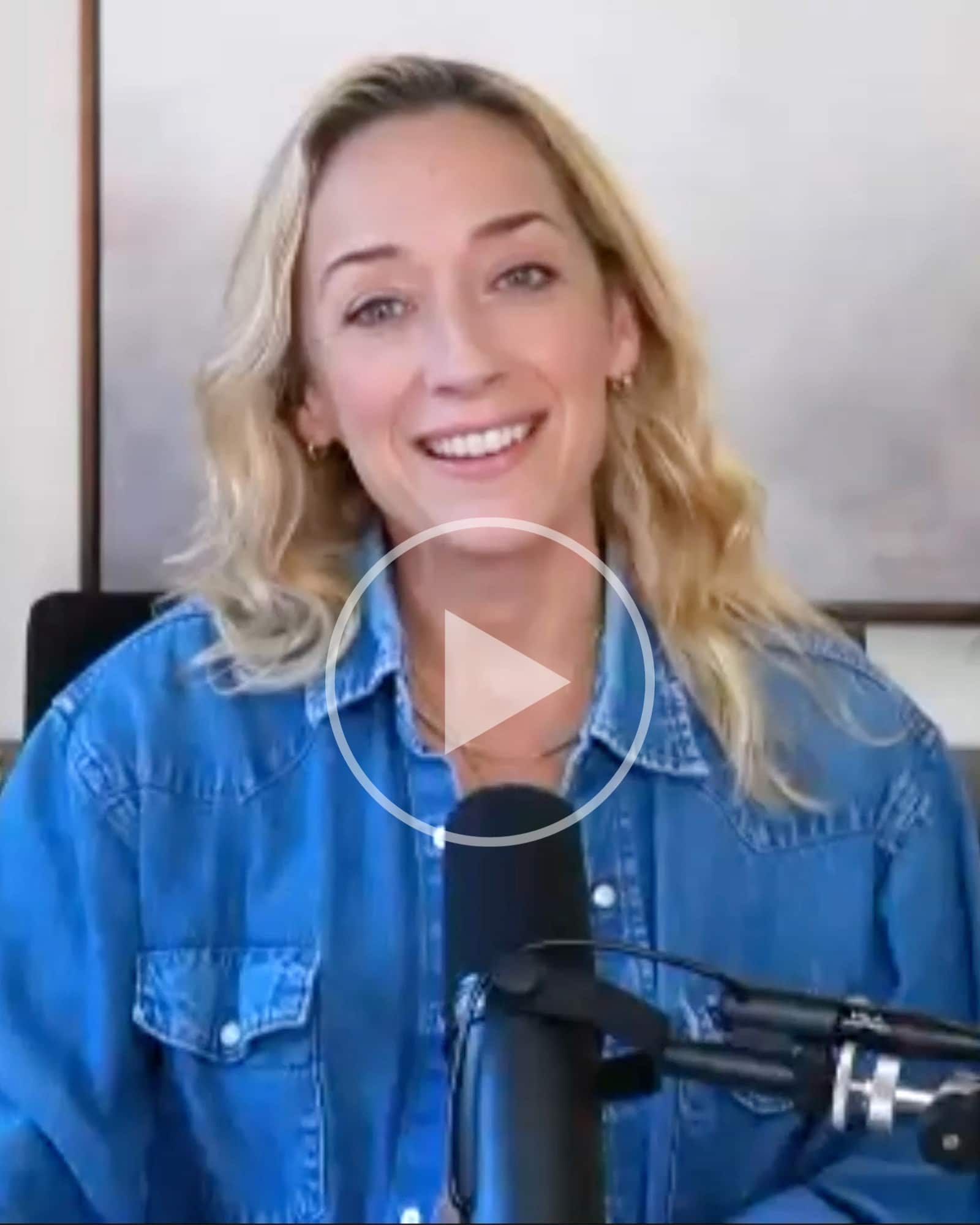
    This quick video will guide you through a simple box breathing exercise you can use to return to a state of peace. Consider it your step-by-step guide for what to do when you feel overwhelmed.

    How to Use Box Breathing When You Feel Overwhelmed


    Key Takeaways

    Fear and anxiety are natural, but they’re not always helpful.

    When the rug’s been pulled out from under you (or your load gets too heavy), it activates your sympathetic nervous system, sending a cascade of stress hormones into your body. That activated state wears you down and can make you feel disconnected from yourself. We all need tools to help us shift from fight-or-flight back to rest-and-digest.

    You can’t always think your way out of a stress response.

    It’s frustrating, but once your stress response is activated, it can be hard to switch it off with your mind. Thinking about your fears, even to try to defuse them, just perpetuates the stress cycle. Instead, it can be more effective to use a physical change (like a change in your breathing) to activate your parasympathetic nervous system and return to a state of calm.

    Sometimes the simple thing is the best thing.

    In the above video, I demonstrate an easy (and free!) exercise you can do anywhere, at any time, to ground yourself. It’s called box breathing and only takes about 2 minutes. Using this technique will bring you back into your body and the present moment. And when you face this present moment with a clear mind and a grounded body, you’ll gain the strength and confidence you need to face the next one.

    Now it’s your turn. What’s one technique you use to feel better when you feel overwhelmed? Let’s share our collective wisdom in the comments.

    All my love,


  • Why You Should Face Hard Feelings: Emotional Literacy Improves Emotional Health (Video Post)

    Why You Should Face Hard Feelings: Emotional Literacy Improves Emotional Health (Video Post)

    Hiya Gorgeous,

    Loss is the one thing we all have in common.

    The divorce. The accident. The miscarriage. When the doctor said it’s cancer. The day you lost your job. Or your mom. Or the love of your life. Whatever it was for you. The moment your world stopped—that’s what we’re here to talk about.

    But too few of us do talk about it. Why?

    In our grief-phobic society, most of us haven’t been taught how to deal with loss. Instead we’re taught how to avoid pain. That collective avoidance of hurt has left most of us lacking in emotional literacy. We experience all of the same hard feelings but, when we try to share them, we feel about as coherent as our college selves did after six shots of Jose Cuervo… It ain’t a pretty picture.

    The trouble is that when we can’t express the hurt, we feel alone in it.

    Worse still, without outlet, those feelings get trapped inside us and wreak havoc on our minds and bodies.

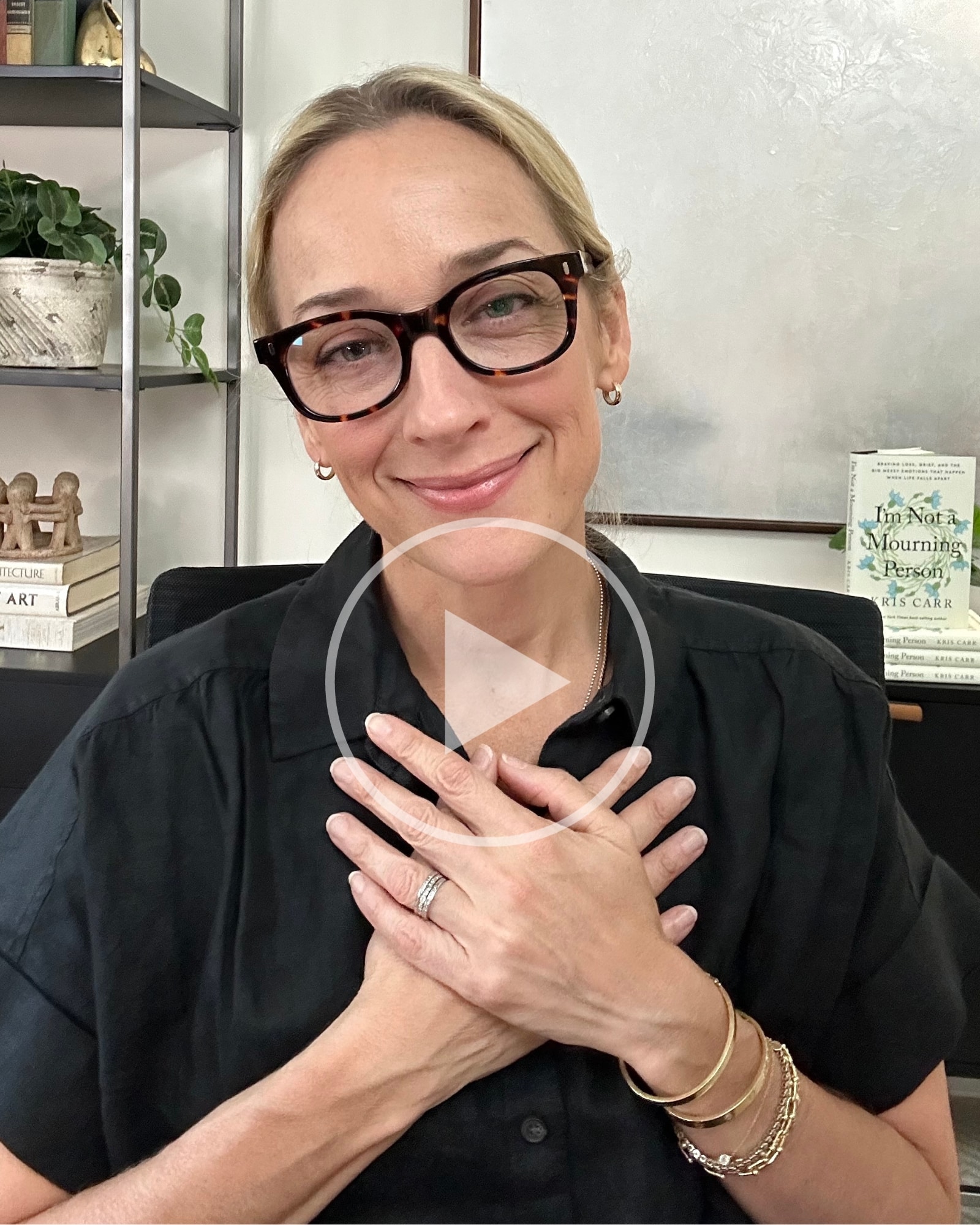
    A few weeks ago, right before the release of my latest book, I went live on Instagram to share a bit about emotional literacy: what it is, how we lost it and why reclaiming it is so important for our emotional health. Let’s talk about it together now.

    Emotional Literacy: What, How, Why


    A few big takeaways:

    • Grief doesn’t just follow the loss of a loved one. Grief can be triggered by the loss of a job, the end of a friendship or relationship, a scary diagnosis and many other life events.
    • We don’t have to be in a full-blown grief-a-palooza to feel the physical side effects that accompany unprocessed hard feelings. Those include: depression, anxiety, appetite loss or gain, digestive issues, fatigue, malaise, lower immunity, aches, pains, inflammation, insomnia or too much sleep, heart issues and so on.
    • Since most of us have adopted unhealthy coping mechanisms, it’s important to bring an awareness to how you currently deal with pain. Do you drink, shop, dive into work, etc.? And are your go-to mechanisms numbing the pain or are they truly helping you heal?
    • Emotional physics is my term for the seemingly-sideways consequences that occur when we try to resist our hard feelings. When we shove those feelings down, that energy isn’t lost. It just manifests in more sucky and less constructive ways.
    • The work of emotional literacy may feel heavy, but it actually lightens you. Most of us are carrying immensely heavy emotional loads. By processing our experiences, we can finally tap into the lightness we crave.
    • Emotional literacy comes in two steps. Step 1 is identifying what emotion you’re experiencing. Step 2 is learning to articulate it.
    • As our emotional literacy expands, our emotional health improves.

    Now it’s your turn. How are you actually feeling today? Let’s practice the first step of emotional literacy and dig beyond “good” or “fine.” Share your response in the comments.

    All my love,

  • How to Deal with Guilt or Regret

    How to Deal with Guilt or Regret

    Hiya Gorgeous,

    This weekend, I got to spend a few hours with some of the most wonderful humans around (AKA amazing readers like YOU!) at the official release event for my new book. At the VIP afterparty, we went deep. I mean deep, deep. We took some time for Q&A and the vulnerable questions you shared cracked my heart open.

    It turns out that the questions we have about grief aren’t easy ones to face:

    • What if we’re already grieving a loss that we know is coming—anticipatory grief—and worry we’re wasting precious moments on premature sadness?
    • Or we never really got to grieve because life got in the way?
    • Or we’ve lost someone and now fear that it’ll happen again?
    • Or, one of my personal favs, how can we take better care of our bodies when grief made us “swan dive into nachos and Reese’s Pieces?”

    (Shoutout to the magical woman who asked that one. Lol! I’ve been there, baby. And got the T-shirt.) 

    These questions are all beautiful and important. But by far the biggest theme that emerged during our discussion? Guilt and regret. 

    Specifically how to deal with guilt when you’ve lost someone and there were words left unspoken, things ended on a sour note, or you didn’t get to say goodbye. Whew. These are tough trails to climb. I’d love to offer a few practices that may help you on your way, but first I’d like to say: I’m sorry you’re on the trail, at all, my friend. I’m sorry for the loss. And I’m sorry for whatever circumstances added guilt to the grief you already feel. I can’t fix it, but I’m here to walk beside you.

    Let’s see if we can find our way forward today.


    3 Practices to Help You Process Guilt or Regret

    Practice 1. Return to the Present

    Regret is a rearview emotion. Whenever we’re wracked with guilt or regret, we’re trying to live inside the unchangeable past. That’s especially true when we feel regret over our interactions (or lack thereof) with a loved one who’s passed on. We’re beating ourselves up for all the mistakes we made or the opportunities we didn’t take to reconnect. We’re frozen trying to change the end of a story that’s already been written. It’s a heavy feeling.

    Before my Dad “got on the bus”—his euphemism for dying—he wanted to have a Zoom party with his friends in celebration of his life. The mere suggestion of that party melted my brain and made me shout, “I’m not ready for that!” He never got to have that gathering and, to this day, I still wish I’d handled that moment differently.

    But as hard as it may be to accept, those moments are beyond our reach. We can’t fix it. We can’t change it. All we can do is be with ourselves authentically and compassionately today. The work of healing is to acknowledge what happened then and come back to this moment now.

    • I’m disappointed that I wasn’t my best self in that moment. But I’m not there anymore. I’m here. And in this moment, I will forgive myself and learn from what happened.
    • I’m so sad I didn’t get to say goodbye. But I can’t change that. All I can do is acknowledge the hurt without judgment and love myself through it today.

    Reflecting is fine, but ruminating is corrosive. When you find yourself stuck in the past, take a deep breath and come back to the now.

    Practice 2. Express Yourself

    Our next healing practice can be best expressed in the immortal words of Charles Wright: “Express yourself.” (“Jumpin’ like a kangaroo” optional. 😉)

    So many of our regrets can be linked to what we say (or fail to say). I can’t tell you how many times I’ve replayed the phrase: “I’m not ready for that!” in my head. If you find yourself rehearsing what you “should” have said in your head, maybe it’s time to get it out. Here are a few formats to consider:

    • Have a conversation: I know we all hold different beliefs about the afterlife, so see if this one fits for you. For me, I believe in the continuity of life and love even after a loved one is “gone”. I believe my Dad can still hear me and I talk to him all the time. If you feel the same, find a private moment and have a conversation with your loved one either out loud or in your heart. You can still say all the things you wish you’d said. You just have to be willing to talk it out.
    • Write a letter: This beautiful idea came from one of the VIPs on the call. If you’re more comfortable writing, why not put all those unsaids on paper? Write a letter to the person you love with everything you wish you could tell them. When you’re done, you can read it out loud to them. You can burn it to release that energy into the universe. Or bury it and put a marker like a heart stone on top to create a place where you can remember them. It’s not about closure—that’s often a myth. The big loves and losses in our lives have a way of staying with us. But there is connection—and a letter is a beautiful place to start.
    • Find a flashlight: Navigating grief is tough, especially when it’s laced with guilt or regret. You’re walking into some dark places, which means that now’s a good time to find a flashlight: someone who can illuminate the path and help guide you through. Throughout this process, I’ve had my therapist, Carol, on speed dial. Consider finding your own flashlight (AKA a brilliant therapist) today.

    Of course, these aren’t the only vehicles to express what you’re feeling. Journaling, somatic work, and EMDR are some of the other healing practices you can explore. But the bottom line is that you want to get all those big feelings out. When we try to shove them down, they don’t actually go away. Instead, they work their way into our psyches and our tissues only to pop back up later like a deranged Jack-in-the-Box.

    You don’t have to shove it all down, cookie. You deserve to express yourself.

    Practice 3. Choose Radical Compassion

    For our final practice, may I have a drumroll, please?

    🥁🥁🥁

    Stop trying to be perfect.

    It’s time to be kinder to yourself. You’ve got to lower the bar, my friend. Consider that section in I’m Not a Mourning Person specifically dedicated to you. You went through something massive and traumatizing. Being tough on yourself is not going to help your healing. Practicing radical self-compassion to your very core is the medicine you need.

    You did the best you could.

    You’re doing the best you can.

    And that is enough.

    Say it to yourself as often as you need to. “I’m doing the best I can and that’s enough.” And when those cruel, self-critical thoughts arise, I invite you to say to yourself what Dad always said to me when that happened: “Knock it off.” This is a bully-free zone and self-bullying is prohibited from now on.

    Grace is the Antidote to Regret

    It’s normal to feel regret, remorse or even guilt after a loved one “gets on the bus.” The antidote is grace every time. When I’m being too hard on myself, I find it helpful to look at a picture of me when I was little. In fact, I keep this one on my desk.

    This little gal was very excited to hop on every ride at Playland for her birthday. And she’s still with me today. She needs me to feed her a sandwich at noon instead of “powering through” lunchtime. When we’ve had a full, busy day, she wants to relax and watch a movie she loves (no laundry-folding; just rest). And when she’s messed up or missed something important… she wants grace. She wants me to meet her with compassion. To wrap her in a hug, tell her she’s safe and loved despite all her imperfections. That I forgive her. That I’d never judge her. And that we can put that failure away and move forward together in love.

    Little You is still there, too. Be kind to their tender heart today.

    Your Turn: What’s your next step toward releasing regret? Share yours in the comments so we can learn from each other.

    All my love,

  • I’m Not a Mourning Person: Why I Wrote a Book About Loss, Sadness and How to Heal

    I’m Not a Mourning Person: Why I Wrote a Book About Loss, Sadness and How to Heal

    Hiya Gorgeous,

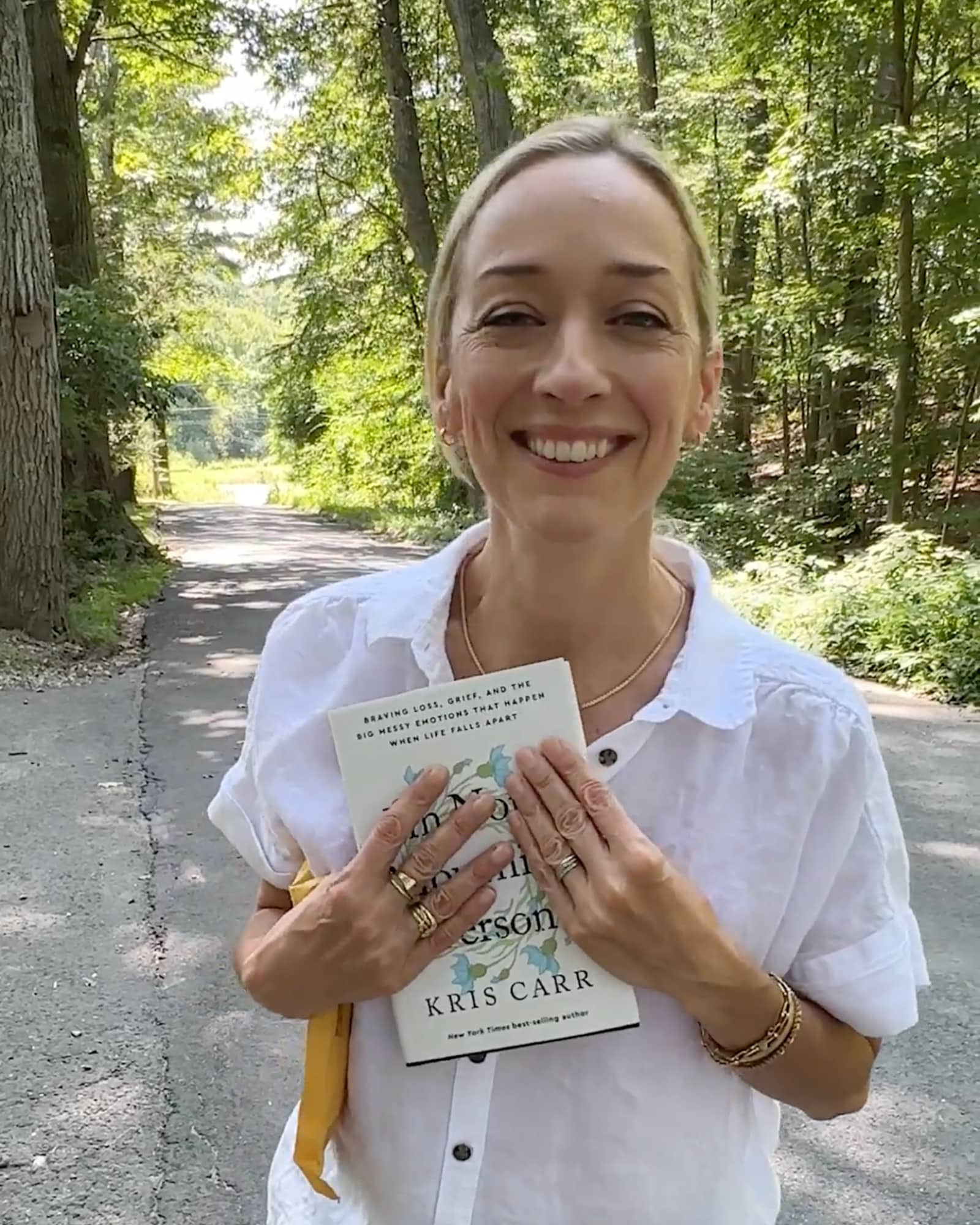
    My latest book released this week. It’s called I’m Not a Mourning Person: Braving Loss, Grief, and the Big Messy Emotions That Happen When Life Falls Apart. The title came to me in a flash one morning and felt so representative of my own journey (and likely yours).

    I never wanted to be a “mourning person.”

    I spent years trying to run from the big, scary feelings explored in this book: loss, sadness, anger, fear, and the rest of the unpleasant posse that rolls in when the sh*t hits the fan. And hit the fan it did.

    A few years ago, my whole world fell apart. My father was dying, my business was faltering, and I was on the verge of my twenty-year anniversary of living with Stage IV cancer. Like you, I was also muddling through a global pandemic and the social, political, and economic upheaval that would follow. Did I mention perimenopause? I was definitely not OK.

    I could no longer shove down my big feelings.

    (Besides, shove anything down long enough, and it’s sure to pop back up in less productive and more destructive ways.)

    So I decided to try something different: I stopped and faced my feelings instead. Eager to find a framework that resonated, I began researching how grief and other difficult emotions affect our brains, bodies, and lives. And I began braving the rougher terrain of my own heart. Here’s what I discovered: our messy emotions can teach us how to be free––not free from pain but free from the fear of pain and the barrier it creates to fully living.

    Consider this book a field guide for navigating through hard times and finding your way back to yourself. It’s available in stores everywhere this week (click here for a full list). And if you’ve been wondering if it’s right for you, here’s an exclusive sneak peek at what’s waiting for you inside.


    PEEK INSIDE EVERY CHAPTER OF “I’M NOT A MOURNING PERSON”

    Chapter 1. I’m Not OK

    Being OK starts with acknowledging that, in fact, you are not OK.

    So often we miss this step or avoid the truth of how we actually are. There’s so much pressure to be grrreat!—happy, wise, and in control—that we have a hard time sitting with our internal reality. Instead, we cover up angst by racing forward, looking for people, things, and solutions outside ourselves––as if we are problems to be fixed. In truth, we are not broken. We do not need fixing. We just need loving.”

    Chapter 2. The Rupture

    “Have you ever had a moment of seeing your worst fears realized? Most of us have, at some point. A needle off the record of your life. Your world crumbling into a million disconnected puzzle pieces. A situation that is such a clusterf*ck that at first glance you’re positive it can’t be fixed. And if by some miracle you can make it better, you will surely never be the same. This is what I call ‘the rupture.’ But I’m here to tell you that even the worst ruptures can reveal a road map to our next chapter.”

    Chapter 3. Fear & Anxiety

    “I used to think that anxiety just came naturally to me. You know how some people are born with amazing voices or athletic prowess? Well, I was born to worry. Like many women I know, my mind is built to solve problems and seek solutions. But two things can be true at once. A strength can also be a weakness when taken to the extreme.

    Some researchers believe that chronic anxiety can not only harm your brain—it can become addictive, like a drug. The more we fuel it, the more anxious we get, and the more we turn to unhealthy behaviors to reduce our anxiety. It’s a never-ending cycle that wears us down, shrinks our resilience, and makes our lives way smaller than they need to be. It’s time to find a way out.”

    Chapter 4. Becoming Unbecoming

    “Anger is especially common in the face of loss. We act out instead of crying out, because anger feels powerful, while grief feels powerless. But anger is also taboo, especially misunderstood and vilified for women. We’re socialized to use minimizing language, keep the peace, and be deferential. But no one can be an emotional shock absorber forever. All that energy has to go somewhere. Anger isn’t a character defect to avoid. It’s a blinking red light telling us that something is not OK. (And the same is true for our other “unbecoming” emotions.)”

    Chapter 5. Grief & Trauma: The Golden Repair

    “There’s an ancient Japanese art called kintsukuroi, which translates to “golden repair.” When pottery breaks, instead of being thrown out, the piece is lovingly repaired with gold leaf hand-painted over every crack and crevice. As a result, what was damaged becomes unique and more beautiful—“a conversation piece,” as my grandma would say.

    We, too, are more beautiful as a result of our once-broken, now-mended parts. And whatever caused the crack—such as neglect, betrayal, abuse, trauma, loss, or death—the process of repair begins with grieving. Allowing ourselves to feel is the gold that makes us whole again.”

    Chapter 6. Acceptance

    “As it relates to grief and loss, acceptance is about recognizing that life has changed, and we can no longer go back to what was. While we don’t have to like it, here we are in a newly emerging reality. Acceptance isn’t passive; it’s defiant. It’s a way to rebel against shutting down, living in a destructive fantasyland, or losing hope. In a world that encourages quick fixes and black-and-white thinking, acceptance teaches us the expansive and revolutionary power of embracing the gray and all that comes with it. If you can do that, you can do anything, my friend.”

    Chapter 7. Rest in Love

    “Within a few weeks, Dad would be cremated. Yet here he was, caring for his pores and himself. Not because he wanted to look good for anyone else but because he wanted to look and feel good for himself.

    It made me think of those Tibetan sand mandalas. A team of Buddhist monks tirelessly work building colorful geometric sand designs in intricate detail. The mandalas represent many things, including our journey from ignorance to enlightenment. Once the mandala is done, and the ceremonies and public viewings are over, the monks destroy the beautiful work of art by sweeping it away—signifying that nothing lasts forever.

    In this way, our bodies are like mandalas, too. Beautiful. Intricate. Full of wisdom, and, despite their fragility, worthy of spiffyness until our very last breath.

    Chapter 8. Beyond the Stars

    “In grief, we often focus on what (or who) is no longer there in front of us. We naturally notice the absence of the person we love. A bed or chair they no longer occupy. Clothes that still hold their scent but hang empty day after day. Special moments like holidays or birthdays, where their nearness is so deeply missed. My eyes can still find those places, years later. Observing the absence of Dad and, if I’m not careful, telling my heart he’s just gone. But that’s not what I want to believe. So I ask my eyes to see his presence, instead of just his absence.

    It’s like turning your life into a treasure hunt. Look for signs each day of the ways you are being offered love, joy, peace, and reassurance. Look for the continuity of the love. It’s still there. The goodness is still with you, just as real and sacred as the grief. You just have to keep searching for signs and say a silent Thank you whenever you see them.”

    Chapter 9. Awkward Times, Awkward People

    Let’s be real, it’s frickin’ hard to know what to do or say when someone you love is in pain. It’s also hard to know and ask for what you need when you’re the one who’s struggling. And because this rocky terrain is rarely traversed, it’s easy to slip and unintentionally do or say insensitive things. This chapter, filled with tips and real-world scenarios, is meant to help both people who are grieving as well as those who love and care for them. My hope is that we all emerge feeling a little more prepared, a little less awkward, and a lot more forgiving—of ourselves and each other.”

    Chapter 10. Love is Love, Grief is Grief

    “The bond between animals and their humans is real, so when an animal dies and their daily dose of unconditional love becomes a memory, it’s brutal. Unfortunately, a lot of the grief literature and resources out there often overlook pet loss, or pay minimal lip service to it. But our furry, feathered, and scaly babies deserve better. And so do we.

    With that in mind, this chapter is for anyone who’s ever felt sheepish about grieving something deemed “not significant.” The loss of a parent or grandparent who “lived a long life.” (It’s not childish to be shattered when you lose your elders, no matter how old they are.) The devastation of a miscarriage. (You’re not “overreacting.” The moment you decided to conceive your connection began.) Just as there is no hierarchy of love, the same is true of grief.

    Chapter 11. Self-Care in the Storm

    “In difficult times, you’re inevitably going to be more depleted. Nurturing yourself, in even the smallest ways, will help you become more stress-hardy. That’s why I teach simple practices to support what I call the Five Pillars of Wellness: the five areas that will have the biggest impact on your well-being

    But let’s get one thing clear: no one is expecting you to embark on a full-blown lifestyle makeover. Perfection sucks the life force right out of you. It kicks your batteries in the balls. Ouch! Don’t do that. Instead, let your new self-care mantra be this: ‘It’s good enough.’ Good enough creates momentum. Good enough allows you to implement better habits. Good enough keeps you from quitting on yourself. Good enough is likely all you’ve got right now, and, well, it’s good enough.”

    Chapter 12. Listening to Your Life

    “Hold fast to the courage needed to let all of yourself be loved—that’s the lesson I’ve learned time and time again from my many ruptures. Don’t avoid the parts of yourself that ask for the most tenderness. The so-called ugly parts that need to be witnessed and held. Like it or not, we’re all complicated beings who share one common thread: a need to love and be loved.

    Loving ourselves and others through the good times and devastating times is what life is all about. In fact, there’s no greater success to achieve. Ultimately, love not only showed me how to grieve—it showed me how to live.”


    I’M NOT A MOURNING PERSON IS IN STORES NOW!

    I hope these excerpts have given you a sense of the goodness waiting for you inside I’m Not a Mourning Person. And I hope this book will be a source of comfort for anyone suffering from any loss.

    I hate that we have to do this.

    I’d much rather watch our favorite Netflix series or make paninis or go shopping for new throw pillows, but here we are. The truth is, you wouldn’t be exploring this book (and I wouldn’t have written it) if life didn’t kick us in the choppers. We’d be on a beach somewhere sipping a colada. And we’ll likely do that again, but first, we’ve got some heart tending to do together.

    So, I invite you to be my co-pilot on this healing trip as we tour some of the most difficult and treasured parts of life: grieving and loving, stumbling and flying, living and dying. I’ll bring the snacks, flashlights, and bandages. You bring the sensible shoes.

    All my love,

  • Tips for Overcoming Anxiety (Because Life is Full of Uncertainty)

    Tips for Overcoming Anxiety (Because Life is Full of Uncertainty)

    Hiya Gorgeous,

    I’m afraid of more things than I should be.

    I’m afraid of walking on ice, riding my bike downhill, eating sweet and savory foods in the same bite—pizza with pineapple . . . terrifying. I’m afraid the UPS guy will catch me without a bra on when he delivers my Amazon packages. I’m afraid of astronomy—the vastness of the universe, and all the math it takes to figure it out, leaves me anxious and confused, wanting to kick inanimate objects. I’m afraid of having to unexpectedly talk to my neighbors. Please don’t just stop by to say hello. I will need a cold compress to recover.

    And at the same time, when the shit hits the fan, I’m clearly the kinda girl you want on your cleanup crew. I’ve had some version of an emergency “go bag” packed and ready since I was five years old. Detailed contingency plans are my love language. Trying to imagine and plan for the unimaginable helps me feel safe—or, at the very least, productive.

    Think about it. Even if you can’t do a darn thing about the chaos du jour that triggers your anxiety, you can still worry about it—which at least feels like you’re doing something.

    I used to think that anxiety just came naturally to me.

    You know how some people are born with amazing voices or athletic prowess? Well, I was born to worry.

    Worry is Natural (and, Unfortunately, Inescapable)

    We humans are extremely creative creatures. Our imaginations have allowed us to invent microscopes to peer into the smallest cells of our bodies, and rocket ships that hurtle us into the realm of the stars. But our imaginations can also freak us the fuck out.

    Think about it: is there anything scarier than all the awful stories we tell ourselves?

    We’re so damn good at devising the most frightening tales. Yet most of us have no desire to be Stephen King, channeling our darkest thoughts into best-selling horror novels. Instead, we do our best to bury our paranoid thoughts in the boneyard of our psyche and desperately try to become “fearless,” an impossible task that goes against our very DNA.

    The Difference Between Fear and Anxiety

    People often confuse fear and anxiety because they can feel the same way in our bodies—the heart pounding, the sweaty palms, the racing thoughts. And while they’re both designed to keep us safe, they’re actually different.

    Fear is automatic.

    It’s designed to protect us from tangible and immediate threats. Fear signals a clear and present danger, prompting us to take instant action—pronto. See tiger. Run. Survive. Voilà! Fear has done its job. It comes on in a burst and has a beginning, middle, and end.

    Though we can be afraid of something from the past or future—like getting into a car accident again or losing another job—more often than not, we confuse that kind of fear with anxiety. In fact, many of us who identify as being fearful are probably more anxious than we fully understand. That was certainly the case for me when I started teasing out these complicated emotions.

    Anxiety is a nervousness, unease, or worry over things that may or may not happen in the future.

    It’s the anticipation of a threat, rather than the threat itself. It’s that feeling of dread that comes over us when we think about a potential hazard, especially when we turn it over and over again in our minds.

    • If I speak up to my brother, like I know I must, he’s going to decimate me.
    • If I don’t get that flight out before the hurricane hits, I’m going to get stuck in Weather Channel hell.
    • If I quit my fancy but unsatisfying job, I’ll never find anything else and wind up broke and hungry.

    And while anxiety can be less intense than fear, it tends to last much longer. That’s because anxiety gets triggered by uncertainty—the very nature of life.

    If fear’s job is to identify a threat and quickly take action, anxiety’s job is to run worst-case scenarios and gauge what could happen, in order to come up with a plan and protect ourselves. Anxiety keeps us vigilant so we can pay attention, strategize, and stay on top of things.

    Our Worries Can be Both Helpful and Hurtful

    Remember, all of our emotions serve a purpose. We can thank fear for helping us swerve out of the way of an oncoming car, or jump when we see a snake slithering toward us. Fear makes us call 911 when our house is on fire.

    We can applaud anxiety for forcing us to finally get that persistent pain checked out. Anxiety alerts us to choose another street to walk down late at night. It tells us to yell “not friendly” to the oblivious dog owner whose bouncy, untethered pooch charges toward our leashed (and salivating) pit bull. There’s a reason her nickname is “Rumbles.”

    But when left unchecked, anxiety can warp into something very harmful—keeping us in a state of constant fight-or-flight, sending our inflammation through the roof, and our energy and immunity into the toilet.

    These last few years, anxiety has collectively skyrocketed. Today, more than 40 million people suffer from full-blown anxiety disorders in the U.S. alone. Pre-pandemic the United Nations estimated that nearly 1 billion people worldwide were struggling with a mental health condition. Since then, the pandemic has caused a 25 to 27 percent increase in the prevalence of anxiety and depression. According to a recent Gallup poll, worry, stress, fear, anger, and sadness have been on the rise globally for the past decade and reached record highs in 2021.

    Something’s got to give, or our bodies will.

    As a 20-year veteran of co-existing with Stage IV cancer (and a lifelong prodigy at worry), I’m no stranger to the mental marathon of managing a long-term source of anxiety in our lives. With the way our culture lionizes bravery, it’s no wonder that most of us feel under-equipped to soothe our stress or worry. Tending to the messy emotions that come with tough times is a major focus in my new book (that comes out this week—eek!!!!). You can order your copy (and score a FREE ticket to my book release event) here or by hitting the button below. In the meantime, I’ll share a few ways you can unwind your long-term worries.


    Three Ways to Unwind Long-Term Worry

    1. Laugh a Little

    Long-term stress can do weird shit to your noggin. Whether yours stems from work, financial struggles, worry over a sick loved one, or something else, long-term uncertainty is a masterclass in learning to coexist with both rational and irrational fear. In the early days of managing my cancer diagnosis, I really struggled with this. Every weird ache, gas pain, or sneeze could send me into a hysterical tailspin.

    Anne Lamott basically summed up my experience when she wrote, “My mind is a bad neighborhood that I try not to go into alone.”

    One minute I was centered, calm, and present. Feeling my butt on the chair. Paying attention to my breathing. Noticing my peaceful surroundings—a cardinal at my birdfeeder. The next minute I’d be planning the guest list for my funeral.

    What kind of food would be served? Should there be a DJ? No. Not classy enough. Who should get my good jewelry? My mom and goddaughter. Will my hubby, Brian, remember to feed our dogs? Brian is so lonely now. I love Brian. Maybe he should start dating again? But not someone younger and prettier than me. Oh my God, Brian is dating a hot 20-year-old! I hate Brian.

    If I had enough awareness to recognize what my brain was actually doing and why, I’d meet my fear and anxiety with compassion (and a hearty chuckle). But more often than not, my negative fantasies would hold my brain hostage, and the next time Brian asked me if I knew where his glasses were, I’d tell him to consult his child bride.

    In the years since, I’ve learned to stop judging those doom loops when they occur in my mind. Instead, I try to become aware of them, accept them as a natural way that my mind is trying to safeguard my future, and then bid them adieu. I sometimes even cook up a funny name for the scary movie playing in my mind. Laughter is a wonderful way to disarm those doom loops.

    2. Remind Yourself That It Will Be Okay

    This next one was handed to me by my Dad in one of the hardest and most beautiful moments of my life so far. Days before my dad “got on the bus”—his euphemism for dying—I peeked into his bedroom. Did he need another blanket or some ice chips? Were the lights too bright? Was there anything I could do to make him more comfortable?

    That’s when I overheard him steadying and calming himself with a mantra. His voice was reduced to a raspy, faint whisper, but his words held the power to stick with me forever.

    “It will be OK. I will be OK. It will be OK.”

    Eyes closed. Hands gently folded on his heart. Deep breaths.

    “It will be OK. I will be OK. It will be OK.”

    Witnessing him trying to comfort himself stopped me in my tracks. Here he was, in the twilight of his life, finding the strength to recognize his fear and comfort himself through it.

    How much more can we, in the face of life’s normal stress, summon the strength to breathe deep, place a hand on our hearts, and remind ourselves that we will be OK? Do that now if you need to, my friend. There’s deep healing inside that simple practice.

    3. Ask the Question You’re Avoiding

    One of the good things anxiety does in our lives is ask the hard questions. It points our attention to the areas where we feel more fear and dread than we do love and peace. Sometimes that tension is something we can’t control and have to bear (as with a long-term illness). But other times, it’s an invitation to make a change (like leaving a job or relationship that’s run its course).

    This is another big piece of wisdom I learned from my Dad. He’d always encourage me to ask myself the candid question I often didn’t want to even think about: Have I reached the point of diminishing returns?

    If the answer was yes—meaning the blood, sweat, and frustration weren’t remotely paying off—he’d follow up with another classic: “Go where the sun shines the hottest.” To me, this means directing my attention to where the energy, action, and opportunity is—as opposed to just going through the motions, eking out crumbs out of obligation.

    Dad’s wisdom is a potent reminder: Don’t stay stuck in old, ineffectual rhythms because they feel safe. Trust that what’s meant for you doesn’t require you to drain your life force to experience success or fulfillment.

    LET YOUR FEAR & ANXIETY INFORM YOU—BUT NOT OWN YOU

    I hope these practices help you find peace if long-term worry has been making a meal of you lately. While not easy to manage, our feelings of fear and anxiety can have use. They’re hardwired into our genetic code for a reason. Like all of our emotions, they’re just information. Signals from our body trying to protect us.

    The aim is to listen to them with love—to have the courage to receive the messages our fear and anxiety are trying to send us and choose an intentional next step. Sometimes that will be a big, brave shift. And at other times, it will be a deep breath, and a choice to make peace with the parts of life we can’t control. Whichever path you’re walking today, know that I’m so proud of you. Being awake to your own life and heart… that’s brave.

    All my love,

  • Life Lessons: How to Listen Better When Life Speaks to You

    Life Lessons: How to Listen Better When Life Speaks to You

    Hiya Gorgeous,

    Last week, I had the privilege of hosting hundreds of you for a virtual Happy Hour. It was such a joy getting to spend time with you, answer your questions, and hear your stories.

    To all those who came, THANK YOU. You’re such a gift to me!

    And to those who wish they could have been there… I saved a little bit of Happy Hour to share with you. It’s a reading from the final chapter of my new book—a section called, “Taking Inventory”. It’s about the big life lessons that emerge when things get hard. Take a look and, when you’re done, I’ll share 3 specific ways you can be a better listener and capture your big life lessons before they pass you by.


    How to Avoid Missing Out on Your Big Life Lessons

    1. Stop and breathe.

    Life is always speaking to us. At first, it taps us gently and whispers in our ears … But when we refuse to pick up what life is laying down, those whispers can turn into wrecking balls … Don’t blow off the messages. Listen to the whispers before they become roars.

    During times of loss, transition and change, it can feel like life is already mid-roar. When there’s so much to process, it’s easy to shut down or shift into fight, flight or freeze mode. Right before I read this excerpt, we did an exercise in box breathing. And you’ll notice that before the question at the end, I again encouraged everyone to take a deep breath.

    It’s perfectly normal to feel flooded when a rupture happens in your life. But to actually hear the life lessons under all that turmoil, we have to pause, breathe, and process.

    2. Let go of the myth of temporary.

    When life gets upended, some corner of our psyches becomes more aware that we will one day leave this planet. No one really wants to think about that (including me). But perhaps the heightened awareness of our limited time helps us see more keenly which parts of our lives could be pruned to make space for our next chapter.

    … 

    I remember thinking, Once this is over, then I’ll live. Once this task—obligation, deadline, to-do—was complete, then I’d [take better care of myself, visit my best friend . . . fill in the blank]. But every time I finished a task or project, I failed to pause and keep the promises I had made to myself. Instead, I’d automatically turn to another item on my list.

    The myth that struggles are temporary is a thief. It robs us of the urgency to live like we mean it. It makes us believe that there will be some fictional quiet time in the future to address the life lessons that are asking for our attention—to make the shifts that would set us free.

    One of the gifts that grief brings is the shattering of that illusion. It reminds us that tomorrow isn’t promised. Life is happening right now. We don’t have to wait for an invitation or the “right time” to live the life we always meant to. That invitation is open and the best time to begin is today.

    3. Focus on your next step.

    It’s easy to feel overwhelmed by the idea of listening to and applying your big life lessons. But just like eating a watermelon, the best way to go about it is one bite at a time.

    Pay attention to your very next step. Don’t look back and beat yourself up for all the times you’ve ignored the whispers before—for all the changes you haven’t yet made. And likewise, don’t overwhelm yourself trying to plot a whole new trajectory for your life.

    Just look for the next right step.

    1. Pause to breathe.
    2. Listen for one lesson your life is trying to teach you.
    3. Then take one step to act on it today.

    That is enough, my friend.

    You turn: What is one lesson that life is trying to teach you today? Share yours in the comments so we can learn from each other.

    Love,

  • The In-Between: What to Do When You Feel Conflicted

    The In-Between: What to Do When You Feel Conflicted

    Hiya Gorgeous,

    Two years ago, Brian and I moved into a new house.

    After living in upstate New York for 17 years, we decided to sell our wonderful home (which we lovingly built) and relocate to Connecticut—near where my mom lives and I grew up.

    It was a bittersweet change, but not because we weren’t ready or were sad to leave. We weren’t.

    You see, I’d been manifesting this new house for YEARS. I knew it would happen, I just didn’t know when. I knew what it would look like, feel like, be like because I saw it in my mind and kept watering my vision.

    To say we’re happy is an understatement, we love our dream house and our new town! In fact, I’ve seen more wildlife in these last two years (including bears and bobcats!) than I did in all those years living in the rural mountains.

    But it hasn’t been pure bliss. In addition to all the joy, our new home has also brought an interesting contradiction.

    Our new home introduced me to the in-between.

    It’s a happy season, but it’s also sad because my Dad isn’t here to enjoy it with us. He would have loved our new house, especially because we’re so much closer to my parents’ place. It was a long-time goal of mine, but one he didn’t live to see.

    Coming home kicks up so many memories. In some ways, I feel closer to him because I remember him in the restaurants, stores, flea market, walks, drives, and other nooks and crannies we used to inhabit together.

    Feeling joy after loss is a masterclass in contradiction.

    • I love this and it guts me—both/and.
    • I’m excited about this new season and I’m so sad.
    • I’m joyful and grieving.
    • I’m energized and exhausted.

    The both/and conundrum is a surreal place. But I’m starting to think that the in-between is actually normal and more realistic—more true to a dynamic, three-dimensional life.

    Life doesn’t like to be overly compartmentalized or tucked in, and it certainly isn’t black and white.

    • I’m healthy and I have cancer.
    • I’m a joyful, life-loving person and I live with chronic depression and anxiety.
    • I’m successful and I face challenges.

    Both/and.

    So how can we respond when we feel conflicted?

    The short answer is to accept that we’re in the in-between.

    If the word acceptance makes you feel uncomfortable or defeated, you’re not alone.

    Years ago, I remember hanging out backstage before delivering a keynote at a wellness conference, when another speaker leaned over and asked me what the subject of my talk was. “The healing power of acceptance,” I cheerfully shared. She paused.

    “Oh. So you teach people how to give up?” she asked, with a furrowed brow.

    Ugh. There was a reason I’d chosen this topic, hoping to untangle common misconceptions about acceptance with my audience (and now here with you).

    Acceptance isn’t giving up, settling, or denying the situation.

    Acceptance isn’t being hunky-dory about what happened, either. As it relates to grief and loss, acceptance is about recognizing that life has changed, and we can no longer go back to what was. While we don’t have to like it, here we are in a newly emerging reality.

    Acceptance helps us find a way forward.

    Acceptance isn’t passive; it’s defiant.

    It’s a way to rebel against shutting down, living in a destructive fantasyland, or losing hope. In a world that encourages quick fixes and black-and-white thinking, acceptance teaches us the expansive and revolutionary power of embracing the gray and all that comes with it.

    The opposite of acceptance is resistance:

    • Fighting against the truth: Maybe he’ll come back.
    • Fighting with our egos: I’m not the kind of person who falls apart.
    • Fighting against what we know we need to do, say, or feel: Maintain a stiff upper lip. 
    • And fighting with each other, instead of coming together: It’s all their fault.

    For many of us, resistance is our go-to mode. We’d rather deny, avoid, or brawl than face the truth of how our lives are changing or even what we’ve been through. But as the saying goes, “What we resist persists,” keeping us stuck in pain and frozen in time.

    Acceptance thaws us out, allowing new things to grow.

    It says,

    “Life has changed. I may not like it, but I’m here. And I can still build a beautiful life—even after everything that’s happened.”

    Learning to live with cancer was my first big experience with acceptance. Learning to live with loss—specifically the loss of my Dad—was my second. Acceptance has given me the reminder I’ve needed to be compassionate with myself here in the in-between.

    Some days, I’m on board with the limitations of my life; other days, not so much. Acceptance allows me to handle the highs, lows, and contradictions. To forgive life so I can spend more time healing.

    So when you’re feeling conflicted, practice a little acceptance.

    Give yourself permission to embrace the both/and. And start learning to find joy right here in the magnificent gray.

    Love,

  • How to Be Happy Even in a Hard Time (3 Super Easy Ideas)

    How to Be Happy Even in a Hard Time (3 Super Easy Ideas)

    Hiya Gorgeous!

    I sent an email out last weekend about the importance of fun when you’re facing a hard time. Fun is the remedy, my friend. Depriving ourselves of it is the opposite of what we need when we’re struggling.

    In fact, the more you’re struggling, the more fun you need to have!

    The responses to that email were overwhelming. So many of you committed to having a little F.U.N. (and saying a big F.U. to your hard times). Today, I’m raising a glass to you.

    Your responses also inspired me to share a few more easy tips about how to be happy even in a hard time. These aren’t outlandish, reach-for-the-stars ideas. It’s advice from the trenches for those in the trenches. Think of them as easy, attainable ways to let a little light in even when you’re struggling.

    Wondering How to Be Happy in a Hard Time?

    Here Are 3 Easy Ideas:

    Idea 1: Add joy.

    On a scale of 1 to 5, how shitty are you feeling these days?

    The higher that number, the more likely you are to fall into a joy deficit. Sometimes, we even feel like we’re being inauthentic or frivolous by seeking joy in a hard time. But joy is serious business. Joy boosts our resilience. It relieves the pain and fear we may be feeling. It reminds us that there’s more to life than the difficulties we’re facing right now. It awakens hope.

    If you’re facing a hard time, create a micro-joy practice to help carry you through.

    It can be just 10 minutes a day. Or one special hour a week. But make it sacred. Sneak away from the burdens you’re holding and give yourself permission to feel good. Spend a few minutes on a hobby you love. Call up a friend and share a laugh. Listen to your favorite song—maybe even dance a little! Throw the ball for your dog. Bring home a Nerf gun and fire off a few shots at your loved ones. Watch a standup comic you love—this one’s my go-to! However you approach it, just give yourself the gift of fun—even if only for a few moments. You’ll be glad you did.

    Idea 2: Notice the good.

    Are you familiar with the concept of negativity bias? It reveals that our brains are hard-wired to record negative experiences more than positive ones. It’s an important survival instinct. If you were taking a morning walk and came across a dangerous snake on the path, you’d want your brain to record exactly where that happened (and trigger your threat-readiness hormones if you’re ever back in the same spot). It’s a helpful evolutionary tool for keeping you alive.

    But there’s a downside… That hyper-fixation on the negative means less room to retain the positive. How many beautiful blooms, puffy clouds, and cute dogs are you passing on that same walk? Odds are, you won’t remember those the same way.

    The same is true for your life at large. Your brain will prioritize cataloging the negative to keep you safe. If you want it to take equal notice of the positive, you’ve got to give it a little nudge. A physical touch can be a helpful way to do this. When something joyful or beautiful is happening and you want to take notice, lay a hand on your heart and take a deep breath. Or touch your forehead and smile.

    Whatever gesture feels good to you, use the same physical marker every time you feel those moments of joy to remind your brain to stop and notice the good.

    That’s also the reason that my Results Journal has space for you to begin each morning by listing three reasons you’re grateful. As gratitude increases, happiness increases. So adopt a few simple practices that anchor you to what’s good and help you see the light—not just the shadows—in your life.

    Idea 3: Be kind to your body.

    Our psychology and physiology are inextricably linked.

    There are lots of hormones racing around in your body that influence how happy you feel, how optimistic you are, and how much energy you have on any given day. In other words, the neurological cocktail your brain is sipping at any given moment (and pouring up for the rest of your body) has a lot to do with how resilient and stress-hardy you feel during a hard time. That’s why a little bit of care for your body is sometimes the fastest way to lift your spirits.

    Here are a few simple things you can try:

    • Drink a glass of water.
    • Take a nap.
    • Go to bed early.
    • Eat one healthy meal.
    • Try a magnesium supplement if you’re stressed out or having trouble sleeping.
    • Get your Vitamin D levels checked if you’re struggling a lot with fatigue.

    And here’s a big one that’s sure to help: take a 10-minute walk. I know movement can feel like the hardest thing to do when you’re already drained from a difficult season. But it’s probably the biggest difference-maker on this list. It creates the energy you feel like you’re lacking, helps dislodge stress hormones stuck in your tissues, promotes happiness and creates calm. It doesn’t have to be anything major. Just take a short stroll today and see if it helps.

    There are seasons in life that invite us to stretch ourselves and tackle ambitious new heights of personal development. In seasons of loss, grief (or any other kind of hard time), that just ain’t the way to go.

    The higher the mountain you’re facing, the lower your bar should be. Just do one thing on this list today and you’ve already won, my friend.

    Now I’d love to hear from you: What helps you find your happy even when times are hard? Please share with us in the comments.

    Sweetness & simplicity,

  • 4 Ways to Process Unexpected Change (and Come Out Stronger)

    4 Ways to Process Unexpected Change (and Come Out Stronger)

    Hiya Gorgeous!

    I want to share a story about a loss I recently experienced and how I applied the methods from my new book, I’m Not A Mourning Person

    Life gets interrupted in many different ways—big and small. This we can count on. 

    It’s how we approach those interruptions (or devastations) that shore up our ability to not only weather the storms, but turn them into opportunities for growth, new life, and even deeper satisfaction. 

    Last week, a colleague I’ve been working with for a while gave notice. I was shocked. Not only do I adore this person, but she’s also great at her job and a pleasure to work with. A wonderful opportunity came her way, though, and she felt it would be foolish not to take it. (I agreed.) 

    But underneath my surprise and overwhelm I realized a familiar feeling, one I would have been too afraid to name in the past—grief. I’d relegate grief to the big heartbreaks and I’d fight like hell not to feel it. All that fighting, denying, pushing down would morph into something far less productive and manageable.

    In the past, I would have panicked. NOW? This is the worst time! (As if there’s a “best time” for unexpected change?)

    I’d worry about what to do and how to do it. I’d stress about the impact the sudden interruption would make. 

    I’d complain and likely shut down. And I’d probably tell myself a litany of fear-based stories—which would only make me feel worse. 

    But since going on this journey, I’m not only more capable of weathering storms with grace and acceptance, I’m better able to turn them into new opportunities. 

    I do that by holding space for the possibility that even unexpected changes can create results that are in better alignment with who I am now and who I am committed to becoming. 

    When something ends, consciously choose to make space for something better. 

    • What if getting fired works out for the better? You finally launch your own business or find your dream job.
    • What if getting dumped allows you to find your true soulmate? The person you’d never have seen if you were stuck in the old relationship (that probably wasn’t that fulfilling if you’re honest with yourself).
    • What if the move was a catalyst for deeper connection? You love where you now live and the new community you’ve built. 

    You may be thinking, Sure, that all sounds good, but how do I get there from here? (Especially if you find yourself at the bottom of what feels like a deep, dark hole.) 

    4 Ways to Process Unexpected Change from my new book: 

    #1 Accept that what you’re experiencing is loss. 

    The hardest thing for any of us to accept is loss. But allowing the pain of our losses is how we ultimately start to get our energy moving so we can feel alive again. Acceptance doesn’t mean giving up or settling, it means owning your self-worth and never abandoning yourself—especially in loss. 

    #2 Let go of the shoulda, woulda, coulda’s. 

    You know the nasty little suckers. The unproductive thoughts that keep us stuck in the past, beating ourselves up, or blaming others. The “shoulda, woulda, coulda’s” mess up our ability to recognize all the goodness that’s actually happening in our lives right now—even if the present moment also holds pain. I should have taken better care of myself. I could have caught this sooner. I would have done things differently if I only knew. 

    To some degree, the “shoulda, woulda, coulda’s” are normal. But when left unchecked, they make it harder to pick up the pieces and move forward. 

    #3 Name your feelings. 

    This is where emotional literacy comes in. You need to identify what the actual feeling is. For example, “I am angry.” Great! Anger is a signaling emotion, which means there’s always something underneath it. Possibly an ancient boo boo that desperately needs tending. Thank your anger for pointing you in the direction of your healing. 

    And know this: You are not expected to gloss over any of your feelings with positivity. Get down with what’s coming up. 

    #4 Get out of your head and into your body. 

    Research shows that it’s hard to solve the problems of the mind with the mind. When we’re flooded with big feelings triggered by unexpected life changes, it’s really challenging to mentally strong-arm ourselves back to calm. 

    This is where movement comes in. Even just 10 minutes of movement per day (walking, aerobics, dance—anything you love that gets your heart pumping) significantly reduces stress and anxiety. Moving your muscles also releases a flood of feel-good neurochemicals like serotonin, dopamine, and noradrenaline. 

    We may never “get over” loss. 

    Especially when it’s the loss of a loved one or our former sense of safety. But over time, we become more adept at moving forward. 

    Life is always worth fully living. 

    It’s beautiful. It’s a privilege. You deserve to bask in it, scars and all. 

    I’m looking forward to hearing from you, my friend. What’s one thing that helps you navigate unexpected change? Let’s share our collective wisdom in the comments section.

    All my love always,